Digitalization Continues to Mature, Bandung City Government Reaffirms Commitment to Building a Cashless Administration
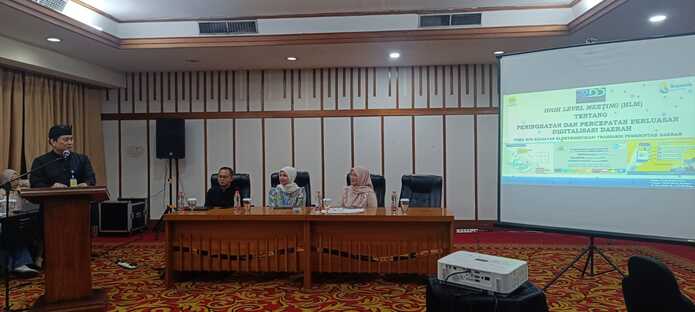
The Bandung City Government held a High Level Meeting (HLM) of the Regional Digitalization Acceleration and Expansion Team (TP2DD) as part of efforts to strengthen coordination regarding the implementation of Regional Government Transaction Electronification (ETPD).
This meeting also serves as one of the requirements assessed by the central government in measuring digitalization performance in the regions.
During the meeting, significant achievements regarding government digital transactions were presented. While the transaction value in the previous year was only around hundreds of millions of rupiah, the figure has now surged to reach IDR 7 billion.
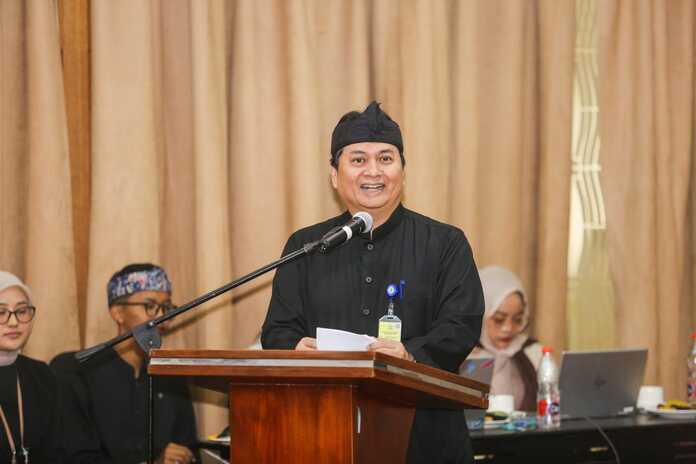
“This increase shows that transactions are increasingly shifting to non-cash systems. We have been widely using cashless schemes, including the utilization of the Indonesian Government Credit Card (KKI),” stated an official present at the HLM.
The use of KKI is considered more effective compared to manual transfer payments. Besides speeding up the process, all transactions are recorded digitally, facilitating oversight.
“With the credit card, the entire transaction trail is automatically recorded. This minimizes the potential for leakage as there are no longer any unrecorded payments,” they explained.
From an evaluation perspective, several regions such as West Java and other regencies/cities, including Bogor and Nganjuk, are also used as comparisons in the central government’s assessment.
Regarding the impact on the public, it was emphasized that the push to expand digital transactions aligns with the national agenda. Excessive cash circulation in the field is considered more difficult to monitor, while digital transactions allow the government to read revenue potential more accurately.
“If all transactions are recorded, we can map opportunities and minimize leakage. That is what we want to encourage,” they continued.
It was confirmed that the digitalization of services and transactions will continue to be expanded to enhance transparency, efficiency, and the quality of public services.
At the same location, the Head of the Bandung City Regional Revenue Agency (Bapenda) conveyed that this meeting is a follow-up to the performance evaluation of the TP2DD, which was established on July 21, 2021.
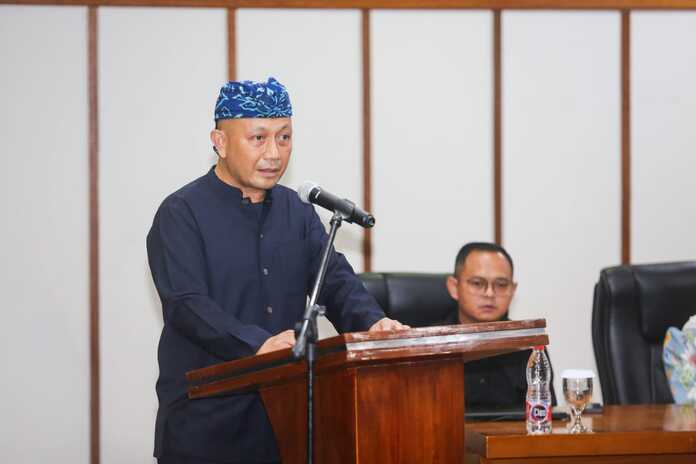
“This High Level Meeting is a strategic forum to discuss and make important decisions regarding the acceleration of regional government transaction electronification,” they stated.
It was revealed that the Bandung City Regional Government Transaction Electronification (ETPD) Index for the first semester of 2025 achieved high scores: 100% in the implementation aspect, 92.5% in the realization aspect, and 100% in the strategic environment aspect.
According to the official, there are six main objectives of the TP2DD: Accelerating and expanding regional digitalization. Increasing Regional Original Revenue (PAD). Strengthening coordination and synergy between institutions.
Furthermore, formulating strategic recommendations, encouraging the realization of a cashless society, and controlling regional inflation.
“With increasingly mature digitalization, we hope that public services in Bandung City will become faster, easier, and more accountable,” they concluded.
Bandung City Government
The Bandung City Government is the administrative body governing Bandung, Indonesia, a city founded in 1810 by the Dutch. Historically known as the “Paris of Java” for its European-style architecture and planning, the modern city government now manages one of the country’s most populous and culturally significant metropolitan areas.
Regional Digitalization Acceleration and Expansion Team (TP2DD)
The Regional Digitalization Acceleration and Expansion Team (TP2DD) is an Indonesian government initiative launched to accelerate digital transformation across the country’s regions. It was established to improve public services, boost the digital economy, and bridge the digital divide by implementing technology and infrastructure projects at the local level.
Regional Government Transaction Electronification (ETPD)
The Regional Government Transaction Electronification (ETPD) is an Indonesian digital initiative designed to modernize and streamline public service transactions at the regional government level. It was launched to increase efficiency, transparency, and accessibility by moving bureaucratic processes online. This system represents a key part of Indonesia’s broader efforts to digitize its public administration and reduce in-person paperwork.
Indonesian Government Credit Card (KKI)
The Indonesian Government Credit Card (Kartu Kredit Indonesia or KKI) is not a cultural site or a physical place, but a government program. It was a financial inclusion initiative launched to provide civil servants with access to credit for productive purposes and essential needs. The program was designed to offer a formal and structured credit facility as an alternative to informal lenders.
West Java
West Java is a province of Indonesia located on the island of Java, with a rich history as the core of the Sundanese Kingdom and later the powerful Hindu Kingdom of Pajajaran. It is home to vibrant cultural traditions like Angklung music and Wayang Golek puppet theater. The region is also famous for its stunning volcanic landscapes, including the Tangkuban Perahu volcano, and the bustling modern capital city of Bandung.
Bogor
Bogor is a city in West Java, Indonesia, historically known as “Buitenzorg” during the Dutch colonial era. It is most famous for the Bogor Botanical Gardens, which were established in 1817 and house thousands of plant species. The city also features the Bogor Presidential Palace, a former colonial residence that underscores its historical significance.
Nganjuk
Nganjuk is a regency in East Java, Indonesia, known for its significant historical heritage from the Medang Kingdom. Its most famous cultural site is Candi Ngetos, a Hindu temple believed to be the burial place of King Hayam Wuruk’s successor from the Majapahit Empire. The area serves as an important archaeological region that reflects the area’s ancient Javanese Hindu-Buddhist history.
Bandung City Regional Revenue Agency (Bapenda)
The Bandung City Regional Revenue Agency (Bapenda) is the official local government body responsible for managing and collecting local taxes and levies in Bandung, Indonesia. It was established to support regional autonomy and finance local development projects. Its history is tied to the implementation of Indonesian laws on regional governance and financial management, which granted cities greater authority to generate their own revenue.