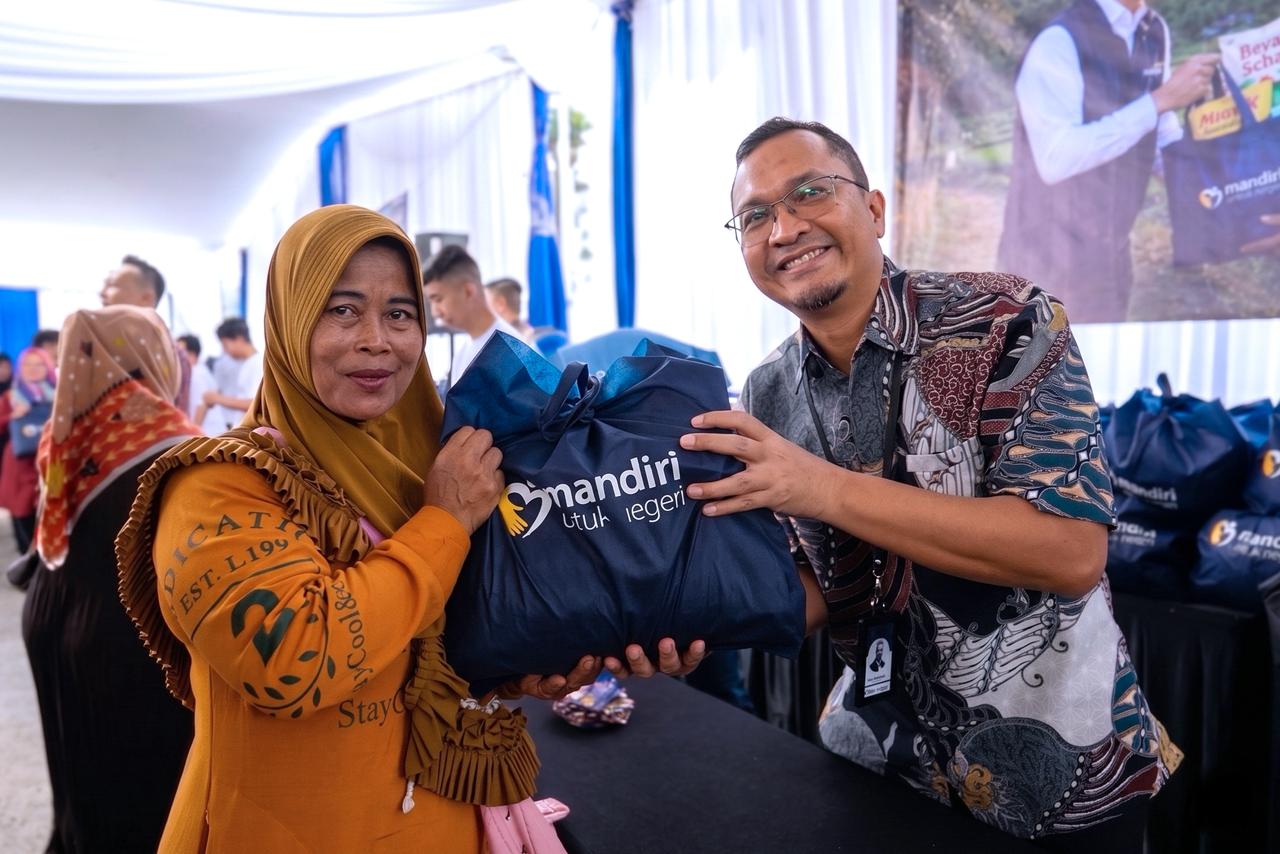
Commemorating National Awakening Day, Bank Mandiri reaffirmed its commitment to be present and provide tangible benefits to the community through the Mandiri Shares Basic Food social initiative. Through this initiative, Bank Mandiri distributed thousands of basic food packages to underprivileged residents and informal sector workers in the Bandung area and its surroundings.
Nationally, this program was implemented at 10 locations across various regions of Indonesia from May 12 to 20, 2026, reaching a total of 28,000 beneficiaries. Meanwhile, in Bandung, Bank Mandiri distributed 2,800 basic food packages as a tangible contribution from the company in supporting community welfare while strengthening the spirit of togetherness and mutual cooperation.
The beneficiaries of this program include various groups of informal workers and vulnerable communities who play an important role in supporting daily economic activities.
Regional CEO of Bank Mandiri Region VI/West Java Adityo Wicaksono stated that the Bank Mandiri Shares Basic Food program is part of the company’s commitment to continuously strengthen sustainable social care across its operational areas.
“Through this program, we aim to provide assistance that can be directly felt by the community, especially informal sector workers and vulnerable groups in the Bandung area and its surroundings. This initiative is also part of Bank Mandiri’s commitment to continue serving the community inclusively and sustainably,” said Adityo in his official statement on Wednesday (20/5/2026).
According to him, the momentum of National Awakening Day serves as a reminder of the importance of strengthening the commitment to Serve Wholeheartedly and the spirit of mutual cooperation through concrete actions that have a positive impact on the wider community. Therefore, Bank Mandiri continues to strengthen its role as a development agent through various social programs that are adaptive to community needs.
To ensure the activity runs orderly and reaches the right targets, Bank Mandiri collaborates with local officials and community coordinators in the aid distribution process. Beneficiaries are also divided into several collection sessions to maintain the smooth running of the activity and avoid queue buildup at the implementation locations.
The basic food packages distributed consist of various essential needs, such as rice, sugar, cooking oil, tea bags, and biscuits. This aid is expected to help alleviate the community’s expenses while supporting the economic resilience of the beneficiaries.
Going forward, Bank Mandiri will continue to maintain the sustainability of various social programs that have a direct impact on communities across the company’s operational areas. The Mandiri Shares Goodness initiative is part of Bank Mandiri’s ongoing commitment to strengthening inclusive social contributions and encouraging the spirit of mutual cooperation to support the welfare of the Indonesian people.
“Bank Mandiri is committed to continuing to present social programs that are adaptive to community needs and capable of creating sustainable added value for the surrounding environment as part of Mandiri’s tangible contribution to the Nation,” concluded Adityo.