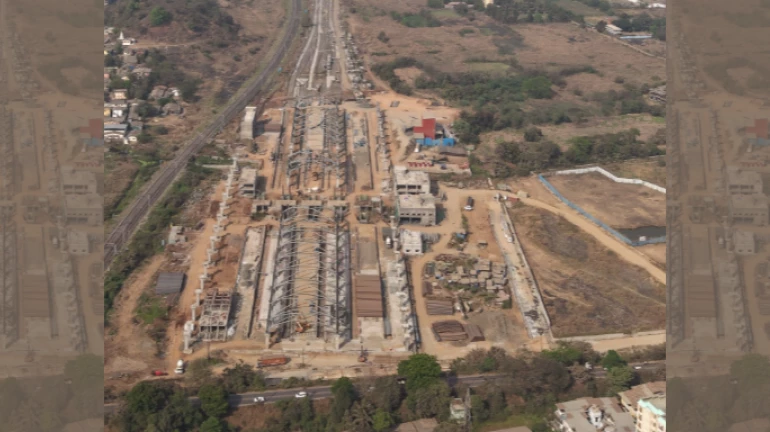
While metropolitan regions like Mumbai and Navi Mumbai continue to witness elevated property prices, Karjat offers comparatively larger living spaces, greener surroundings, and a healthier lifestyle at significantly lower costs.
For years, Karjat was largely viewed as a weekend getaway or second-home destination for Mumbai residents seeking peace away from the city’s chaos. However, the narrative around the region is now beginning to shift rapidly. With major infrastructure upgrades, improving connectivity, growing social infrastructure, and rising lifestyle aspirations, Karjat is steadily emerging as a potential first-home destination for homebuyers looking beyond Mumbai’s expensive real estate landscape.
The transformation is being driven by a combination of affordability and accessibility. While metropolitan regions like Mumbai and Navi Mumbai continue to witness elevated property prices, Karjat offers comparatively larger living spaces, greener surroundings, and a healthier lifestyle at significantly lower costs. This value proposition is increasingly attracting young families, professionals working in hybrid setups, retirees, and even first-time homebuyers.
One of the biggest catalysts behind Karjat’s growing residential appeal is infrastructure development. The Mumbai Trans Harbour Link (MTHL), Navi Mumbai International Airport, Virar-Alibaug Multi-Modal Corridor, JNPT-Chowk Highway, expansion of road networks, and improved rail connectivity are expected to significantly reduce travel time and improve regional integration over the coming years. Additionally, the proposed Panvel-Karjat suburban rail corridor is expected to further strengthen accessibility and unlock large-scale residential growth in the region.
The enhanced connectivity is changing buyer perception. Karjat is no longer seen as a distant outskirts location but as an emerging extension of the Mumbai Metropolitan Region (MMR). As commuting infrastructure improves, the possibility of residing in Karjat while working in Navi Mumbai, Thane, or even parts of Mumbai is becoming increasingly viable.
According to industry experts, the region is currently at an inflection point where planned development and infrastructure-led growth could reshape its residential identity over the next five years.
One director from ORA Land (by ORA Group) said, “Karjat is witnessing a gradual but very promising transition from being purely a second-home destination to becoming a location that can support end-use residential living. Infrastructure projects across the MMR region are significantly improving connectivity, while Karjat’s strategic location which is approximately 60 minutes from Mumbai through upcoming infrastructure corridors is further strengthening its appeal. Buyers are also becoming more open to destinations that offer a better quality of life. The demand today is not just about owning a holiday home, but about creating a sustainable lifestyle with open spaces, wellness, and affordability. Karjat naturally fits into this aspiration.”
They further added, “Over the next five years, we expect stronger social infrastructure, improved transportation, and planned developments to further enhance the liveability quotient of Karjat. With rising urban congestion and property prices in core cities, many homebuyers are actively evaluating peripheral growth corridors that offer long-term value and lifestyle benefits.”
The Founder President and Chairman of NAREDCO Raigad commented, “The Navi Mumbai International Airport is a complete game-changer for the larger MMR region. Locations such as Karjat, Neral, Panvel, and Khalapur will need to be viewed from a completely different perspective, with the airport becoming the new centre of economic and residential growth. Historically, we have seen how airports transformed cities like Hyderabad and Bengaluru, where entirely new growth corridors emerged around them. A similar transformation is expected here as well.”
They further added, “The airport is not just an infrastructure project; it is an economic catalyst. It is already driving large-scale commercial and economic activity across the region, including commercial parks, logistics hubs, educational institutions, hospitality projects, and entertainment zones. Alongside this, upcoming infrastructure such as new highways, improved road networks, and railway connectivity will make travel faster, smoother, and far more convenient. Over the next five years, these developments will create entirely new residential and commercial destinations around the airport ecosystem. Karjat, Neral, and Khalapur are therefore well-positioned to emerge as strong first-home destinations for buyers seeking affordability, connectivity, and long-term growth potential.”
Beyond infrastructure, social development is also gaining momentum. Educational institutions, healthcare facilities, retail outlets, hospitality projects, and lifestyle amenities are gradually expanding in and around the Karjat belt. This ecosystem development is critical in supporting permanent residential communities rather than merely seasonal occupancy.
Another major advantage Karjat holds is its natural environment. Surrounded by hills, rivers, and greenery, the region offers a lower-density lifestyle that is becoming increasingly