-
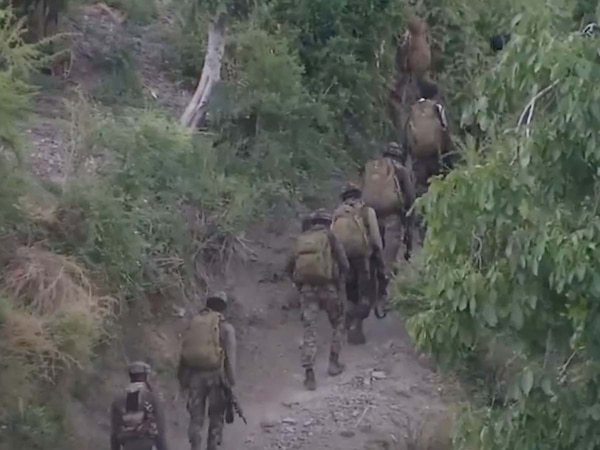
Jammu Kashmir Anti Terror Operation News: The ‘Operation Sherwali’ being conducted by security forces in Rajouri, Jammu and Kashmir, has now reached a critical phase. Late Thursday evening, heavy firing and shelling occurred in the Dorimal forest area of Rajouri. Following this, troops tightened the encirclement to eliminate suspected terrorists hiding in the dense forests.
Strong deployment of security forces in the forest
According to officials, heavy deployment of security forces has been made at the encounter site. Additional troops and necessary logistical support have also been sent to the location. Security agencies are attempting to create a strong and impenetrable cordon to prevent terrorists from taking advantage of the dense forests to escape.
According to officers involved in the operation, this operation is being conducted on a large scale. The entire area is under tight security surveillance. Search and combing operations within the forest are ongoing continuously. Every possible effort is being made to eliminate the terrorists hiding in the forest.
‘Operation Sherwali’ enters its sixth day
This operation, named ‘Operation Sherwali’, involves troops from the Indian Army, Jammu and Kashmir Police, and CRPF. It is being conducted jointly in the forests of Gambhir Mughlan and Dorimal in the Manjakot sector of Rajouri district. The operation involves encirclement and search of the area. This operation has now entered its sixth day.
Major operation launched in recent days
According to sources, this operation was launched after receiving specific intelligence about the presence of suspected terrorists in the area. Security forces are still maintaining a tight cordon of the area and efforts are ongoing to flush out terrorists hiding in the dense forests. This is a major joint counter-terrorism operation launched against terrorists in recent days. Its aim is to eliminate pro-Pakistan terrorists.
Rajouri
Rajouri is a historic town in the Jammu region of India, known for its strategic location in the Pir Panjal range. It has a rich history dating back to ancient times, serving as a key stop on the old trade route between Kashmir and the rest of India, and was once part of the princely state of Jammu and Kashmir. The area is also famous for its scenic beauty, including the nearby Rajouri Fort and the Shahdara Sharief shrine.Jammu and Kashmir
Jammu and Kashmir is a region in the northern Indian subcontinent, known for its stunning Himalayan landscapes and rich cultural heritage. Historically, it emerged as a princely state under the Dogra dynasty in the 19th century and became a disputed territory after the partition of India in 1947, leading to ongoing conflicts between India, Pakistan, and China. The region is renowned for its distinct Kashmiri culture, including traditional crafts like Pashmina shawls and the iconic Dal Lake.Dorimal forest
Dorimal Forest is a lush, ecologically rich area located in the Himalayan foothills of northern India, near the town of Nainital. Historically, it was part of the dense forests that served as a natural resource for local communities and later became a protected area to conserve its diverse flora and fauna. Today, it is recognized for its scenic beauty, biodiversity, and as a popular destination for nature walks and wildlife observation.<div class="my-4 p-4 rounded-lg shadow-md bg-blue
Rajouri Fort
Rajouri Fort, located in the Rajouri district of Jammu and Kashmir, India, is a historic hill fort with origins dating back to the 13th century, though its current structure largely reflects Mughal and Dogra architectural influences. It was originally built by local Rajput rulers and later captured by the Mughals, serving as a strategic military outpost due to its commanding position over the surrounding valleys. The fort offers panoramic views and stands as a testament to the region’s turbulent history, including its role in the 1947-48 Indo-Pakistani War.Shahdara Sharief shrine
The Shahdara Sharief shrine, located in the Jammu region of India, is a revered Sufi shrine dedicated to the 16th-century saint Hazrat Syed Abdul Qadir Jeelani (also known as Pir Hadi). It was established during the reign of the Mughal emperor Akbar, and the site is known for its annual Urs festival, which attracts thousands of devotees from various religious backgrounds who come to pay homage and seek blessings. The shrine complex features a distinctive white marble dome and serves as a symbol of communal harmony and spiritual devotion in the region.Pir Panjal range
The Pir Panjal range is a prominent mountain range in the Indian Himalayas, located primarily in the states of Himachal Pradesh and Jammu and Kashmir. Historically, it served as a key passage for ancient and medieval trade routes, including the famous Mughal Road connecting the Kashmir Valley to the plains, and was often crossed by invaders and travelers alike. The range is also known for its scenic passes, such as the Pir Panjal Pass, and holds cultural significance as a natural barrier dividing the Himalayan and Trans-Himalayan regions.Dal Lake
Dal Lake, located in Srinagar, Jammu and Kashmir, is a renowned freshwater lake known for its floating gardens, houseboats, and shikaras. Its history dates back to the Mughal era, when it served as a leisure spot for emperors, and it later became a center of trade and tourism during the British colonial period. Today, it remains a vital cultural and economic hub, though it faces environmental challenges due to pollution and encroachment.Dorimal forest
The Dorimal Forest is a dense, ancient woodland located in the Kashmir region of India, known for its rich biodiversity and serene landscapes. Historically, it has been part of the traditional routes used by local shepherds and traders, and it holds cultural significance for nearby communities due to its association with local folklore and spiritual retreats. Today, the forest is valued for its ecological importance and as a destination for nature lovers seeking tranquility away from urban areas.Gambhir Mughlan
Gambhir Mughlan is a historic village located in the Punjab region of Pakistan, known for its rich cultural heritage and agricultural landscape. Its name, meaning “deep Mughal,” reflects its historical ties to the Mughal Empire, which influenced the area’s architecture, traditions, and local governance. Today, the village is recognized for preserving elements of Mughal-era customs and rural Punjabi life.Manjakot sector
The Manjakot sector, located in the northern region of the Indian subcontinent, is historically significant as a part of the ancient kingdom of Kashmir. It is known for its scenic landscapes and cultural heritage, though specific historical records about the sector are limited. Today, it remains a primarily rural area, reflecting the traditional lifestyle and customs of the broader Kashmir Valley.Jammu and Kashmir
Jammu and Kashmir is a region in the northern part of the Indian subcontinent, known for its stunning Himalayan landscapes and rich cultural heritage. Historically, it was a princely state under British rule before acceding to India in 1947, a decision that led to ongoing territorial disputes with Pakistan. The region encompasses the Kashmir Valley, Jammu, and Ladakh, and has a diverse history influenced by Hindu, Buddhist, and Islamic traditions.