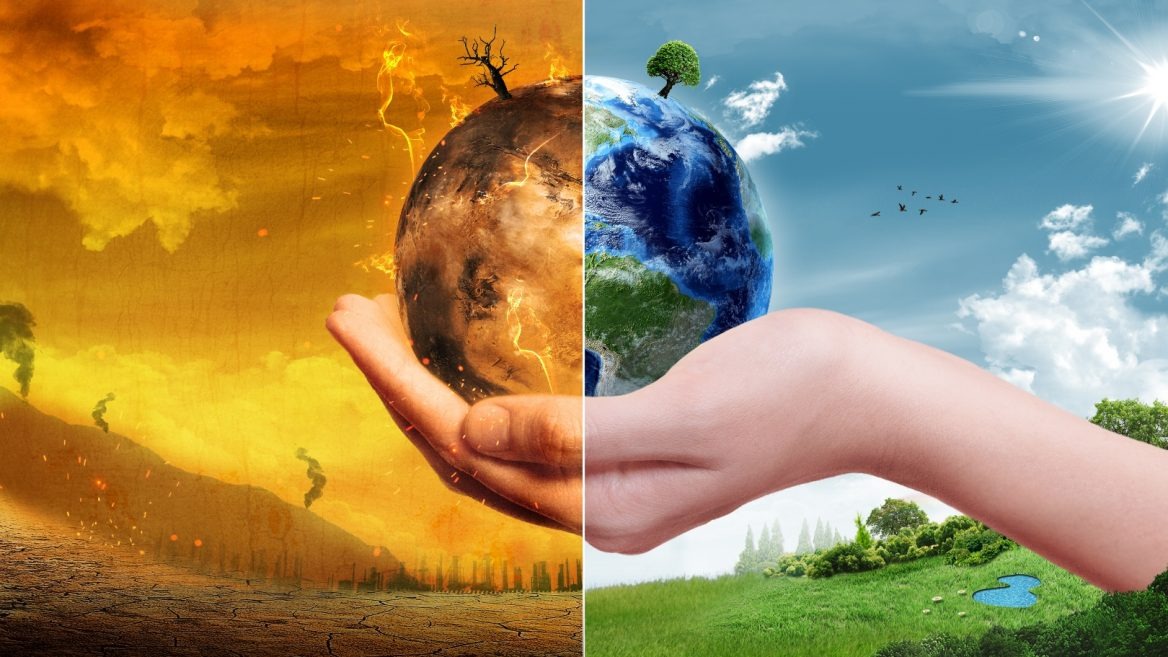
‘Your fierce destruction’
Intense heatwaves are scorching vast regions of northern, northwestern, and central India. The temperature in the capital itself has long crossed 45 degrees Celsius. In Banda, Uttar Pradesh, temperatures have reached nearly 49 degrees Celsius. Across Bundelkhand, the heatwave is so severe that farmers are working their fields late at night under LED lights. Bengal is also burning. This year, the impact of climate change has been compounded by the excessive warming of the central and eastern equatorial Pacific Ocean, known scientifically as El Niño. According to a report from the U.S. National Oceanic and Atmospheric Administration (NOAA) on May 26, 2026, there is at least an 82% chance of El Niño intensifying between May and July this year. The world previously witnessed the most severe impact of El Niño from 1876 to early 1878. This year, El Niño’s effects are set to be a curse, primarily across the Northern Hemisphere. This will lead to abnormal ocean warming, relentless heatwaves, drought, food security issues, and public health crises. Additionally, rainfall from the upcoming southwest monsoon in India is expected to be significantly below normal. At least, that is what the Indian Meteorological Department indicated in its report published on April 23. Typically, the monsoon brings about 70% of total annual rainfall, averaging 870 millimeters in India. But this year, the likelihood of monsoon rainfall exceeding 800 millimeters is virtually nonexistent. Directly affected will be 60% of farmers who depend on monsoon rains. It is worth noting that in 2009, due to a relatively weak El Niño, monsoon rainfall in India dropped to 78.2% of the long-term average, the lowest record in 87 years. Moreover, about 150 crore people and an agricultural economy worth at least $400 trillion depend on monsoon rains. Since one-third of India’s consumer price index is based on food grains, reduced rainfall means a devaluation of this index and, consequently, rampant price hikes. Currently, about 6% of India’s total power generation is hydropower. Reduced rainfall leads to lower river flows, which in turn threatens to significantly disrupt hydropower production. Alongside this, people are suffering from relentless heatwaves caused by rising temperatures due to climate change, especially informal workers, who make up nearly 90% of India’s total workforce.
Scientists fear that 2026 will break all records for prolonged heatwaves. According to the Global Climate Risk Index (2026) published by Germanwatch at the World Climate Conference last November, India has moved from 15th place to 9th among the top ten most vulnerable countries. According to that report, in 2024 alone, 3.3 crore people were directly affected by heatwaves. From 2008 to 2019, an average of 1,116 people died annually in India due to severe heatwaves, although the actual number is much higher, as most heatwave-related deaths are not properly documented in India.
Sea levels are rising due to global warming. The Intergovernmental Panel on Climate Change (IPCC) reports that sea levels have risen by 20 centimeters since 1850, almost entirely in the last 30 years. If this trend continues, sea levels could rise by at least half a meter by the end of this century. It is worth noting that just three decades ago, the Antarctic ice sheet was six times larger than today. It is important to remember that melting polar ice sheets is not the same as melting glaciers. If all the world’s glaciers melted, sea levels would rise by at most 24 centimeters; but if all polar ice sheets melted, sea levels would rise by 65 meters—300 times more. A recent study published in Nature Reviews Earth and Environment shows that at least 3,100 glaciers worldwide are rapidly retreating, with a significant portion located in the Karakoram mountain range. Of these, 81 are in a very critical state, and there is a high risk that surrounding settlements could be buried under ice at any time.
In a research paper published in the journal Nature on April 22, 2026, Isabella S. Tagomori and her colleagues state that unless strict controls on fossil fuel use are implemented, it will be virtually impossible to limit global warming to 1.5 degrees Celsius above pre-industrial levels by the end of this century, as per the Paris Climate Agreement. If current trends continue, warming could reach 3.4 degrees Celsius by the century’s end. Even if countries meet their voluntary carbon emission reduction targets, warming of up to 2.8 degrees Celsius cannot be avoided. The World Meteorological Organization’s report