The BJP has set out to destroy democracy through the Election Commission. That is the purpose of the SIR. And before the elections, speeches are being made to restore democracy in the state. Democracy is under attack under the Trinamool Congress government. To restore it, the alternative is the leftists.
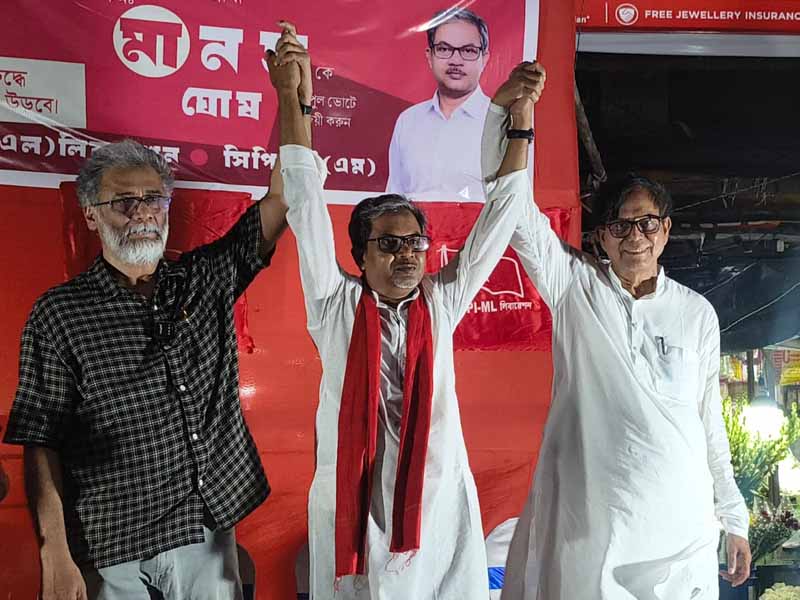
On Tuesday, at the election rally in Kolkata’s Rashbehari, CPI(M) state secretary Mohammed Salim and CPI(ML) Liberation general secretary Dipankar Bhattacharya spoke along these lines.
That day, a public meeting was held in support of Manas Ghosh, the Left Front-supported CPI(ML) Liberation candidate for the Rashbehari constituency. Speeches were also given by Liberation’s Kolkata district secretary Atanu Chakraborty, among others.
That day, Dipankar Bhattacharya said that a broader unity of leftists has developed in West Bengal. He said, “We have seen many changes in Bengal, but we have never seen an election like this one. An attempt is being made to take over Bengal. The Election Commission’s job is to ensure that no one is deprived of their voting rights. But now the task has become to remove as many names from the rolls as possible. This is the first time that the voting rights of millions of people have been snatched away.”
He said, “If a bomb explodes at the Red Fort, the military is not brought in. But before this election, this state has been turned into a military camp.”
He said that the central government was hastily trying to pass the delimitation bill in the name of women’s reservation. The reason is to redraw constituency boundaries in such a way that the opposition cannot win.
He said, “Do not hand Bengal over to the BJP. Reject them. The workers of Bengal are being called Bangladeshis and persecuted. What is happening in Noida, where there is a double-engine government?”
Dipankar Bhattacharya said, “The Trinamool Congress has been in power for 15 years. But all their leaders face corruption allegations. And ordinary unemployed youth are suffering the consequences. Incidents like Abhaya are happening. Now they are making a big noise about women’s reservation. But neither government says a word about women’s safety.”
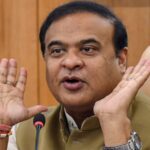
Salim said, “This election is being held under the shadow of the SIR. The Commission could not prepare an accurate voter list. The BJP and the Sangh Parivar are using the term ‘Rohingya’. Himanta Biswa Sarma said Bengal must be made like Assam. In Assam, they have banned Rabindranath’s songs.”
He said, “Attacks on Bengal began even before the BJP was born. We have fought here for people’s rights—over education, health, and employment. Playing politics with religion will not work here. Having understood this, they are now spreading propaganda using terms like ‘Rohingya’ and ‘Jihadi’. Where has this cultivation of poison brought Bengal today?”
Salim questioned, “Where does India stand? We were the leader of the third world. We said we would not be the tail of America. What is the condition in states with double-engine governments? Even there, farmers do not get fair prices for their crops.”
Salim said, “We wanted the election to be fought on people’s demands, but they wanted to fight it on religion. They have set out to destroy democracy using the ‘knowledge sinner’ Gyanesh Kumar. And now the BJP says it will restore democracy. They have used religion as a shield to commit misdeeds.”
Salim said, “If the opposition is a sham in the assembly, then the elected representatives fail to work. When elected representatives fail, it leads to goonda raj and corruption raj.” He said that is why it is essential to elect representatives who do politics based on people’s real needs.
Salim said, “Today, both the BJP and the Trinamool Congress have to talk about education and employment. This is a victory for the leftists. This demand is strengthening across the state. We must come together to protect people’s interests. The red flag must be strengthened.”