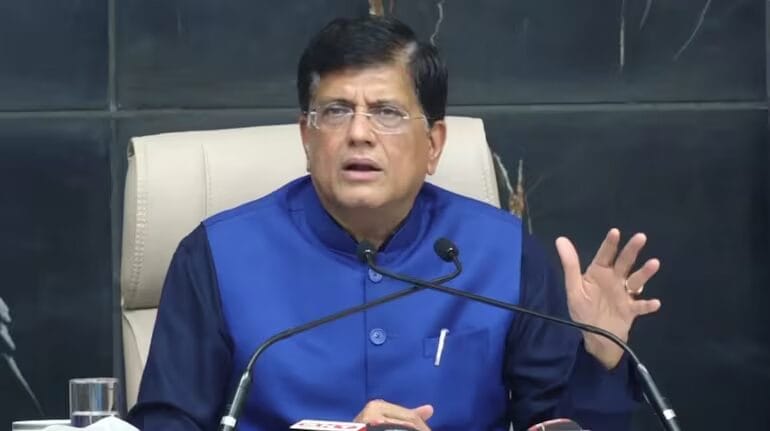
New Delhi: Commerce and Industry Minister Piyush Goyal said on Thursday that a US team may visit India next month for trade talks. The Indian side held face-to-face meetings with US counterparts in Washington DC in April to finalize details of an interim agreement and advance negotiations under a comprehensive bilateral trade agreement (BTA).
When asked if the US chief negotiator for the BTA would accompany US Secretary of State Marco Rubio, Goyal said, “He is not coming with them, but he plans to visit next month.” Rubio will embark on a four-day visit to India starting May 23, aimed at advancing cooperation in trade, defense, and energy sectors. This will be his first visit to India.
10 percent additional tariff imposed
India and the US issued a joint statement on February 7, finalizing a framework for an interim trade agreement. However, a US Supreme Court ruling invalidated all retaliatory tariffs that the US administration had been using as a tool to secure trade deals with partner countries.
Subsequently, the US imposed an additional 10 percent tariff on all imports under Section 122 of the Trade Act for 150 days, effective February 24 this year. Additionally, it launched two investigations under Section 301 against major exporters regarding their excess production capacity and labor standards.
Under Section 122, a tariff of up to 15 percent can be imposed for a maximum of 150 days. Under Section 301, if investigations find that trading partners’ actions harm US interests, there is no limit on tariffs. India has submitted its responses to both investigations, and consultations between the two sides are ongoing.
This figure will likely exceed $60 billion
Goyal said at an event that several major US companies have announced investments in India, as the country remains a preferred investment destination globally. He said, “If I look at the various investment commitments from US industry over the last six months, this figure will likely exceed $60 billion. Look at Amazon’s data center investments and Google’s data center investments. My understanding is that the US and India are working like natural partners. We complement each other.”
India should collaborate with the US in areas such as technology, innovation, high-precision defense, digital data centers, quantum computing equipment, and medical devices. He said, “We can expand US innovation through the aspirations of 1.4 billion ambitious Indians, a growing middle class, rising incomes, and a growing economy. So it is no surprise that amid global crises, with the Ukraine war ongoing and the West Asia crisis, the world is going through turmoil.”
Companies should consider paying these units within seven days of accepting goods
The minister said the current situation is an appropriate opportunity for India and the US to work together and build more reliable and robust supply chains. On testing facilities, he said the Bureau of Indian Standards, the Export Inspection Agency, and the National Testing Agency are ready to assist the industry in setting up facilities equipped with modern and superior equipment.
On ways to promote micro, small, and medium enterprises (MSMEs), he suggested that US companies operating in India should consider paying these units within seven days of accepting goods, which would accelerate cash flow. He said this would allow MSMEs to focus on their business and also offer discounts in exchange for early payments, making products more competitive.