The truth has come out in the Malegaon blast case.
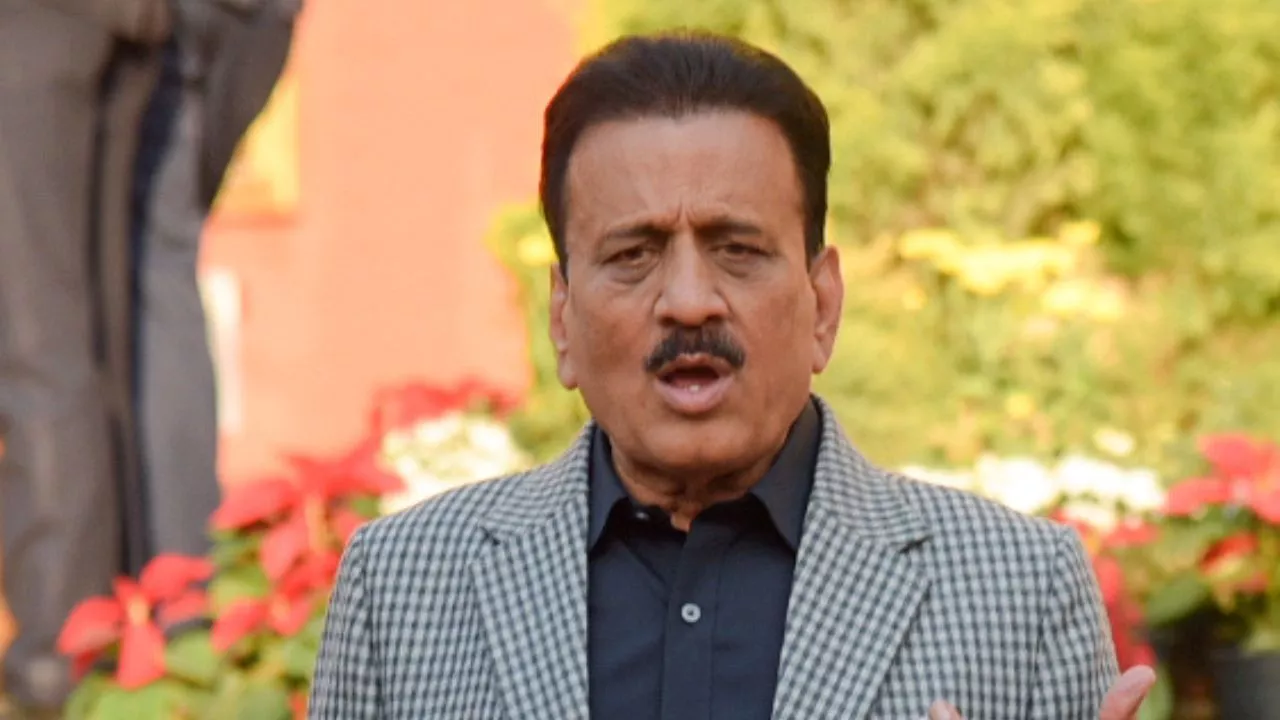
Mumbai, Maharashtra minister and Bharatiya Janata Party (BJP) leader Girish Mahajan alleged on Wednesday that some people were falsely implicated in the 2006 Malegaon blast case, but the truth has now come to light after the Bombay High Court acquitted four accused.
Girish Mahajan made this comment while speaking to reporters here after the High Court acquitted four accused — Rajendra Chaudhary, Dhan Singh, Manohar Ram Singh Narwaria, and Lokesh Sharma — and set aside the special court’s order framing charges against them. These accused were charged under various sections of the Indian Penal Code related to murder and criminal conspiracy, as well as the stringent Unlawful Activities (Prevention) Act (UAPA).
Speaking to reporters after the court’s decision, Mahajan said, “The Congress party made the Malegaon blast case a very big issue. Some people were implicated in this case without any reason. Now the truth has come out.” He said, “The accused have been released (acquitted). They were deliberately framed.” Mahajan alleged that the case was politicized and that the court’s latest order has vindicated those who have been consistently saying that innocent people were targeted.
2006 Malegaon Blasts Killed 31, Injured Over 300
On September 8, 2006, four bomb blasts occurred in the town of Malegaon in Nashik district. Three of these blasts occurred at the Hamidia Mosque and Bada Kabristan complex shortly after Friday prayers, while the fourth blast occurred at Mushawarat Chowk. The incident killed 31 people and injured 312 others.
The initial investigation into the case was conducted by the state Anti-Terrorism Squad (ATS), which arrested nine Muslim youths in connection with the case. The National Investigation Agency (NIA), which later took over the investigation, claimed that these blasts were the work of right-wing extremists. The NIA had arrested these four accused.
Mumbai
Mumbai, formerly known as Bombay, is a bustling coastal city and the financial capital of India. Originally a collection of seven islands inhabited by fishing communities, it was ceded to the British as part of a royal dowry in 1661 and rapidly grew into a major colonial port and trading hub. Today, it is a vibrant metropolis known for its iconic landmarks like the Gateway of India, Bollywood film industry, and diverse cultural heritage.
Malegaon
Malegaon is a city in the Nashik district of Maharashtra, India, with a history dating back to the Mughal era when it was founded as a military cantonment. It later became a significant center for the power loom textile industry, earning the nickname “Manchester of Maharashtra.” Today, Malegaon is also famous for its unique, low-budget parody film industry, often referred to as “Malegaon’s Hollywood.”
Bombay High Court
The Bombay High Court, located in Mumbai, India, is one of the oldest high courts in the country, established in 1862. Its iconic neo-Gothic building, designed by British architect John Augustus Fuller, was completed in 1878 and stands as a landmark of colonial-era architecture. The court has played a pivotal role in Indian legal history, handling significant cases and serving as the seat of justice for the state of Maharashtra, Goa, and the Union Territories of Daman and Diu and Dadra and Nagar Haveli.
Hamidia Mosque
Hamidia Mosque, located in Bhopal, India, was built in the 19th century under the patronage of Sultan Shah Jahan Begum, one of the city’s notable female rulers. It is a prominent example of Mughal-inspired Islamic architecture, featuring intricate minarets and domes. The mosque remains an active place of worship and a key historical landmark in Bhopal.
Bada Kabristan
Bada Kabristan is a historic cemetery located in the city of Hyderabad, India, known for its large, ornate tombs and mausoleums dating back to the 17th and 18th centuries. It served as the final resting place for many nobles and officials of the Qutb Shahi dynasty, reflecting the region’s rich Islamic architectural heritage. The site is notable for its unique blend of Persian, Indian, and Deccan styles, offering a glimpse into the cultural and historical legacy of the era.
Mushawarat Chowk
Mushawarat Chowk, located in the old city of Lahore, Pakistan, is a historic square known for its role as a gathering place for public consultations and political discussions during the Mughal era. The name “Mushawarat” translates to “consultation” in Urdu, reflecting its use as a venue where community leaders and citizens would convene to deliberate on important matters. Today, it remains a symbol of Lahore’s rich cultural heritage and its tradition of civic engagement.
Nashik district
Nashik district, located in the Indian state of Maharashtra, is historically significant as the site of the ancient Kumbh Mela, a major Hindu pilgrimage held every 12 years along the Godavari River. It is also linked to the Ramayana, believed to be where Lord Rama, Sita, and Lakshmana spent part of their exile. Today, the district is known for its religious sites, vineyards, and as a growing industrial and wine-producing region.
Malegaon blast case
The Malegaon blast case refers to a series of bomb explosions that occurred on September 8, 2006, in the town of Malegaon, Maharashtra, India, killing at least 37 people and injuring over 100. Initially suspected to be linked to Islamist extremists, the investigation later shifted focus to Hindu right-wing groups, leading to the arrest of several individuals, including prominent figures. The case has been marked by legal complexities and controversies, with trials ongoing for years, highlighting communal tensions and the challenges of counterterrorism in India.