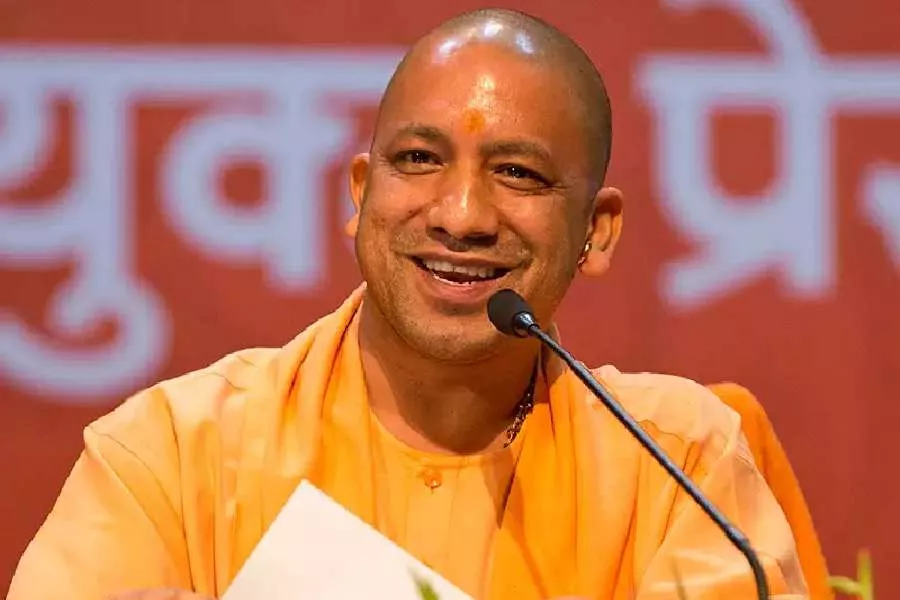
Gorakhpur (UP), Uttar Pradesh Chief Minister Yogi Adityanath listened to people’s grievances during the ‘Janata Darshan’ held at the Gorakhnath Temple and directed officials to resolve their problems promptly.

The Chief Minister instructed officials to take prompt action on complaints and ensure their quality and satisfactory resolution. Assuring the people who attended the Janata Darshan program, he said, “Do not worry. The government will ensure an effective solution to every problem you have.”

Yogi Listens to Problems During Janata Darshan, Issues Directions for Resolution

During the Janata Darshan held outside the Mahant Digvijaynath Memorial Building in the Gorakhnath Temple complex, Yogi Adityanath met with about 200 people. He listened to their problems, reviewed their petitions, took note of their complaints, and then referred them to the concerned administrative and police officers for resolution of issues related to different cases.

Yogi directed the officials that all problems should be resolved in a timely, fair, and satisfactory manner. During the Janata Darshan program, some people requested financial assistance for medical treatment. The Chief Minister assured them that no one’s treatment would be affected due to lack of funds.

Some women raised the issue of housing before the Chief Minister. In response, Adityanath assured them that the government is committed to providing permanent housing to every needy person under the Pradhan Mantri Awas Yojana. The Chief Minister directed officials to ensure that housing is made available to all eligible individuals deprived of permanent housing facilities.

Gorakhpur

Gorakhpur is a city in the northeastern part of the Indian state of Uttar Pradesh, historically significant as a center for Buddhist, Hindu, and Sufi traditions. It is named after the revered medieval saint Gorakhnath, whose temple, the Gorakhnath Math, is a major pilgrimage site. The city also served as a key British military cantonment and is known today as a major railway junction and the gateway to the Buddhist pilgrimage circuit that includes Kushinagar.

Uttar Pradesh

Uttar Pradesh is a state in northern India, historically known as the heartland of ancient and medieval Indian civilization. It is home to iconic cultural and religious sites like the Taj Mahal in Agra and the holy cities of Varanasi and Prayagraj, having been a central region for empires such as the Mughals and a key setting for the Indian epic, the Ramayana. Today, it is India’s most populous state and a major political and cultural center.

Gorakhnath Temple

The Gorakhnath Temple in Gorakhpur, India, is a major Hindu temple dedicated to Guru Gorakhnath, the founder of the Nath monastic movement. Historically, it is believed to have been established in the 12th century and serves as the central seat of the Nath tradition. The temple is a significant pilgrimage site, drawing devotees for its spiritual heritage and association with yogic practices.

Janata Darshan

“Janata Darshan” (meaning “People’s Audience”) is a traditional Indian public grievance redressal system, historically associated with political leaders, most notably Mahatma Gandhi. It involves leaders holding open, accessible meetings where citizens

Gorakhpur

Gorakhpur is a city in the Indian state of Uttar Pradesh, historically significant as a major center for Buddhism, Hinduism, and Sufism. It is named after the revered medieval saint Gorakhnath, whose temple is a key pilgrimage site. The city also served as a British military cantonment and is known as the gateway to the Buddhist pilgrimage circuit, with nearby sites like Kushinagar.

Uttar Pradesh

Uttar Pradesh is a state in northern India, historically known as the heartland of ancient and medieval Indian civilization. It is home to iconic cultural and religious sites like the Taj Mahal in Agra and the holy cities of Varanasi and Prayagraj, having been a central region for empires such as the Mughals and a key setting for the epic Ramayana. Today, it is India’s most populous state and a major political and cultural center.

Gorakhnath Temple

The Gorakhnath Temple in Gorakhpur, India, is a prominent Hindu temple dedicated to Guru Gorakhnath, the founder of the Nath monastic movement. Historically, it is believed to have been established in the 12th century and serves as the central seat of the Nath tradition. The temple is a major pilgrimage site, known for its spiritual significance and its association with yogic practices.

Mahant Digvijaynath Memorial Building

The Mahant Digvijaynath Memorial Building is a significant cultural and educational institution located in Gorakhpur, India. It was established in memory of Mahant Digvijaynath, a prominent spiritual leader and former head of the Gorakhnath Math, to honor his contributions to society. The building serves as a center for religious, social, and educational activities, reflecting his legacy of service and community development.

Pradhan Mantri Awas Yojana

“Pradhan Mantri Awas Yojana” (PMAY) is not a physical place or cultural site, but a flagship Indian government scheme launched in 2015. Its goal is to provide affordable housing to the urban and rural poor, aiming to achieve “Housing for All” by 2022. The program’s history is rooted in addressing India’s significant housing shortage and improving living standards through financial assistance and subsidies for home construction and renovation.

Gorakhnath Math

Gorakhnath Math is a prominent Hindu monastic institution and temple in Gorakhpur, India, dedicated to Guru Gorakhnath, the founder of the Nath monastic movement. Historically, it is believed to have been established in the 12th century and serves as the central seat of the Nath tradition, which emphasizes yoga, asceticism, and spiritual discipline. The site remains a major pilgrimage and cultural center, deeply influencing the region’s religious and social landscape.

Kushinagar

Kushinagar is a significant Buddhist pilgrimage site in Uttar Pradesh, India, revered as the place where Gautama Buddha attained Mahaparinirvana (final nirvana) after his death. Historically, it was known as Kushinara and was the capital of the ancient Malla kingdom, with archaeological excavations revealing stupas, monasteries, and the iconic reclining Buddha statue in the Mahaparinirvana Temple. Today, it remains a center of devotion and study, featuring temples built by various Buddhist communities from around the world.

Taj Mahal

The Taj Mahal is an immense white marble mausoleum located in Agra, India, built by Mughal Emperor Shah Jahan in memory of his favorite wife, Mumtaz Mahal. Constructed between 1632 and 1648, it is considered a masterpiece of Mughal architecture, blending Persian, Islamic, and Indian styles. Today, it is a UNESCO World Heritage Site and one of the most iconic symbols of love and architectural beauty in the world.

Related news

कारवान दादावाड़ी में चातुर्मास के संबंध में आयोजित बैठक

Preparations for Chaturmas discussed in Karvan Dadawadi.

Meeting held at Karwan Dadawadi regarding Chaturma...
आदिलाबाद में स्कूटर चलाते परिवहन मंत्री पोन्नम प्रभाकर।

Minister Ponnam wears helmet to convey road safety message.

Transport Minister riding a scooter in Adilabad. H...
हैदराबाद वीकेंड

Hyderabad Weekend Guide: 6 Exciting Activities for January 11th and 12th

Hyderabad Weekend Hyderabad welcomes you this week...
कारगिल युद्ध के नायक कर्नल जॉय दासगुप्ता एवं उनकी माँ का सम्मान करते मुख्यमंत्री रेवंत रेड्डी।

“Remembering the martyrs on Kargil Vijay Diwas”

Chief Minister Revanth Reddy honoring Kargil War h...

Three-Day Meditation and Health Retreat Organized

Successful organization of the meditation yoga ret...