Aam Aadmi Party will break its previous record in the 2027 Punjab elections.
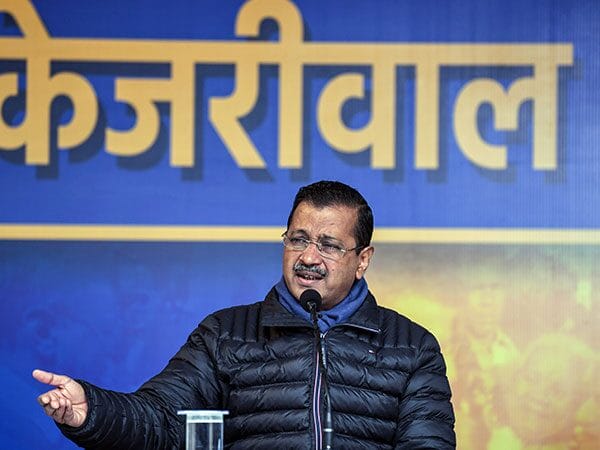
Chandigarh, Aam Aadmi Party (AAP) national convenor Arvind Kejriwal expressed confidence on Wednesday that his party will break its previous record in the 2027 Punjab assembly elections. He claimed there is a positive atmosphere towards the state government led by his party.
Kejriwal targeted opposition parties, saying they have no issues left now, so they are using abusive language against Chief Minister Bhagwant Mann. The AAP chief arrived in Ludhiana on a two-day visit to hold meetings with party leaders as part of preparations for the assembly elections. Chief Minister Bhagwant Mann was also present with him. Speaking to reporters in Ludhiana, the AAP chief said, “I am fully confident that in the upcoming assembly elections, the Aam Aadmi Party will break its previous record and we will perform well.”
The AAP chief said that after four years of the government, people have a very positive outlook towards the Aam Aadmi Party. Former Delhi Chief Minister Kejriwal said, “People are talking about our work, people are saying that electricity has been made free, people are saying that canal water has reached the fields. Now farmers are getting electricity during the day.”
Chandigarh
Chandigarh is a planned city in northern India, serving as the capital of both Punjab and Haryana. Designed by the renowned architect Le Corbusier in the 1950s after India’s partition, it was built to replace Lahore as the capital of Punjab and is famous for its modernist architecture and urban design. Key landmarks include the Capitol Complex, a UNESCO World Heritage Site, and the Rock Garden, a unique sculpture park made from industrial and urban waste.
Ludhiana
Ludhiana, a major city in the Indian state of Punjab, was founded in the 15th century by the Lodhi dynasty, from whom it derives its name. It grew significantly during the British colonial period as a key industrial and trading hub, particularly known for its textile and hosiery manufacturing. Today, it is a bustling metropolis, famous for its vibrant culture and as a center for the production of bicycles and auto parts.
Chandigarh
Chandigarh is a planned city in northern India, designed by the renowned architect Le Corbusier after India’s independence in 1947. Serving as the capital of both Punjab and Haryana, it is famous for its modernist architecture, grid-like layout, and iconic landmarks like the Capitol Complex and the Rock Garden. The city was built to symbolize a progressive, futuristic India, rising from the ashes of the partition of Punjab.
Ludhiana
Ludhiana is a major industrial city in the Indian state of Punjab, known for its textile and hosiery manufacturing. Historically, it was founded in 1480 by the Lodi dynasty, and later became an important center during the Sikh Empire under Maharaja Ranjit Singh. Today, it is the largest city in Punjab and a key hub for trade and industry.
Capitol Complex
The Capitol Complex in Chandigarh, India, is a UNESCO World Heritage site designed by the renowned architect Le Corbusier. It houses the three branches of the state government of Punjab and Haryana, including the Secretariat, the Legislative Assembly, and the High Court. Completed in the 1960s, it is celebrated as a masterpiece of modernist architecture and a symbol of post-independence India’s vision for a progressive future.
Rock Garden
The Rock Garden, also known as the Chandigarh Rock Garden, is a unique sculpture park in Chandigarh, India, created entirely from industrial and household waste. It was built secretly over several years by Nek Chand, a government road inspector, starting in the 1950s, using recycled materials like broken ceramics, bottles, and stones. The garden was eventually discovered by authorities in 1975, but public support turned it into an official tourist attraction, now featuring over 5,000 sculptures across a sprawling, maze-like landscape.
UNESCO World Heritage Site
A UNESCO World Heritage Site is a landmark or area recognized by the United Nations Educational, Scientific and Cultural Organization (UNESCO) for its outstanding cultural, historical, or natural significance. Established in 1972 through the World Heritage Convention, the designation aims to preserve and protect sites of universal value for future generations. Today, there are over 1,100 such sites worldwide, ranging from ancient ruins and historic cities to natural wonders and ecosystems.