News
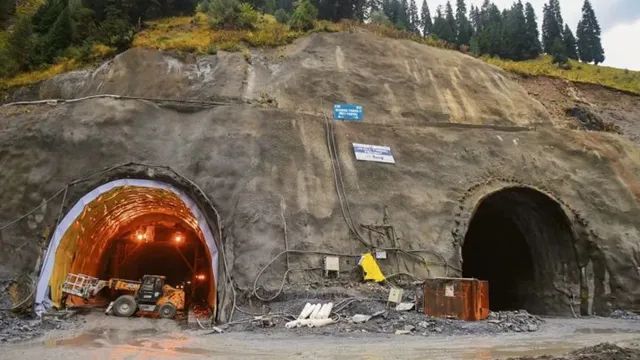
Zojila Tunnel Breakthrough: The world’s longest single-tube tunnel, named the Zojila Tunnel, will have its breakthrough tomorrow, June 9.
Zojila Tunnel Breakthrough: What India had been waiting for has finally arrived. The breakthrough of the world’s longest single-tube tunnel (Zojila Tunnel) will take place tomorrow, June 9, 2026, connecting both ends of the tunnel.
The 13.15-kilometer-long Zojila Tunnel is located between Baltal (Sonamarg) and Minamarg (Dras and Kargil) in the union territories of Jammu & Kashmir and Ladakh. It is set to become the world’s highest-altitude, longest single-tube, bidirectional road tunnel.
Vehicle wheels will not stop even in snowfall
This project is one of India’s most challenging Himalayan corridors. Every year, heavy snowfall, avalanches, and bad weather often cause connectivity issues in these areas. However, once the Zojila Tunnel is fully operational, it will ensure year-round connectivity between Srinagar and Ladakh.
This will improve access to Dras, Kargil, Leh, and surrounding areas, significantly strengthening movement, logistics reliability, and strategic access in sensitive border zones. The Zojila Tunnel project holds immense socio-economic and strategic importance. It is expected that after this tunnel, connectivity issues will no longer arise in any weather, boosting tourism.
Tunnel being built from both ends
Located at an altitude of approximately 11,578 feet above sea level, this tunnel is one of the most significant engineering achievements in India’s mountain infrastructure sector. The main tunnel starts at the West Portal in Baltal and ends at the East Portal in Minamarg, with construction work having been underway from both ends for a long time.
Everyone is now awaiting the final breakthrough of this tunnel. This important project is being carried out by Megha Engineering & Infrastructures Limited (MEIL) for the National Highways and Infrastructure Development Corporation Limited (NHIDCL).
Read also-
Zojila Tunnel
The Zojila Tunnel is a strategic infrastructure project in the Indian union territory of Ladakh, designed to provide all-weather connectivity between Srinagar and Leh. It is named after the treacherous Zojila Pass, located at an altitude of about 11,578 feet, which has historically been a major barrier due to heavy snowfall and avalanches that often close the road for months. Once completed, it will be India’s longest bi-directional tunnel, significantly reducing travel time and enhancing military and economic access to the region.
Baltal
Baltal is a picturesque meadow and base camp in the Indian union territory of Jammu and Kashmir, serving as the starting point for the annual Amarnath Yatra pilgrimage to the holy cave shrine. Historically, it has been a significant stop for pilgrims for centuries, with its name derived from the Sanskrit words “Bali” (offering) and “Sthal” (place), referring to ancient sacrificial rituals. Today, it features tented accommodations and helipad facilities, blending spiritual tradition with modern accessibility.
Sonamarg
Sonamarg, meaning “Meadow of Gold,” is a breathtaking Himalayan resort town in the Indian union territory of Jammu and Kashmir. Historically, it served as a vital stopover for traders and travelers on the ancient Silk Route, connecting the Kashmir Valley to Ladakh and Central Asia. Today, it is renowned
Zojila Tunnel
The Zojila Tunnel is a strategic road tunnel under construction in the Indian union territory of Ladakh, connecting the Kargil district with the Leh district through the challenging Zojila Pass in the Himalayas. Once completed, it will be India’s longest and Asia’s longest bi-directional tunnel, providing all-weather connectivity to the region and significantly reducing travel time. Historically, the Zojila Pass has been a vital but treacherous route, witnessing fierce battles during the 1947 Indo-Pakistani War, and the tunnel aims to overcome the harsh winter closures that have long isolated Ladakh.
Baltal
Baltal is a scenic meadow in the Indian union territory of Jammu and Kashmir, serving as the base camp for the annual Amarnath Yatra pilgrimage to the holy cave shrine. Historically, it has been a key staging point for pilgrims for centuries, with its name derived from the Sanskrit words “Bali” (offering) and “Sthal” (place), referencing its traditional role as a site for ritual preparations. Today, it features tented accommodations and a helipad, facilitating access for thousands of devotees who trek to the 3,880-meter-high cave dedicated to Lord Shiva.
Sonamarg
Sonamarg, meaning “Meadow of Gold,” is a breathtaking hill station in the Indian union territory of Jammu and Kashmir, located at an altitude of about 2,800 meters. Historically, it served as a key stop on the ancient Silk Route, connecting Kashmir to Central Asia, and later became a popular summer retreat for British officials during the colonial era. Today, it is renowned for its pristine glaciers, alpine meadows, and as a base for treks to the Thajiwas Glacier and the Amarnath Yatra.
Minamarg
Minamarg is a small village located in the Kashmir Valley of India, known for its serene landscapes and apple orchards. Historically, it lies on the ancient trade route connecting Kashmir to the rest of the Indian subcontinent, and it gained prominence during the Dogra rule as a stopover for travelers. Today, it remains a quiet, picturesque destination that reflects the region’s agricultural traditions and cultural heritage.
Dras
Dras is a town in the Kargil district of Ladakh, India, famously known as the “Gateway to Ladakh” and one of the coldest inhabited places on Earth. Historically, it was a key location along the ancient Silk Route, connecting Kashmir to Central Asia, and gained modern significance as a major battleground during the 1999 Kargil War between India and Pakistan. Today, Dras is known for its stark, mountainous beauty, war memorials, and the hardy resilience of its local communities.
Kargil
Kargil is a town in the Indian union territory of Ladakh, historically significant as a key stop on the ancient Silk Road trade route connecting Central Asia to the Indian subcontinent. It is most widely known for the 1999 Kargil War between India and Pakistan, during which Indian forces successfully recaptured strategic peaks in the region. Today, Kargil is a culturally rich area with a mix of Buddhist and Muslim communities, and it serves as a gateway for travelers exploring the rugged landscapes of Ladakh.
Leh
Leh is the capital of the Ladakh region in northern India, situated high in the Himalayas at an altitude of over 3,500 meters. Historically, it was a key stop on the ancient Silk Road trade route and the seat of the Namgyal dynasty, whose 17th-century royal palace still dominates the town. Today, Leh is known for its stunning Buddhist monasteries, such as Hemis and Thiksey, and its blend of Tibetan and Indian cultures.
Zojila Pass
Zojila Pass is a high-altitude mountain pass in the Indian union territory of Ladakh, connecting the Kashmir Valley with the Dras and Suru valleys. Historically, it has served as a crucial gateway for trade and military movements, and it was the site of intense fighting during the Indo-Pakistani War of 1947–1948. Today, the pass remains a vital but challenging route, often closed in winter due to heavy snowfall.