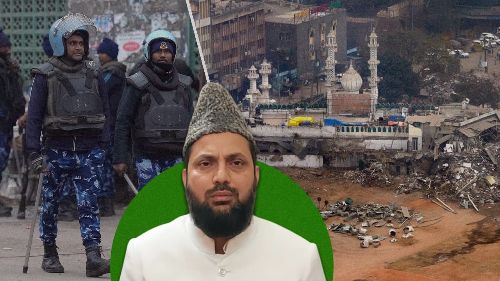
New Delhi, January 8, 2026. The investigation into the stone-pelting incident in Delhi has now reached a new turn. Police have decided to question a Member of Parliament from the Samajwadi Party (SP) in this case. Following this step, activity in political corridors has intensified and political rhetoric regarding the matter has also begun.
SP MP Mohibullah Nadvi will be questioned regarding the stone-pelting that occurred near the Faiz-e-Ilahi Mosque on the night of January 6. According to sources, despite repeated requests from senior Delhi Police officials, Nadvi did not leave the incident site and remained present in the vicinity.
Police have identified 30 people involved in the stone-pelting incident based on CCTV camera footage. Different police teams are conducting raids to apprehend the accused.
In fact, the entire matter is linked to the removal of encroachments near the Faiz-e-Ilahi Mosque. A police team had gone to remove the encroachments as per a court order. Meanwhile, some people spread a rumor that the mosque would be demolished, which sparked the violence. Stones were thrown at police personnel, injuring 5 officers.
Following the incident, a tense atmosphere developed in the area, leading to the deployment of additional police forces. The investigation is progressing based on CCTV footage, mobile data, and eyewitness statements. Police are also trying to determine whether the stone-pelting was organized or the result of a sudden flare-up of violence.
Reacting to this matter, the SP stated that this action is motivated by political malice. Party leaders allege that central agencies and police are being misused to target opposition parties. Meanwhile, police and administration officials say the law is equal for all and the investigation will be conducted impartially.
Legal experts believe that questioning a public representative is not in itself unusual, provided there is a solid basis and evidence behind it. The impact of this case will not be limited just to law and order, but could also affect Delhi’s politics and upcoming political equations.
For now, the police investigation is ongoing, and it will only become clear what further action is taken in the case after the questioning. However, it is certain that the Delhi stone-pelting case is increasingly becoming more of a center for political debate than a legal one.