Nepal’s Supreme Court has imposed an interim stay on the collection of customs duties on daily-use items valued over 100 rupees brought from India. …Read more
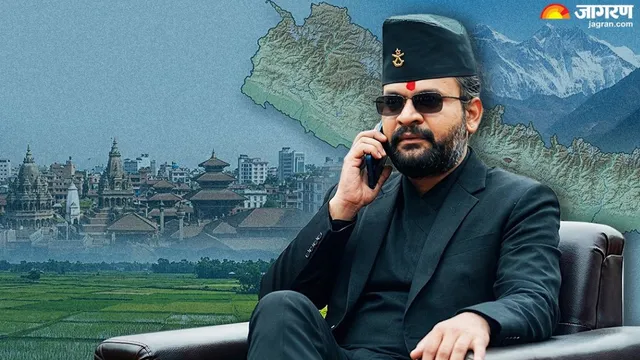
Nepal’s Supreme Court has imposed an interim stay on the collection of customs duties on daily-use items valued over 100 rupees (Nepal 100 Rupees Custom Rule) brought by ordinary citizens across the Nepal-India border.
This court order has brought great relief to people living in the border areas of the Terai-Madhesh region.
A joint bench of Supreme Court justices on Friday directed the Prime Minister’s Office and Council of Ministers, the Ministry of Finance, and other relevant bodies not to collect customs duties on daily consumption items until a final decision is reached.
In fact, the Nepal government had made customs duties mandatory on items valued over 100 rupees brought across the Nepal-India border under a notification issued on May 2.
Following this decision, protests began in border areas. People said it was affecting the movement of everyday essential goods.
Writ petition filed in court on April 14
Lawyers filed a writ petition in the Supreme Court on April 14 challenging this decision of the government. After a hearing, the court issued an interim order, initially considering the petitioners’ arguments as serious.
Now, until the final verdict, the government will not be able to collect customs duties on daily-use items under that provision. People in Nepal’s border areas are happy with this decision.
Meanwhile, traders in border markets in Indian areas, including Sonbarsa, are also happy. They believe the market will pick up and people from Nepal will be able to easily buy daily-use items as before.
Nepal’s Supreme Court
Nepal’s Supreme Court, located in Kathmandu, is the highest judicial authority in the country, established under the 1990 Constitution. It has played a pivotal role in upholding the rule of law, including landmark rulings on human rights and democratic governance. Historically, it has been central to Nepal’s transition from a monarchy to a federal democratic republic, with its decisions shaping modern legal and political frameworks.
Nepal-India border
The Nepal-India border is an open, largely unguarded international boundary that stretches over 1,800 kilometers, facilitating deep cultural, economic, and familial ties between the two nations. Historically, the border’s current form was established by the 1816 Sugauli Treaty between the British East India Company and Nepal, and later refined by the 1950 Treaty of Peace and Friendship, which allows for free movement of people and goods. This porous border has fostered significant trade and migration, while also presenting challenges such as smuggling and illegal crossings.
Terai-Madhesh region
The Terai-Madhesh region is a lowland belt in southern Nepal, known for its fertile plains and subtropical climate. Historically, it served as a key trade route and agricultural hub, with its dense forests once providing refuge for kingdoms during conflicts. Today, it is culturally diverse, home to various ethnic groups like the Tharu and Madhesi, and features significant sites such as Lumbini, the birthplace of Buddha.
Prime Minister’s Office and Council of Ministers
The Prime Minister’s
Nepal’s Supreme Court
Nepal’s Supreme Court, located in Kathmandu, is the highest judicial authority in the country, established in 1951 after the end of the Rana regime. It serves as the guardian of the constitution and the final court of appeal, playing a key role in upholding the rule of law and protecting citizens’ rights. Over the decades, it has been instrumental in landmark decisions, including the abolition of the monarchy and the establishment of a federal democratic republic in 2008.
Nepal-India border
The Nepal-India border is an open, largely unguarded frontier stretching over 1,800 kilometers, reflecting deep historical, cultural, and economic ties between the two nations. Historically, the border was formalized through treaties such as the 1816 Sugauli Treaty between the British East India Company and Nepal, later redefined by the 1950 Indo-Nepal Treaty of Peace and Friendship. Today, it facilitates significant cross-border trade, migration, and family connections, though occasional disputes over boundary demarcation and security concerns persist.
Terai-Madhesh region
The Terai-Madhesh region is a lowland belt in southern Nepal, known for its fertile plains and subtropical climate. Historically, it served as a vital trade route between India and the Himalayas, and was once home to several ancient kingdoms. Today, the region is culturally diverse, with a mix of ethnic groups and languages, and is an important agricultural hub for the country.
Sonbarsa
Sonbarsa is a historical village located in the Sitamarhi district of Bihar, India, believed to be the birthplace of the Hindu goddess Sita, the consort of Lord Rama. According to the Ramayana, King Janaka found Sita in a furrow while plowing a field in this area, making it an important pilgrimage site. Today, the village features ancient temples and a sacred pond, drawing devotees who come to honor its mythological and cultural significance.
Kathmandu
Kathmandu is the capital and largest city of Nepal, renowned for its rich history as a hub of trade, art, and religion in the Himalayas. Its ancient Durbar Squares, filled with temples and palaces, reflect the craftsmanship of the Malla and Shah dynasties, while the city’s many UNESCO World Heritage Sites, such as Swayambhunath Stupa, highlight its deep Buddhist and Hindu cultural heritage. Despite damage from the 2015 earthquake, Kathmandu remains a vibrant center of tradition and modernity.
Lumbini
Lumbini, located in present-day Nepal, is a UNESCO World Heritage Site and one of the most sacred places in Buddhism, as it is the birthplace of Siddhartha Gautama, who later became the Buddha. According to tradition, Queen Maya Devi gave birth to him in 623 BCE while holding onto a tree branch in the Lumbini Garden. Today, the site features the Maya Devi Temple, ancient pillars, monasteries built by various Buddhist nations, and a sacred pond, drawing pilgrims and tourists from around the world.