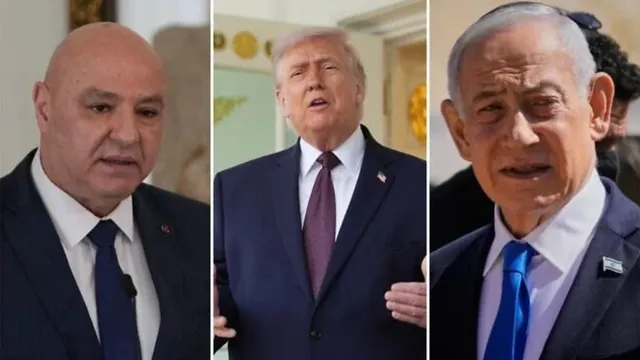
U.S. President Donald Trump has announced a 10-day ceasefire between Israel and Lebanon, effective from Thursday evening. He stated that Netanyahu …read more
Amid ongoing tensions in West Asia, diplomatic efforts have gained momentum, although ground realities remain complex. U.S. President Donald Trump announced a 10-day ceasefire between Israel and Lebanon late Thursday night.
Trump wrote on Truth Social that the ceasefire would take effect at 5 p.m. ET. He stated that both countries agreed to it following discussions with Lebanese President Joseph Aoun and Israeli Prime Minister Benjamin Netanyahu.
10-Day Ceasefire Between Israel and Lebanon
Hezbollah has stated that whether the ceasefire holds will depend on Israel’s attitude. Meanwhile, Pakistan and Iran have also said that peace in Lebanon is necessary before peace talks with the U.S. can proceed. On the other hand, preparations for a potential second round of talks between the U.S. and Iran have intensified. However, the issue of nuclear enrichment remains a sticking point.
Pakistan’s Army Chief, Field Marshal Asim Munir, who arrived in Tehran, met with senior Iranian leaders on Thursday. The White House stated that a date for talks with Iran has not been set. Meanwhile, Prime Minister Narendra Modi discussed the issue of security and movement of ships in the Strait of Hormuz with French President Emmanuel Macron. Separately, the U.S. issued a stern warning regarding the naval blockade imposed against Iran.
Appeal to Open the Strait of Hormuz
U.S. General Dan Keane said that any ship attempting to break the blockade could be attacked and, if necessary, fired upon. This includes stopping, boarding, and seizing the vessel. U.S. Defense Secretary Pete Hegseth warned Iran’s military leadership, stating, ‘We are watching you.’ So far, 14 oil tankers have turned back from the Strait of Hormuz following warnings from the U.S. Navy.
China has also appealed to Iran to open the Strait of Hormuz. Trump invited Netanyahu and Aoun to the White House. According to reports, Lebanese President Joseph Aoun made it clear in a phone conversation with the U.S. Secretary of State that there is no point in any talks with Israel until there is a ceasefire with Hezbollah. He stated that with airstrikes and destruction ongoing in southern Lebanon, dialogue with Israel is inappropriate. The Secretary of State reportedly told Aoun that he understands the situation.
Trump’s Announcement
According to reports, Trump announced the ceasefire on Truth Social, writing that the U.S. administration has tasked the Vice President, the Secretary of State, and the Chairman of the Joint Chiefs of Staff with coordinating with Israel and Lebanon to establish lasting peace.
Trump claimed this agreement could be a significant step towards permanent peace between the two countries. Trump has invited the leaders of both countries to the White House. He said he would call Israel and Lebanon for their first meaningful bilateral talks since 1983. He claimed both sides want to move towards peace and that this process could advance rapidly. Trump also wrote that he has now stopped 10 wars.
According to reports, a senior Lebanese MP, Hassan Fadlallah, stated that the Iranian ambassador in Lebanon provided information about a week-long ceasefire. When asked if Hezbollah would respect this ceasefire, Fadlallah said everything related to it depends on Israel’s commitment.
He credited Iranian diplomatic efforts for this ceasefire. Meanwhile, Lebanon’s Prime Minister welcomed the ceasefire. In a post, he expressed gratitude to the U.S., France, Saudi Arabia, Egypt, Qatar, and Jordan for their efforts.
What is the Damage So Far in the War?
This conflict has so far resulted in over 2,196 deaths and more than 1.2 million people displaced. Meanwhile, on Thursday, the Israeli army destroyed the last bridge over the Litani River in Lebanon, which connected southern Lebanon to the rest of the country. It was claimed that 70 Hezbollah terrorist sites were destroyed within a minute. Hezbollah claimed attacks on 39 military sites within 24 hours.
The Israeli army has stated that during the ceasefire, it will not withdraw its troops from southern Lebanon. China’s Appeal to Iran. According to reports, Chinese Foreign Minister Wang Yi appealed to Iranian Foreign Minister Abbas Araghchi to resume traffic in the Strait of Hormuz. He said keeping this crucial sea route open