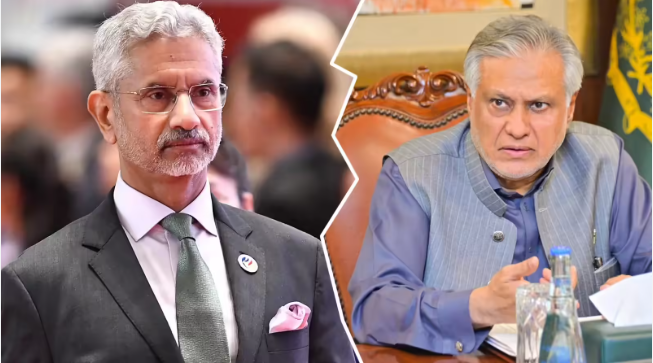
New Delhi, June 06, 2026. India has strongly opposed the proposed legislative assembly elections in Pakistan-occupied Gilgit-Baltistan. The Indian government has clearly stated that Gilgit-Baltistan is an integral part of India and that Pakistan’s attempts to hold elections there have no legal basis. India has described this as a violation of its sovereignty and territorial integrity.
The Ministry of External Affairs stated that the entire Jammu and Kashmir and Ladakh, including Gilgit-Baltistan, are an integral and indivisible part of India. Therefore, Pakistan has no right to conduct any kind of political process in those regions. Activities such as holding elections cannot change the ground reality there.
Voting will take place on Sunday for 24 seats across 10 districts in Gilgit-Baltistan. This region is part of India’s union territory of Ladakh. However, it is under Pakistani occupation. For this reason, India usually objects to any election or political step taken there.
The Ministry of External Affairs (MEA) lodged a formal protest with Pakistan, stating that the entire Jammu and Kashmir and Ladakh, including Gilgit-Baltistan, are an integral part of India. The ministry reiterated that Pakistan has illegally and forcibly occupied these areas and must vacate them. India’s response comes at a time when voting for the Gilgit-Baltistan Assembly is proposed for June 7, 2026. Pakistan is moving forward with the electoral process, but India has consistently maintained that any administrative or political activity in Pakistan-occupied territories holds no valid significance. Meanwhile, India has also cornered Pakistan on international platforms. India’s permanent representative to the United Nations recently stated that Jammu and Kashmir “was, is, and will remain an integral and indivisible part of India” and dismissed Pakistan’s claims as baseless.
Gilgit-Baltistan has long been considered a strategically and politically sensitive region. India says that Pakistan’s holding of elections or making administrative changes there cannot alter the actual situation. Meanwhile, questions have also been raised from time to time regarding human rights and political rights in the region.
Key Points
- India registered strong opposition to the Gilgit-Baltistan elections.
- The Ministry of External Affairs reminded Pakistan to vacate the region.
- India described the electoral process as illegal and unacceptable.
- Assembly elections are proposed for June 7, 2026.
- India reiterated its stance on Jammu and Kashmir at the United Nations as well.
Gilgit-Baltistan
Gilgit-Baltistan is a mountainous region in northern Pakistan, renowned for its stunning landscapes, including the Karakoram and Himalayan ranges, and as the gateway to some of the world’s highest peaks like K2. Historically, it was a crucial part of the ancient Silk Road, connecting South Asia with Central Asia and China, and was home to various kingdoms and Buddhist influences before being incorporated into Pakistan in the 20th century. Today, it is known for its unique cultural heritage, diverse languages, and strategic importance.
Jammu and Kashmir
Jammu and Kashmir is a region in the northern part of the Indian subcontinent, known for its stunning Himalayan landscapes and rich cultural heritage. Historically, it was a princely state under British rule, with its accession to India in 1947 leading to ongoing territorial disputes with Pakistan. The region is also famous for its diverse religious and ethnic communities, including Hindus, Muslims, and Buddhists, reflected in landmarks like the Vaishno Devi shrine and the Mughal gardens of Srinagar.
Ladakh
Ladakh, often called “Little Tibet,” is a high-altitude region in northern India known for its stunning Himalayan landscapes and rich Buddhist culture. Historically, it was an independent kingdom and a crucial stop on the ancient Silk Road trade route. Today, its iconic monasteries, such as Hemis and Thiksey, and the vibrant city of Leh preserve centuries of Tibetan Buddhist heritage.
Pakistan-occupied Gilgit-Baltistan
Gilgit-Baltistan is a mountainous region in northern Pakistan, known for its stunning landscapes and strategic location near the Karakoram and Himalayan ranges. Historically part of the princely state of Jammu and Kashmir, it was administered by Pakistan after the 1947 partition, though India claims it as part of its disputed Kashmir territory. The area is rich in cultural diversity, with influences from Tibetan, Central Asian, and South Asian traditions, and is home to ancient trade routes like the Silk Road.
Gilgit-Baltistan Assembly
The Gilgit-Baltistan Assembly is the legislative body of the Gilgit-Baltistan region in northern Pakistan, established following the region’s governance reforms in 2009. It was created to provide elected representation and greater autonomy to the people of the region, which has a complex history tied to the Kashmir conflict and its status as a disputed territory. The assembly meets in the capital, Gilgit, and plays a key role in regional legislation and development.
United Nations
The United Nations (UN) is an international organization founded in 1945 after World War II, with the primary goal of maintaining global peace and security, fostering friendly relations among nations, and promoting social progress and human rights. Its headquarters, located in New York City, serve as a central forum where member states discuss and coordinate on issues ranging from conflict resolution to climate change. Today, the UN remains a vital platform for multilateral diplomacy, encompassing specialized agencies like UNESCO and the World Health Organization.