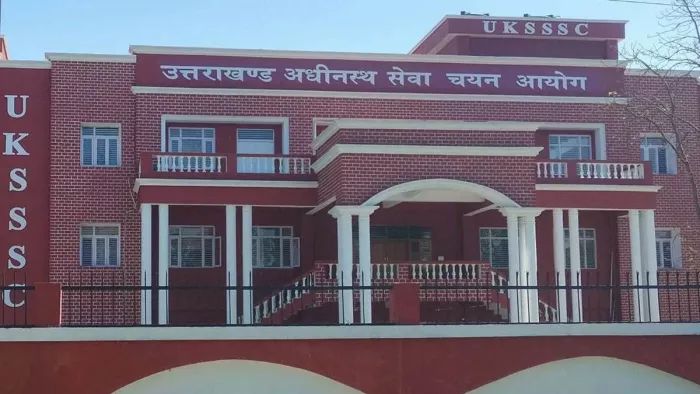
Dehradun, June 8, 2026. A purported letter linked to the Uttarakhand Subordinate Service Selection Commission (UKSSSC) went viral on social media, causing confusion among candidates. The viral document claimed to contain information related to the examination and recruitment process, but the commission immediately took cognizance of it, stating it is fake. The commission clarified that the letter is not official and has no connection to UKSSSC.
As soon as the matter came to light, UKSSSC took notice and declared it completely fake, appealing to youth to remain vigilant. The commission urged candidates to verify any information related to recruitment or examinations on the commission’s official website or authorized channels before trusting it.
Information in the viral letter is incorrect
The viral letter claimed that a written examination for various posts requiring special technical qualifications would be held on May 3. Additionally, it showed the date for a graduate-level re-examination as September 4, 2026. UKSSSC has declared this letter fake. The commission’s official exam schedule makes it clear that the information in the viral letter is completely wrong.
According to commission officials, the document being circulated on social media platforms and various messaging groups was investigated, and several factual and procedural discrepancies were found. Following this, the commission issued an official statement advising candidates to be cautious of such misleading messages and fake documents.
UKSSSC stated that all official information related to exams, results, recruitment processes, and other important notices is released only through the commission’s authorized channels. Candidates are advised to verify any information against the commission’s official announcements before trusting it.
The commission also indicated that necessary steps are being taken to identify those who created and circulated the fake letter. If anyone is found to be deliberately spreading misinformation, legal action may be taken against them.
Following this incident, thousands of candidates were anxious, as any information related to recruitment exams directly impacts their preparation and future plans. The commission reiterated that candidates should rely only on information obtained from official sources and should not share viral social media content without verification.
Dehradun
Dehradun is a city in the foothills of the Himalayas in northern India, serving as the capital of the state of Uttarakhand. Historically, it was part of the Garhwal Kingdom and later became a popular British colonial hill station, known for its prestigious institutions like the Forest Research Institute. Today, it is a major educational and cultural hub, surrounded by scenic beauty and serving as a gateway to nearby hill stations like Mussoorie.
Dehradun
Dehradun is the capital city of Uttarakhand, India, nestled in the Doon Valley between the Himalayas and the Shivalik ranges. Historically, it was part of the Garhwal Kingdom and later came under British rule, who developed it as a key administrative and educational center. Today, it is known for its scenic beauty, prestigious institutions like the Forest Research Institute, and as a gateway to hill stations such as Mussoorie.
Himalayas
The Himalayas are a vast mountain range in Asia, separating the Indian subcontinent from the Tibetan Plateau, and are home to the world’s highest peaks, including Mount Everest. Formed over 50 million years ago by the collision of the Indian and Eurasian tectonic plates, the range holds deep cultural and spiritual significance in Hinduism and Buddhism. For centuries, the Himalayas have been a destination for pilgrims, explorers, and those seeking solitude, while also serving as a crucial water source for major rivers across South Asia.
Uttarakhand
Uttarakhand, a state in northern India, is known for
Dehradun
Dehradun is the capital city of Uttarakhand, India, situated in the Doon Valley between the Ganges and Yamuna rivers. Historically, it was part of the Garhwal Kingdom and later came under British rule, who developed it as a hill station and educational hub. Today, it is known for its scenic beauty, prestigious institutions like the Forest Research Institute, and as a gateway to hill stations like Mussoorie.
Himalayas
The Himalayas are a vast mountain range in Asia, home to the world’s highest peaks, including Mount Everest. Formed millions of years ago by the collision of the Indian and Eurasian tectonic plates, they have long been a sacred site in Hinduism, Buddhism, and other traditions, inspiring pilgrimage and spiritual retreat. Today, the range remains a major destination for mountaineers and trekkers, while also playing a crucial role in regional climate and river systems.
Uttarakhand
Uttarakhand is a state in northern India, known for its stunning Himalayan landscapes and spiritual significance. Historically, it was part of the larger Himalayan region and was formed as a separate state in 2000, carved out of Uttar Pradesh. It is home to important Hindu pilgrimage sites like Char Dham (Badrinath, Kedarnath, Gangotri, and Yamunotri), earning it the nickname “Land of the Gods.”
Garhwal Kingdom
The Garhwal Kingdom was a historical Himalayan state in present-day Uttarakhand, India, established around the 15th century when the region was unified under the rule of the Panwar dynasty. It played a significant role in the region’s culture and politics, often resisting external invasions, including those by the Mughals and later the Gurkhas. The kingdom eventually came under British influence in the early 19th century after the Anglo-Nepalese War, and its legacy remains in the distinct Garhwali language, traditions, and numerous ancient temples.
Forest Research Institute
The Forest Research Institute (FRI) in Dehradun, India, is a premier institution dedicated to forestry research and education, established in 1906. Housed in a stunning Greco-Roman style building set within a sprawling 450-hectare campus, it was originally founded to promote scientific forestry in British India. Today, it functions as a deemed university and houses several museums, including those on forestry, insects, and timber, attracting both researchers and tourists.
Mussoorie
Mussoorie is a popular hill station in the Indian state of Uttarakhand, established by British colonial officers in the early 19th century as a summer retreat to escape the heat of the plains. Known as the “Queen of Hills,” it was developed with schools, churches, and promenades like the famous Mall Road, becoming a key cultural and educational hub during the British Raj. Today, it remains a beloved tourist destination, offering scenic views of the Himalayan ranges and a blend of colonial-era architecture and natural beauty.
Shivalik ranges
The Shivalik ranges, also known as the Outer Himalayas, are the southernmost and youngest foothills of the Himalayan mountain system, stretching across parts of India, Nepal, and Pakistan. Geologically, they formed about 5 to 10 million years ago from sediment eroded from the rising Himalayas, and they hold significant fossil deposits, including early hominid remains. Culturally, the Shivaliks are home to several important pilgrimage sites and wildlife reserves, blending natural history with spiritual heritage.
Doon Valley
The Doon Valley, nestled in the Himalayan foothills of northern India, is a scenic region known for its lush forests and the cities of Dehradun and Rishikesh. Historically, it was part of the ancient kingdom of Garhwal and later came under British control in the early 19th century, becoming a popular hill station and educational hub. Today, it remains a key gateway to the Himalayas, blending colonial-era architecture with natural beauty.