The world’s focus is on AI – large language models promising increased individual and business productivity and the US using Claude-based systems for enhanced battlefield analysis in Iran.
The focus is also on clean energy, on the use of electric transportation platforms to reduce dependence on fossil fuels that pollute air and water reserves that are in increasingly short supply.
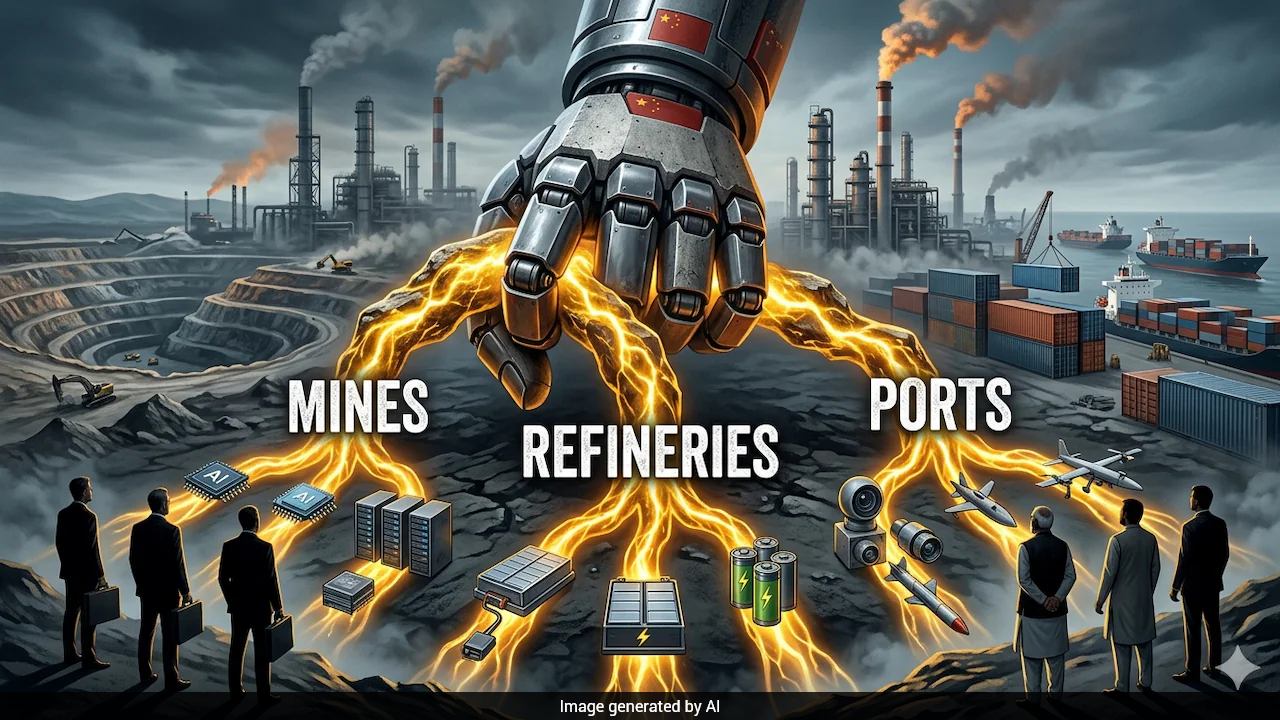
But behind the futuristic curtain there is a race unfolding – a scramble between the West and China to control critical minerals and their supply chains, i.e., the mines from which they are extracted to refineries that process them and shipping channels that distribute them globally.
Critical minerals like lithium, cobalt, and nickel, and the specific subcategory of rare earth minerals, are part of a base enabling growth of Artificial Intelligence and the bedrock of related industries like microelectronics, batteries, and semiconductors that power these systems.
The list of critical minerals evolves over time. But what makes them ‘critical’ is the fact that emergent technology – like AI – is grounded in component hardware made with these resources.
Control over these minerals, therefore, offers any country a strategic edge not just for economic growth and the race to build next-gen technology but also in the development of weapons or, as in the case of the US in Iran, refining existing military protocols to inflict greater damage in a war.
The takeaway is simple.
The next big global tech race won’t be won in labs or boardrooms. The winner won’t be the newest invention or the most ruthless corporate shark. It will be the country (or company) that best controls mines, refineries, and ports. And right now, China is winning that race.
The critical minerals race
Last week a report by the US-based Center for Strategic and International Studies noted that ‘ownership of strategically significant mineral deposits is changing hands’ and that Chinese firms are ‘acquiring an ever-larger share of assets that will supply future rare earths demand’.
In 2024 these acquisitions hit their highest level in a decade. At least 10 deals were valued at over $100 million. And in 2025 state private firms spent even more, buying up mines, mining operations, and refineries in South America and Africa to reinforce its already dominant hold.
The numbers are startling. In December 2025 the Africa Center for Strategic Studies noted Beijing ‘now controls over half of global critical minerals production’, including 70 per cent of rare earth minerals, or REEs, and an estimated 87 per cent of all processing and refining.
And acquisitions over 2023-26 have crossed $6.5 billion, including the $2 billion purchase of a Argentinian lithium mine and the $1.73 billion purchase of a copper mine in Botswana.
Beijing’s readiness to move first and willingness to spend big has bought it the gatekeeper’s post on critical and rare earth minerals at a time of increasing emphasis on these resources. This means it can curb or suppress exports to rival nations or even undercut other suppliers.
The US was on the receiving end of just such a lesson in 2024; in an acerbic tit-for-tat trade tariffs exchange, China withheld REEs that American manufacturers desperately needed.
Beijing’s flex then was a lesson in weaponising strategic chokeholds, a lesson Washington has since been taught anew by Tehran shutting down the Strait of Hormuz to weaponise oil flows.
Now, this doesn’t mean the US and other western nations are unaware of critical minerals or their importance. On the contrary, Reuters said that in February US Vice President JD Vance unveiled plans to marshal allied nations into a preferential trading bloc to help Washington loosen Beijing’s grip on these materials. “We want to eliminate that problem of people flooding into our markets with cheap critical minerals to undercut our domestic manufacturers,” he said.
Reuters also reported the US has also launched an initiative to stockpile critical minerals; the Trump administration codenamed this Project Vault and set aside $10 billion in seed funding.
India and Japan were among 55 countries present at Vance’s February meeting.
For India the stakes are high, perhaps higher than most other countries.
The war in Iran and the subsequent squeezing of oil and gas imports has forced the Indian government into hiking prices by substantial margins to offset losses – increased crude oil prices, shipping