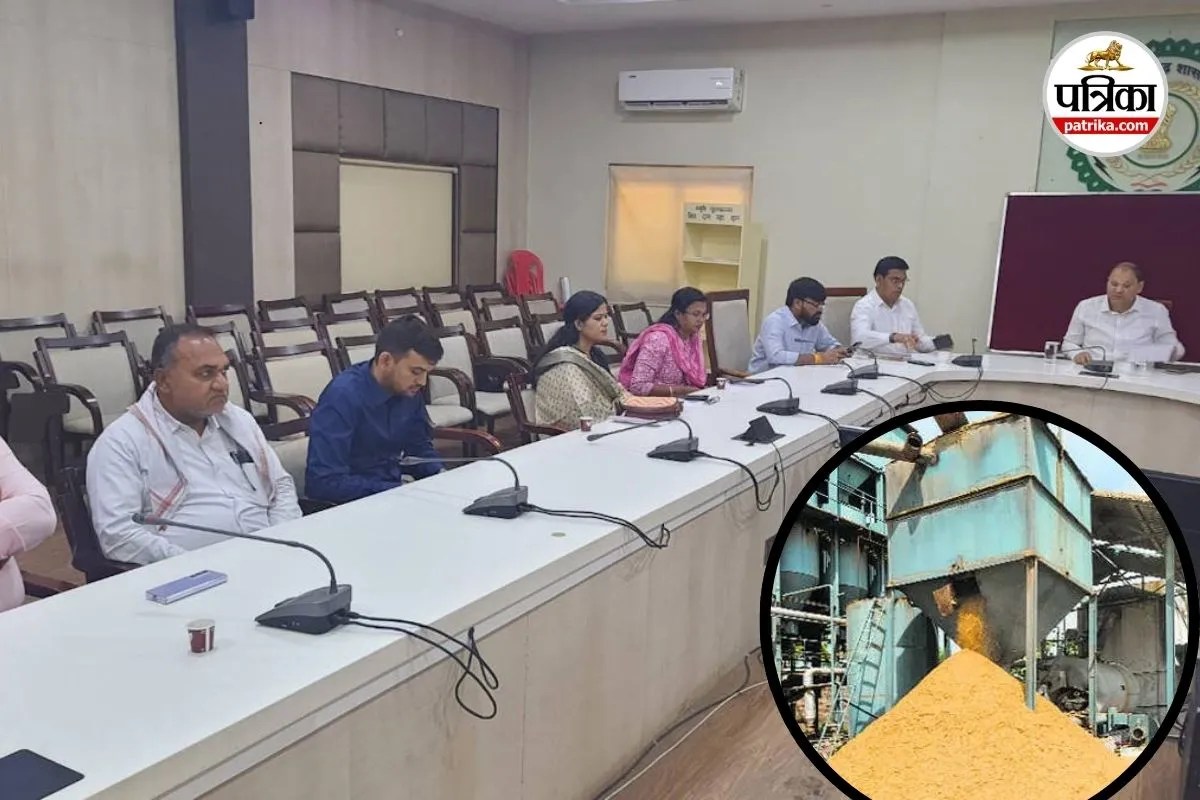
Custom Milling Rice: The administration has taken a strict stance regarding the process of depositing custom milling rice in Raipur district. During a review meeting held at the collectorate premises, rice millers were clearly warned that strict action would be taken if rice is not deposited within the stipulated timeframe. It was also stated in the meeting that the government has set the final date for rice deposit as April 30, after which any laxity will not be tolerated.
The additional collector informed that show cause notices have been issued to 74 rice millers on the instructions of senior officials. These millers are accused of not depositing rice in proportion to the paddy lifted as per the contract. The administration has clarified that if rice is not deposited within the stipulated time, these millers will be blacklisted, their mill registration numbers will be blocked, and prosecution will be initiated in the competent court.

Officials said that this matter is a violation of the provisions of the Chhattisgarh Custom Milling Rice Procurement Order 2016, which falls under the category of a punishable offense under the Essential Commodities Act 1955. In such a case, legal action against the concerned millers is certain if found guilty.
During the review meeting, it was also decided that physical verification of the 10 rice mills on the list with the highest pending rice deposits would be conducted. If a shortage of paddy or irregularities are found during verification, instructions have been given to file an FIR against the concerned millers.
The district marketing officer has been directed that for millers who do not deposit custom milling rice by April 30, 2026, recovery of the amount will be made through bank guarantee from May 1, 2026. This will ensure that the government does not suffer any financial loss.
All concerned officials were instructed to strictly adhere to the timeline and ensure no negligence in the process of getting rice deposited. Other food department officials were also present at the meeting.
This entire action makes it clear that the administration is now in no mood to tolerate any kind of irregularity. Rice millers have been given a clear signal to comply with the rules, or else be prepared for strict legal and financial action. This strictness in Raipur district is not only a step towards improving the system but also shows that the government is serious about making the public distribution system transparent and accountable.

Raipur district
Chhattisgarh Custom Milling Rice Procurement Order 2016
Chhattisgarh
Raipur district
Chhattisgarh Custom Milling Rice Procurement Order 2016
Essential Commodities Act 1955
Related news

Will the alcohol ban end in Bihar? Deputy CM Vijay Chaudhary responds to Anant Singh’s demand.

Cyclone Fengal: Heavy rain in Tamil Nadu, schools and colleges closed in Puducherry

PM Modi’s boat ride in Bengal lasted only 5 minutes, boat owner reveals surprising detail.

Delimitation: ‘We Will Lose Our Own Voice’, Stalin’s Clear Stance’s Reflection