The Battle for Tollygunj Assembly Seat: BJP and Leftists Ready to Breach the Fort of Aroop Biswas, Unbeaten for 20 Years
Tollygunj (West Bengal): Among the seats that draw everyone’s attention in West Bengal politics, Tollygunj is at the forefront. For the last two decades, Trinamool Congress heavyweight and cabinet minister Aroop Biswas has held a one-man rule here. However, the battle for the Tollygunj assembly seat in the 2026 election could prove to be the toughest contest yet. This time, a three-way fight has emerged between four-time TMC MLA Aroop Biswas, BJP candidate and actress Papia Adhikari, and CPI(M)’s Partha Pratim Biswas.
Aroop Biswas’ Political Journey and 2021 Victory
Aroop Biswas has served as the Power and Housing Minister in the West Bengal government. In 2006, he surprised everyone by defeating veteran leader Pankaj Banerjee, and since then, he has been continuously elected from here in 2011, 2016, and 2021. In the 2021 election, the battle for the Tollygunj assembly seat was one-sided, with Aroop Biswas defeating BJP’s Babul Supriyo by a margin of over 50,000 votes. However, in 2016, the Leftists gave him a tough fight, showing that the opposition is not weak here.
Lionel Messi Event Controversy and Resignation
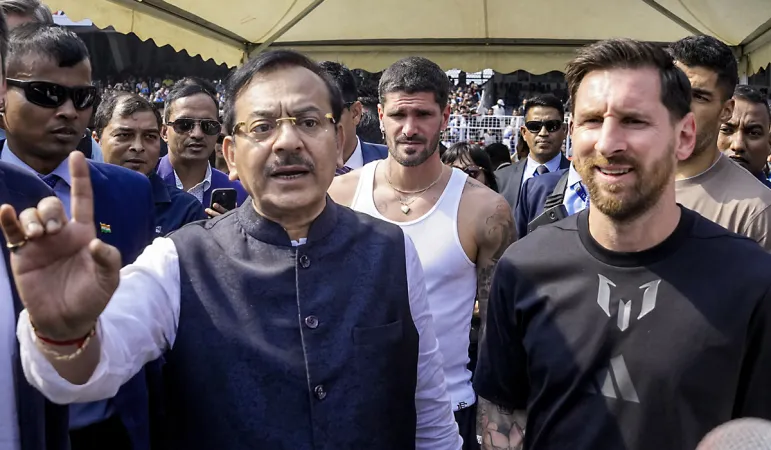
Between 2021 and 2026, Aroop Biswas’s reputation has seen a slight decline. In December 2025, after mismanagement during an event featuring Argentine footballer Lionel Messi at Kolkata’s Salt Lake Stadium, he had to resign from the post of Sports Minister. The logistical failures and crowd management issues at this event sparked a major political controversy. The battle for the Tollygunj assembly seat is now being fought amid this controversy and claims of an “impartial investigation,” which could impact voter sentiment.
According to election analysts, allegations of names being removed from voter rolls and opposition unity could pose challenges for Aroop Biswas. The alliance between the BJP and AIADMK is likely to prevent the division of opposition votes.
Key Aspects of the Election:
Voting in West Bengal will take place in two phases on April 23 and April 29.
Counting of votes and declaration of results will occur on May 4.
Aroop Biswas faces the threat of anti-incumbency.
The clash between actress Papia Adhikari’s glamour and the BJP’s organizational strength.
Main Challenges and Equations:
Public discontent following the Messi event controversy.
A strong showing by the Leftists, similar to 2016, could again damage the TMC.
New voter rolls and opposition alliance strategy.
According to a ground report, the battle for the Tollygunj assembly seat this time is not just about retaining the seat, but for Aroop Biswas to prove his political credibility. It will be interesting to see whether voters in this prestigious area of Kolkata embrace change or uphold tradition.