Preparations Complete with Danda Planting and Vedic Worship, Expecting 8,000–10,000 Daily Participants
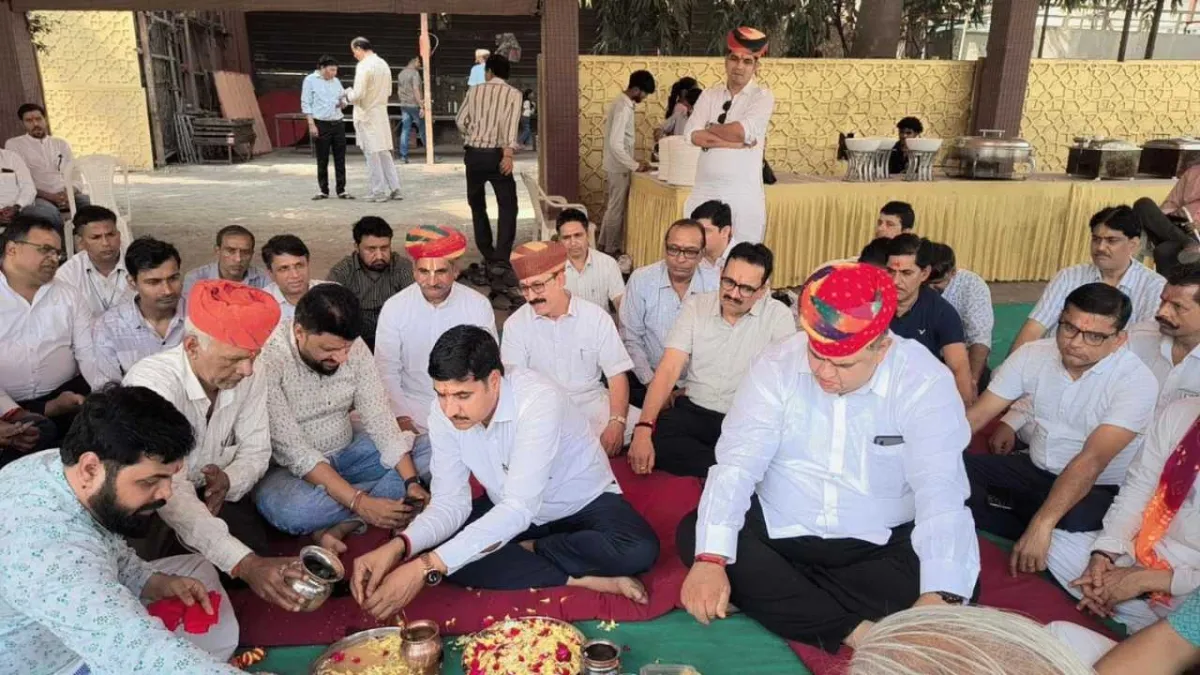
The cultural festival ‘Phagotsav 2026’, organized by the Rajasthan Yuva Sangh, Surat, will be held from February 28th to March 2nd at the Tulsi Party Plot in Godadara. Prior to the festival, on Sunday, the traditional Danda planting ceremony and Vedic worship with mantra chanting were completed following customary rituals. The event was conducted in a devotional atmosphere in the presence of senior community members and officials.
It was stated that the Rajasthan Yuva Sangh, established in 1992, continuously works towards the preservation and promotion of culture. Since then, the Phagotsav has been organized annually, with participation from all communities of Rajasthan. It was said that Phagotsav is a symbol of community unity, culture, and tradition, where Rajasthan’s traditional Ghoomar and Gujarat’s Garba will be showcased together. Additionally, a glimpse of ‘Developed India 2047’ will also be presented at the event.
An appeal was made to community members to attend in large numbers with their families to make the event a success. According to the organizers, it is expected that 8,000 to 10,000 people will participate in the Phagotsav daily.
During the event, the lamp lighting ceremony will be performed on February 28th by a retired IRS officer and social worker, on March 1st by a social worker, and on March 2nd by a provincial joint contact head. The program will commence daily at 7:30 PM with the lamp lighting.
It was informed that the three-day celebration will feature captivating performances of various folk dances by renowned artists from Rajasthan, including Ghoomar, Kalbelia, Bhavai, Chari, Kachhi Ghodi, and Veena dance. Gratitude was expressed towards the guests, with confidence expressed that this year’s Phagotsav will be grand, disciplined, and in keeping with cultural dignity.
Phagotsav
“Phagotsav” is a vibrant spring festival celebrated in parts of India, particularly in Maharashtra and Goa, marking the arrival of the Hindu New Year and the harvest season. Its history is linked to ancient agricultural traditions and the legendary King Mahabali, with celebrations featuring colorful processions, folk dances like the *Dindi* and *Kala*, and the symbolic throwing of red *gulal* powder.
Rajasthan Yuva Sangh
The Rajasthan Yuva Sangh is a cultural and social organization, not a historical site, dedicated to promoting the heritage and welfare of the Rajasthani community, particularly its youth. It typically focuses on organizing events, festivals, and activities that celebrate Rajasthani art, music, and traditions, fostering a sense of community and cultural identity among its members. Its history is rooted in the diaspora and community efforts to preserve Rajasthani culture outside of the Indian state of Rajasthan itself.
Tulsi Party Plot
“Tulsi Party Plot” is a common name for a public event and function space found in many Indian cities, particularly in Gujarat. These venues are typically used for weddings, social gatherings, and political rallies. The name “Tulsi” references the sacred basil plant in Hindu culture, but these plots are modern, utilitarian facilities without a singular historical narrative.
Danda planting ceremony
The Danda planting ceremony is a traditional ritual practiced in parts of Nepal and India, particularly among the Magar and other indigenous communities. It involves the ceremonial planting of a sacred wooden post (the *danda*) to mark the beginning of festivals, the construction of a new house, or the establishment of a communal space, symbolizing stability, prosperity, and a connection to ancestral spirits. Its history is rooted in ancient animistic and shamanistic traditions, serving as a vital cultural practice to invoke blessings and maintain social harmony within the village.
Vedic worship
“Vedic worship” refers to the ancient ritualistic religious practices originating in the Vedic period of India (c. 1500–500 BCE), primarily documented in the sacred texts known as the Vedas. It centered on elaborate fire sacrifices (yajna) performed to honor a pantheon of nature deities like Agni (fire) and Indra (rain), with the goal of maintaining cosmic order (rita) and securing prosperity. This tradition forms the historical foundation for later philosophical and devotional developments within Hinduism.
Ghoomar
“Ghoomar” is not a physical place or cultural site, but a traditional folk dance originating from the Indian state of Rajasthan, performed primarily by women. It is historically associated with the Bhil tribe and later adopted by Rajput communities, often performed during festivals and celebrations like Holi and weddings. Characterized by graceful, swirling movements and colorful flowing skirts (*ghaghara*), the dance symbolizes joy, femininity, and community spirit.
Garba
“Garba” is not a specific place or cultural site, but a vibrant folk dance originating from the state of Gujarat in India. Traditionally performed during the nine-night Hindu festival of Navratri, it honors the goddess Durga. Its history is ancient, with circular movements symbolizing the cyclical nature of life and the worship of a divine feminine energy.
Kalbelia
Kalbelia refers to both a nomadic tribe from Rajasthan, India, and their vibrant, internationally recognized dance form. Historically, the Kalbelia community were traditional snake charmers and snake catchers, but as this practice declined, their expressive dance—mimicking serpentine movements—became their primary cultural signature. Today, Kalbelia dance is a celebrated intangible cultural heritage, performed by women in swirling black skirts to the music of the *pungi* (a wind instrument) and drums.