New Hope in Remote Areas of Northeast India Through the Service and Dharma Protection Campaign of the Purvanchal Mass Marriage Ceremony Committee
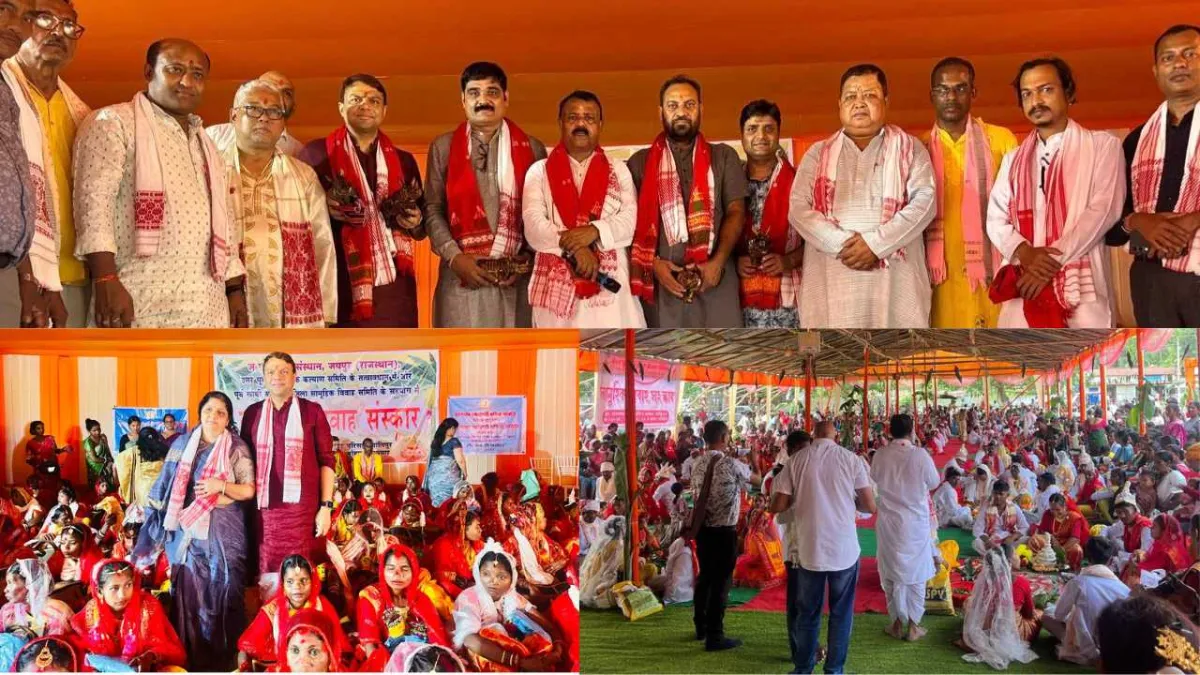
Surat. A grand mass marriage ceremony for 1100 tribal girls was organized in Assam by the Surat-based social organization “Purvanchal Mass Marriage Ceremony Committee,” with the aim of service, cultural values, and protection of Dharma.
Continuing its long-standing tradition, the organization conducted this special ceremony in tribal areas of Northeast India this year as well.
According to information, this event was held for the daughters of tribal families working in tea gardens in Assam. The program was organized under the leadership of the head of the Dharmajagran Samanvay-Surat Marriage Committee, while the patron of the Purvanchal Mass Marriage Ceremony Committee, Surat, provided special support.
The head of the Purvanchal Mass Marriage Ceremony Committee, Surat, informed that the mass marriage programs were organized in various tribal and rural areas of Assam, including prominent regions such as Tezpur, Tinsukia, Dimapur, Jorhat, and Karbi Anglong (Jagiroad). The wedding rites of daughters from needy families living in remote villages of these areas were duly performed.
A special delegation from Surat also arrived in Assam to directly participate in this service work and inspect the arrangements. During the four-day visit, prominent members including the patron, his wife, the committee head, and a chartered accountant were present.
The delegation participated in the wedding ceremonies, interacted with local families, and reviewed the event arrangements. Officials of the organization stated that such programs strengthen service, cooperation, and cultural unity in society.
According to the committee, this event is not limited to a wedding ceremony alone but is an effort to strengthen the spirit of service, cultural values, and protection of Dharma in society.
The organization believes that due to the generosity and social participation of the people of Surat, new hope and happiness have come into the lives of needy daughters in Northeast India.
The committee has expressed its resolve to continue such social and service activities in the future as well.
Assam
Assam, located in northeastern India, is renowned for its rich cultural heritage, biodiversity, and tea plantations. Historically, it was the seat of the powerful Ahom kingdom, which ruled for nearly 600 years until the British annexation in the 19th century. The region is also famous for the Brahmaputra River, wildlife sanctuaries like Kaziranga National Park, and its vibrant festivals such as Bihu.
Tezpur
Tezpur is a historic city in the Indian state of Assam, often called the “City of Blood” due to its legendary association with the mythological battle between the gods Shiva and Krishna. Rich in ancient ruins, it features sites like Agnigarh Hill, linked to the love story of Usha and Aniruddha, and Bamuni Hills with intricate sculptural remains from the 9th–10th century. Today, Tezpur blends its mythological past with colonial-era architecture and natural beauty along the Brahmaputra River.
Tinsukia
Tinsukia is a major city in the Indian state of Assam, known for its rich history as a center of the tea and timber industries during British colonial rule. The name “Tinsukia” is believed to derive from “Tin” (three) and “Sukia” (a type of local plant), and the area was once part of the ancient Chutia kingdom. Today, it serves as a key commercial hub in Upper Assam, surrounded by lush tea gardens and national parks.
Dimapur
Dimapur, located in the northeastern Indian state of Nagaland, is the state’s largest city and a major commercial hub. Historically, it was the capital of the ancient Kachari Kingdom, and remnants of this era, such as the 13th-century Dimapur Ruins with their distinctive stone pillars, still stand today. The city also played a role during World War II as a key supply base for Allied forces in the Burma Campaign.
Jorhat
Jorhat is a city in the Indian state of Assam, known as a major cultural and intellectual hub. It served as the last capital of the Ahom Kingdom in the 18th century and is home to several historic sites, including the Sivasagar tanks and temples. Today, Jorhat is celebrated for its tea gardens, museums, and as a gateway to the Kaziranga National Park.
Karbi Anglong (Jagiroad)
Karbi Anglong (Jagiroad) is a region in Assam, India, known for its scenic hills and cultural diversity. Historically part of the Karbi Anglong district, Jagiroad serves as a key industrial and commercial hub, hosting the Assam Carbon Products Limited and other factories. The area blends indigenous Karbi traditions with modern development, reflecting Assam’s rich tribal heritage and economic growth.
Surat
Surat is a historic port city in the Indian state of Gujarat, known for its significant role in maritime trade during the Mughal era. It was a major hub for exporting textiles, diamonds, and spices to Europe and the Middle East, and it later became an important center for the British East India Company. Today, Surat is a thriving industrial city, famous for its diamond cutting and polishing industry.
Northeast India
Northeast India is a culturally and ecologically diverse region comprising eight states, including Assam, Nagaland, and Manipur. Historically, it served as a crossroads for ancient trade routes and migration, with many kingdoms and tribal communities developing unique traditions over centuries. The area is known for its lush landscapes, ethnic diversity, and vibrant festivals, though it has also faced complex political and social challenges since India’s independence.