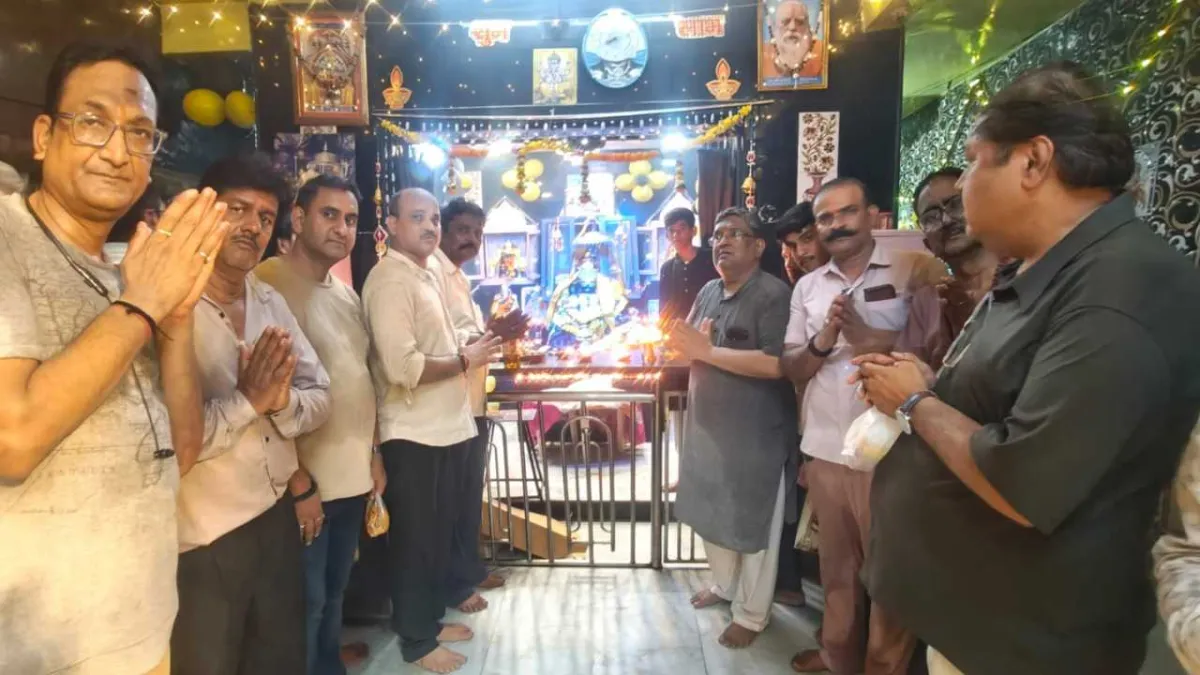
Temple premises resounded with drums, lamps, and chants, devotees were given prasad
The Shri Akhil Bharatiya Jeen Mata Seva Sangh, Surat, celebrated the birth festival of Lord Shani Dev on Saturday, May 16, on the occasion of Amavasya, with devotion and joy. On this occasion, special religious programs were organized at 18 major Shani temples located in various areas of the city.
Members of the Sangh reached all the temples with drums and devotional chants and celebrated Shani Dev’s birthday with great pomp. Under the program, events were held at a total of 18 temples, including Tapi Kubereshwar Mahadev Temple Pal Road, Shani Temple at Pardeshwar Mahadev Temple, Shyam Baba Temple, Mehandipur Balaji Temple, Mahalakshmi Shaktipeeth, Rokadia Hanuman Temple Kharwar Nagar, Socio Circle Shani Temple, Dakshinmukhi Hanuman Temple, Sarveshwar Dham, Navagraha Temple, Suryaputra Shani Dev Temple Anuvrat Dwar, Panchmukhi Hanuman Temple Althan, Kshetrapal Hanuman Temple Majura Gate, Shani Temple near Udhna Railway Station and Bus Depot, Ichhapurti Shani Temple Sitanagar Chowkdi, Shani Temple at Godadara, and Shri Shani Sai Temple Sachin.
In all the temples, 108 lamps were lit and Shani Dev was anointed with mustard oil. After that, a dupatta and flower garlands were offered to the Lord. Offering of coconut, betel leaf, fruits, imarti, and chocolate was made, and prasad was distributed to the devotees. Additionally, 15 kg of oil was also offered for the Shani Bhandara.
Amidst chants like “Victory to Suryaputra Shani Dev,” “Victory to Tapi’s brother Shani Dev,” and “Victory to Chhaya’s son Shani Dev,” devotees swayed to the beats of drums. The temple premises echoed with devotional songs like “Hathi Ghoda Palaki, Jai Bolo Shani Dev Ki” and “Surya Ghar Anand Bhayo, Chhaya Ghar Anand Bhayo.”
A special attraction of the program was a child dressed as Shani Dev cutting a birthday cake. During this, the devotees present collectively sang “Happy Birthday to Shani Dev,” making the celebration even more joyful.
For the successful conduct of the program, the Sangh formed 18 delegations. Many workers, including Vijay Murarka, Ashok Karwa, Manoj Karwa, Satyanarayan Karwa, Abhishek Karwa, Vinod Karwa, Anil Chhipa, Pushpa Rajput, Prateek, Gautam Jaju, Rajendra Rajpurohit, Rajesh Kabra, Mahesh Patnecha, Tara Devi, Sabarmal Bihani, Praveen Bafna, Praneta, Anita, Abhishek Agarwal, and Naman Khandelwal, made significant contributions to the event.
Tapi Kubereshwar Mahadev Temple
Tapi Kubereshwar Mahadev Temple is a historic Hindu temple located in Gujarat, India, dedicated to Lord Shiva. It is situated near the Tapi River, from which it derives part of its name, and is believed to have ancient origins, with local legends linking it to the god Kubera. The temple remains an important pilgrimage site, drawing devotees for its spiritual significance and serene riverside setting.
Pardeshwar Mahadev Temple
Pardeshwar Mahadev Temple is a historic Hindu shrine dedicated to Lord Shiva, located in the village of Pardi in Gujarat, India. Believed to be centuries old, the temple is renowned for its ancient Shivlinga and intricate stone architecture, reflecting the region’s rich cultural heritage. It remains an important pilgrimage site, especially during the month of Shravan, drawing devotees seeking blessings and spiritual solace.
Shyam Baba Temple
The Shyam Baba Temple, located in Khatu, Rajasthan, is a highly revered Hindu shrine dedicated to Lord Krishna in his form as Shyam (the dark-complexioned one). The temple’s history dates back to the 12th century, when it was established after the deity’s idol was miraculously discovered by a cowherd. It is particularly famous for its vibrant fairs and the deep devotion of pilgrims who believe that Lord Shyam fulfills the wishes of those who visit.
Mehandipur Balaji Temple
The Mehandipur Balaji Temple, located in Rajasthan, India, is a renowned Hindu temple dedicated to Lord Hanuman, also known as Balaji. It is famous for its unique and intense exorcism rituals, where priests perform ceremonies to cure devotees believed to be possessed by evil spirits or black magic. The temple’s history is rooted in local folklore, with its origins traced back to the 19th century when the idol of Hanuman was discovered in the nearby hills.
Mahalakshmi Shaktipeeth
Mahalakshmi Shaktipeeth is a revered Hindu temple located in Kolhapur, Maharashtra, India, dedicated to the goddess Mahalakshmi. According to legend, it is one of the 51 Shakti Peethas, where the eyes of the goddess Sati are said to have fallen after her body was dismembered by Lord Vishnu. The temple, with its ancient origins dating back to the 7th century, is a major pilgrimage site and a fine example of Hemadpanthi architecture.
Rokadia Hanuman Temple
The Rokadia Hanuman Temple is a revered Hindu shrine located in the Indian state of Rajasthan, dedicated to Lord Hanuman. Its history is tied to local legends, often associated with a miraculous appearance of the deity’s idol in a natural cave or rocky terrain, making it a significant pilgrimage site for devotees. The temple attracts visitors seeking blessings and spiritual solace, particularly during the festival of Hanuman Jayanti.
Sarveshwar Dham
Sarveshwar Dham is a prominent Hindu temple complex located in the town of Alwar, Rajasthan, India. Dedicated to Lord Shiva, it was established in the 19th century and is known for its unique architecture and spiritual significance. The site also features a sacred pond and a large statue of Lord Shiva, attracting pilgrims and tourists alike.
Navagraha Temple
The Navagraha Temple, located in Guwahati, India, is a unique temple dedicated to the nine celestial bodies (Navagrahas) of Hindu astrology. Perched atop the Chitrasal Hill, the temple’s history dates back to the 18th century, when it was built by the Ahom king Siva Singha. It is a significant pilgrimage site where each planetary deity is represented by a distinct shrine, reflecting the deep cultural importance of astrology in Hindu tradition.