Amid the Middle East crisis, India’s ‘Samudra Manthan Mission’ has achieved an unprecedented success in discovering a second major natural gas reserve in the Andaman Sea.
Natural gas reserve found in Andaman, Samudra Manthan Mission achieves major success
Amid the ongoing global Middle East crisis and fuel shortage, very big and historic news has emerged for India’s energy sector. The country’s ambitious offshore project has achieved a major international success. According to official reports, a natural gas reserve has been found in the Andaman Sea. This remarkable discovery will significantly reduce India’s dependence on foreign oil and gas imports in the future.
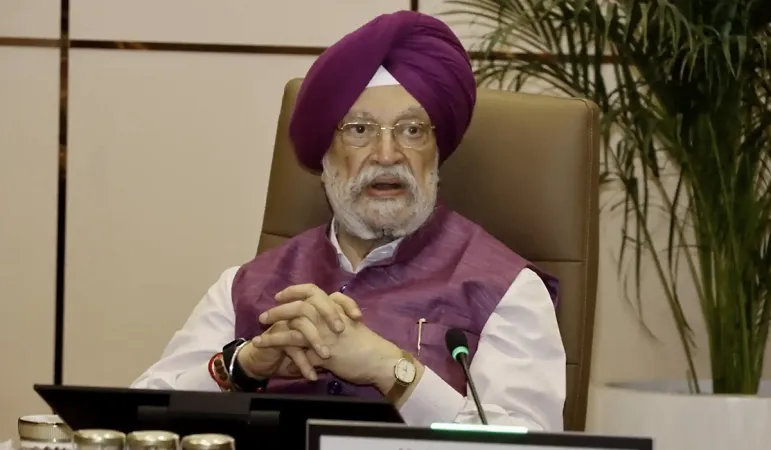
Union Minister Hardeep Singh Puri provides official information via X (Twitter) post
Union Minister for Petroleum and Natural Gas Hardeep Singh Puri on Friday released official figures and details regarding this. According to reports, the government-owned company Oil India Limited (OIL) has achieved this major success in the coastal area of the Andaman Islands. With the natural gas reserve found in the Andaman, this entire maritime region is set to emerge as a major hydrocarbon hub in the coming days.
According to sources, this new discovery was made approximately 15 kilometers from the eastern coast of the Andaman archipelago. The gas was found in the exploration well named ‘Vijaypuram-3’, located at a depth of 355 meters underwater. This is the company’s second successful well in this block. Earlier, in September 2025, the presence of gas was officially confirmed in ‘Vijaypuram-2’ as well.
The company has achieved success in two out of the three wells drilled so far. With the natural gas reserve found in the Andaman, shares of energy companies in the Indian stock market have also seen a significant surge.
This latest discovery comes at a time when global supply chains have been disrupted due to the war in the Middle East. Prime Minister Narendra Modi had officially announced the ‘Samudra Manthan Mission’ from the Red Fort on the occasion of Independence Day 2025, aimed at national energy self-reliance. The main objective of this mission is to fully utilize the hydrocarbon reserves hidden in India’s ultra-deep offshore areas. Under this project, drilling of more wells is planned in the future.
Sufficient raw material for CNG and PNG from Vijaypuram-3 well
This gas discovery is expected to bring widespread benefits to the country’s local industries and ordinary citizens. According to government sources, this natural gas can be used for large-scale production of CNG, PNG, raw materials for chemical fertilizers, and petrochemicals. With the natural gas reserve found in the Andaman, the country will become a global leader in clean energy and green hydrogen production.
In particular, Oil India Limited stated that this success will give new wings to India’s ambitions for international-level deep-sea exploration. Increased local gas production will also help stabilize prices for vehicle fuel and cooking gas. With the natural gas reserve found in the Andaman, there will also be massive savings in foreign exchange.
In response to the Union Minister’s post, Oil India reiterated its commitment to using state-of-the-art technology for the country’s secure energy future.
New roadmap for the country’s energy security and self-reliance in the hydrocarbon sector
In the coming months, Oil India will prepare a commercial plan to search for additional hydrocarbon reserves around this basin. With the natural gas reserve found in the Andaman, this area will now become a center of attraction for global energy companies. In the second phase of the Samudra Manthan Mission, similar high-tech drilling will also be initiated in the deep waters of the western coast.
Under India’s Samudra Manthan Mission, a natural gas reserve has been found in the Andaman, which will prove to be a game changer for the country’s energy security. This success from Oil India’s Vijaypuram-3 well will make India self-reliant amid the Middle East crisis. Can India halve its spending on gas imports in the next five years following this new discovery?