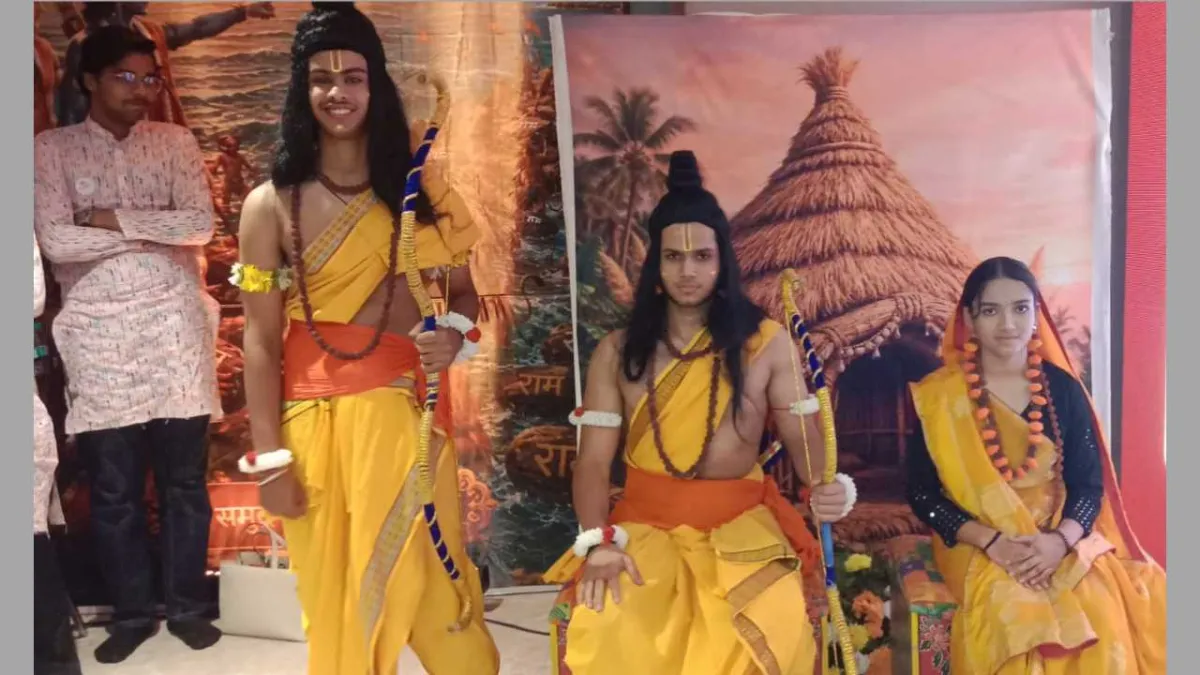
Devotees’ Eyes Moistened by the Touching Story of Sita’s Farewell and Exile; A Message of Dharma and Duty Conveyed
On the third day of the Shri Ram Katha Mahotsav held at the Capital Green Society Banquet Hall in Vesu, the emotional episode of Sita’s farewell and Shri Ram’s departure into exile was narrated on Monday. During the discourse, various divine plays of Lord Shri Ram were described, which a large number of devotees gathered to hear.
From the speaker’s seat, the touching story of Lord Shri Ram, Mother Sita, and Lakshman’s journey into exile was narrated in detail. As the episode of exile was recounted, the devotees present in the pandal became emotionally overwhelmed, and many devotees’ eyes grew moist.
It was explained that after Sita’s swayamvara, the marriages of Lord Shri Ram, Mother Sita, and the four brothers were completed. Upon the wedding procession’s arrival in Ayodhya from Janakpur, the entire city was in a celebratory mood, but circumstances changed when Kaikeyi demanded two boons previously granted by King Dasharatha. As a result, Bharat received the throne, and Lord Shri Ram was given fourteen years of exile.
It was stated that to uphold the sanctity of his father’s word, Lord Shri Ram willingly accepted the exile. Mother Sita, fulfilling her duty as a wife, decided to go with him into the forest, while Lakshman, driven by brotherly love and a spirit of service, accompanied them. As the three departed from Ayodhya, the entire city was plunged into grief.
The storyteller said that the episode of Sita’s farewell inspires sacrifice, values, and dedication to family, while Shri Ram’s exile is the highest example of righteousness, duty, and keeping one’s word. Lord Ram set the ideal of protecting truth and righteousness, while Mother Sita established an unparalleled example of devotion, and Lakshman of service and brotherly love.
On this occasion, the patrons of the Shri Ram Katha Mahotsav, along with guests and a large number of devotees were present.
Ayodhya
Janakpur
Capital Green Society Banquet Hall
Capital Green Society Banquet Hall
Ayodhya
Janakpur
Related news

Akshay Kumar and Priyadarshan deliver a box office hit.

Historical MoU between Surat Municipal Corporation and Bank of Baroda provides employees with free insurance coverage of up to 2 crores.
“Dudhrej Temple resounds with Harsh Sanghvi’s roar: ‘Zero tolerance for cow slaughterers, life imprisonment for 18 criminals'”
Surat: ‘Fake IT Officer’ Arrested While Raiding in Suit and Boots