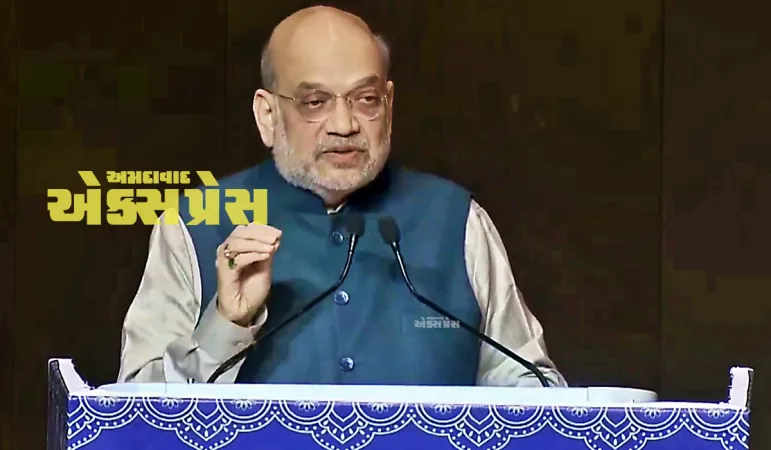
Amit Shah has announced a major roadmap to increase the income of tribal communities in Bastar, Chhattisgarh, by six times and implement development schemes.
Amit Shah made a big announcement for Bastar, know what is the plan until 2031?
Hearing Amit Shah’s name, people initially thought he would only talk about military action against Naxalism. But on Tuesday night, May 19, 2026, in Jagdalpur, the Union Home Minister presented an economic model that surprised everyone. A roadmap has been prepared to fully develop Bastar by the year 2031, which will directly strengthen the finances of tribal communities. The point is that these new schemes will transform the entire region.
Bastar: Tribal income to increase six-fold in Naxal-free region
This journey of change begins in the most backward villages of Chhattisgarh. An ordinary tribal citizen living in the forests never imagined that the profit from forest produce would directly come into their bank account. Previously, development work could not happen due to fear of Naxalites. At the same time, Amit Shah came up with a revolutionary idea of establishing cooperative societies to directly connect tribal women with the dairy industry, and its implementation has begun.
According to sources, under this scheme, every tribal citizen in Bastar will be given a cow and a buffalo. Service dairies and PACS (Primary Agricultural Credit Societies) are being set up to collect milk in villages. It is known that due to security forces, Naxalism is on the verge of ending in this area. As a result, the government has set a target to increase the income of local people six-fold in the next five years.
This new economic dawn has emerged at a time when discussions on internal security and development models are taking place across the country. People are searching for the latest news online, especially to strengthen the rural economy. Today, this Bastar model is being highly praised in various digital media outlets. You might also be surprised that the area once known for violence will now become a major center for milk production.
Chhattisgarh: Security camps to become centers for delivering government schemes
About 70 out of nearly 200 security camps built in the forests of Chhattisgarh will now be converted into ‘Veer Shaheed Gundadhur Seva Dera’ centers. According to reports, from these centers, tribal communities will be able to benefit from 371 central and state government schemes at a single location. Previously, even basic facilities like electricity, water, schools, and ration cards could not reach these areas. Seeing this big change, the satisfaction and happiness of local people have been highlighted. The most interesting thing is that this time, more than 394,000 athletes participated in the Bastar Olympics, including former Naxalites who had surrendered. Some people say this will create new employment opportunities, while others believe these schemes will permanently eliminate Naxalism.
A new chapter of development amid IPL 2026 and national politics
In the coming days, when cultural festivals like Bastar Pandum are held, tribal culture will shine on the world stage. According to reports, the government will soon bring a new roadmap for skill development and private jobs. Amid the various political currents of Indian elections, such foundational development work will have long-term effects. Now, the cooperative system will play a major role in the collection of forest produce.
According to Amit Shah’s announcement, all profits from forest produce and agriculture in Bastar will now go directly to tribal communities. Through Seva Dera centers, there is a plan to deliver 371 schemes to doorsteps. Whether Bastar will emerge as a developed and Naxal-free model region by the year 2031 remains to be seen.