Work From Home and Petrol Rationing Will Reduce Waste
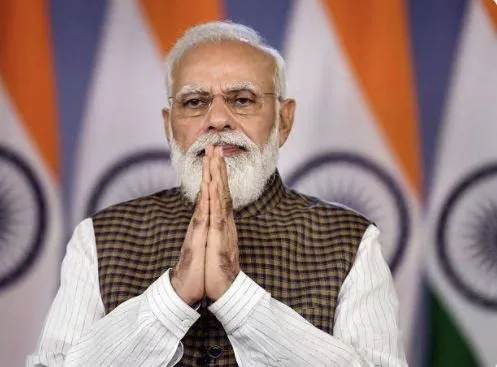
New Delhi, May 14. Amid the global energy crisis caused by rising tensions in West Asia and broken supply chains, Prime Minister Narendra Modi has appealed to citizens to save petrol, diesel, and gold.
According to the International Energy Agency, more than 40 countries around the world have already taken such strict steps before India. Neighboring countries Pakistan, Bangladesh, and Sri Lanka have re-adopted the work-from-home culture to save energy.
In these countries, measures like petrol rationing, reduced office hours, and promoting public transport have been implemented on a war footing to stabilize the faltering economy.
Every country is developing its own strategy to tackle the energy crisis. Sri Lanka has a four-day work week and a rule to keep street lights off in the evening, while Bangladesh has fixed air conditioner temperatures at 25°C.
In Pakistan, markets are being closed by 8 PM, and Nepal has set fuel quotas for government vehicles. China is relying heavily on electric vehicles and solar energy to reduce its dependence.
Countries like Jordan and Indonesia have even imposed temporary bans on non-essential official foreign travel to preserve foreign exchange reserves.
The purpose of Prime Minister Modi’s appeal is to protect the country from economic slowdown and strengthen the domestic currency. The government wants citizens to promote tourism within the country instead of foreign travel, so that money stays with Indian businesses.
The reasoning behind the appeal to save petrol and diesel is that, despite the surge in global prices, the government has not burdened the public, but to maintain this, it is essential to reduce consumption.
In India, there is also consideration of reducing ministers’ fleets and implementing systems like odd-even in the future to keep the country’s economic pace safe during global uncertainty.
New Delhi
New Delhi is the capital of India, designed by British architects Edwin Lutyens and Herbert Baker in the early 20th century and officially inaugurated in 1931 to replace Calcutta as the imperial seat. The city was built to symbolize British power, but after India’s independence in 1947, it became the heart of the new republic. Today, New Delhi is known for its grand boulevards, historic government buildings like the Rashtrapati Bhavan and India Gate, and its vibrant blend of colonial and modern culture.
Pakistan
Pakistan is a South Asian country with a rich history that dates back to ancient civilizations like the Indus Valley. It was created in 1947 as a homeland for Muslims in the Indian subcontinent, following the end of British colonial rule. Today, Pakistan is known for its diverse culture, historic sites like Mohenjo-daro, and natural landmarks such as the Karakoram mountain range.
Bangladesh
Bangladesh is a South Asian country with a rich history, having been part of ancient Bengal, the Mughal Empire, and later British India. It gained independence from Pakistan in 1971 after a brutal war of liberation, and its capital is Dhaka. Today, Bangladesh is known for its vibrant culture, the Sundarbans mangrove forest, and its significant role in the global textile industry.
Sri Lanka
Sri Lanka, an island nation in South Asia, has a rich history dating back over 2,500 years, marked by ancient kingdoms like Anuradhapura and Polonnaruwa, as well as colonial rule by the Portuguese, Dutch, and British. It is renowned for its cultural heritage, including Buddhist and Hindu temples, and its iconic sites like the Sigiriya rock fortress. Today, the country is known for its diverse landscapes, from beaches to tea plantations, and a vibrant culture shaped by its Sinhalese, Tamil, and other communities.
Nepal
Nepal is a South Asian country renowned for its rich cultural heritage and stunning natural landscapes, including the Himalayan mountain range and Mount Everest. Historically, it was home to the ancient kingdoms of the Licchavi and Malla periods, and it is the birthplace of Siddhartha Gautama, the founder of Buddhism. Today, Nepal is known for its diverse ethnic groups, vibrant festivals, and UNESCO World Heritage Sites like the Kathmandu Valley.
China
China is a vast East Asian country with one of the world’s oldest continuous civilizations, dating back over 4,000 years. Its rich history includes the rise of dynasties such as the Qin, Tang, and Ming, as well as iconic cultural sites like the Great Wall and the Forbidden City. Today, China blends its ancient heritage with rapid modernization, making it a unique destination for exploring both historical and contemporary culture.
Jordan
Jordan is a Middle Eastern country rich in history, best known for the ancient Nabataean city of Petra, a UNESCO World Heritage Site carved into rose-red cliffs. Its history spans millennia, from prehistoric settlements and biblical lands to Roman rule under the Decapolis cities like Jerash, and later Islamic empires. Today, Jordan is a stable nation that preserves these cultural treasures, including the desert landscapes of Wadi Rum and the Dead Sea.
Indonesia
Indonesia is a Southeast Asian archipelago nation with over 17,000 islands, known for its immense cultural and ethnic diversity. Its history is shaped by centuries of trade, Hindu-Buddhist kingdoms like Srivijaya and Majapahit, Islamic sultanates, and Dutch colonial rule, followed by a declaration of independence in 1945. Today, it is the world’s largest Muslim-majority country, famous for sites like Borobudur temple, Bali’s Hindu culture, and the UNESCO World Heritage rice terraces.