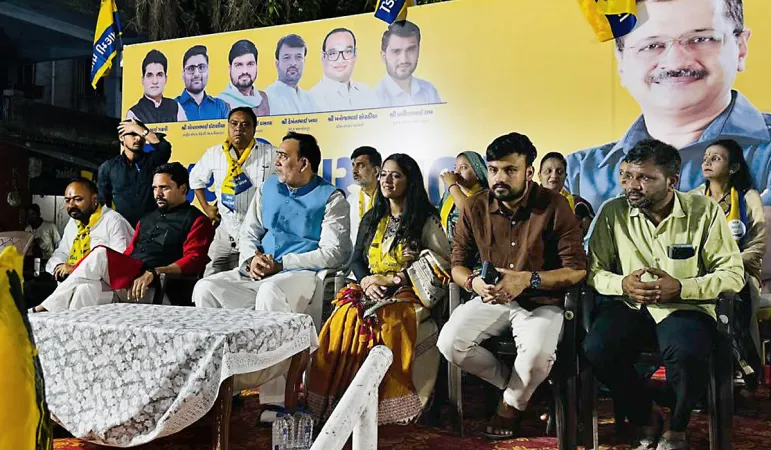
A ‘Vijay Vishwas Sabha’ (Victory Trust Rally) was organized in Bapunagar. The public was appealed to vote for change and make the ‘broom’ symbol victorious.
Election Bugle Sounded in Ahmedabad
The political atmosphere heated up in the historic Bapunagar area of Ahmedabad city. A grand ‘Vijay Vishwas Sabha’ was organized.
The arrival of a former central minister from Delhi and current legislator in charge of Gujarat brought immense enthusiasm among the workers. A large number of local citizens thronged the rally, signaling a wave of change.
According to official party circles, the main objective of this rally was to win public trust ahead of the local self-government elections.
Addressing the gathering from the stage, it was stated that the people of Gujarat are now tired of the decades-old rule.
Issues of education and health for the working and middle-class families of Bapunagar were emphasized.
Key Features of the Bapunagar Victory Trust Rally
The main issues presented by the party during the rally are as follows:
Establishment of neighborhood clinics in Gujarat on the lines of the Delhi model.
Promise of free and quality education for the middle class.
Special plans to create local employment opportunities.
Assurance of a corruption-free governance system.
Following this, a Delhi legislator also addressed the crowd.
It was stated that the people of the Bapunagar area have always supported struggle. The leaders expressed unwavering faith that this time too, they will embrace honest politics.
The people present at the rally unanimously raised slogans for change.
Regional and Local Leadership Present at the Rally
The following officials were present at this event:
State Chief Spokesperson.
State Vice President.
Lok Sabha In-charge and Assembly In-charge.
According to reports from political observers, this rally could change the equations in the eastern areas of Ahmedabad.
Not only workers but also common homemakers and elders attended this rally. People voluntarily took a pledge that this time they would give their valuable vote only and only to the ‘broom’ symbol.
Furthermore, addressing the workers, it was said it is necessary to reach every home and communicate the party’s ideology.
The public support received in various rallies has moved the party officials.
The people of Bapunagar have assured that their family will be on the side of change this time.
In conclusion, thanking the public, it was said this fight is not just for power, but for the rights of the common man.
Hundreds of youth joined the party at the end of the rally. This crowd and public trust prove that in the coming days, the party will emerge as a strong force in the Ahmedabad Municipal Corporation and other elections.
Bapunagar
Ahmedabad
Bapunagar
Ahmedabad
Gujarat
Delhi
Sabarmati River
Related news

Surat: Drunk Driver Causes Destruction with Trailer, Breaks Wall of Rokadiya Hanuman Temple

Do you know why Solapur city in Maharashtra is known as the watermelon capital of the country?
Natural gas reserve found in Andaman, major success for Ocean Mission.

30-Year-Old ‘Momai Complex’ in Umarwada Area of Surat Is a Key Center for Textile Business