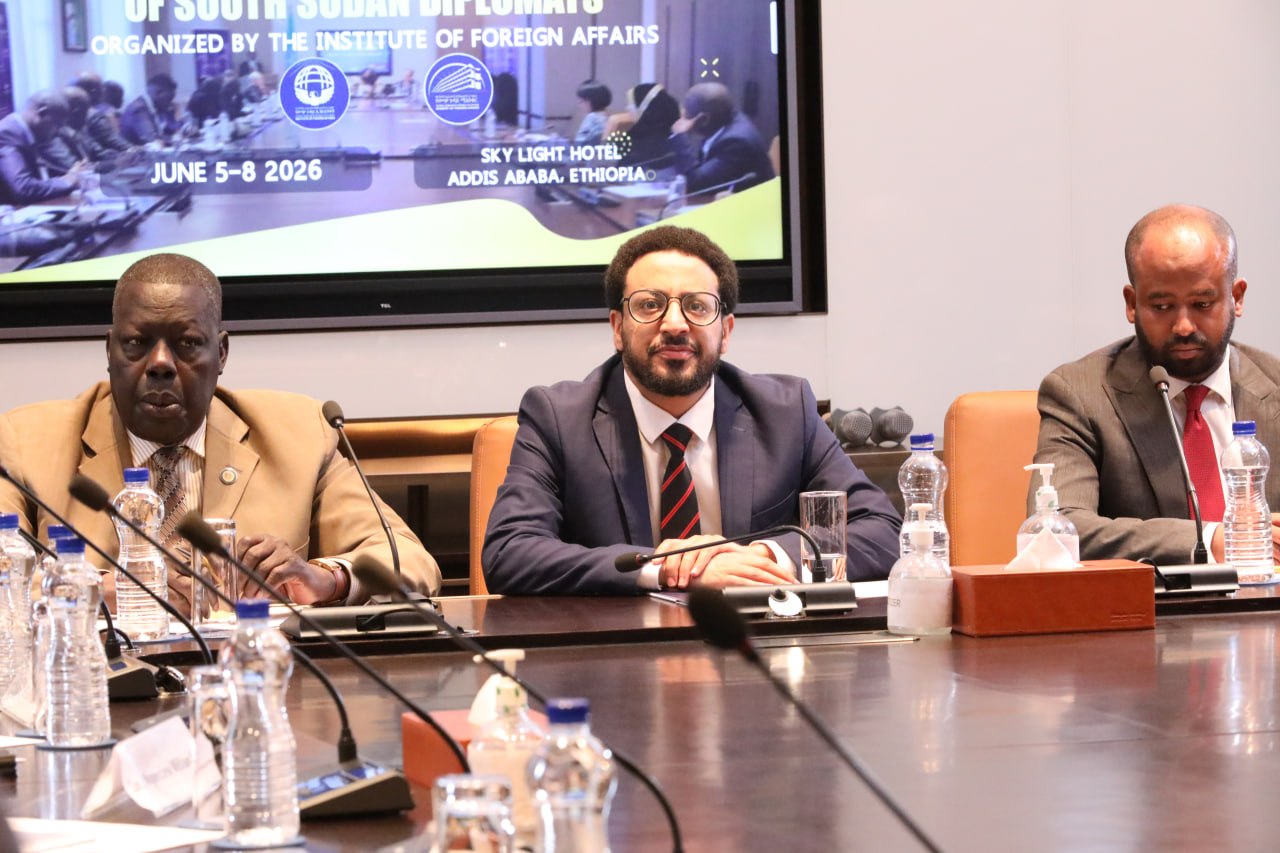
Addis Ababa, June 5, 2026 – Ethiopia has launched a specialized four-day diplomatic training program targeting diplomats from the Republic of South Sudan in the capital Addis Ababa, aimed at enhancing bilateral cooperation between the two countries and developing the diplomatic capabilities of personnel working in the diplomatic corps.
The training program includes a comprehensive curriculum covering the historical achievements of the African unity movement and its ongoing role in promoting the unity of the African continent, along with a focus on negotiation skills and building strategic networks within contemporary African diplomacy.
During the opening ceremony of the program, the Executive Director of the Ethiopian Institute of Foreign Affairs emphasized that this initiative reflects the depth of the historical relations between the two countries, which are based on partnership, peacebuilding, and regional solidarity.
He noted that Ethiopia, South Sudan, and Sudan have shared important regional milestones, most notably the Comprehensive Peace Agreement of 2005, in addition to South Sudan’s independence in 2011.
The Executive Director explained that the continuous support provided by Ethiopia to South Sudan during pivotal historical stages contributed to building a relationship based on mutual trust and good neighborly ties.
The Executive Director linked the training program to the joint strategic projects being implemented between the two countries, particularly projects developing cross-border transport and energy corridors.
He added that Ethiopia and South Sudan are working to establish vital connectivity networks aimed at enhancing trade, facilitating the movement of services, and improving access to resources, thereby helping to reduce dependence on a single external trade route.
Amid rapid regional transformations and the ongoing conflict in Sudan, the Executive Director stressed the importance of active and proactive diplomatic engagement, calling on diplomats in the region to consider peacebuilding a fundamental responsibility towards communities affected by crises.
He affirmed that building strong diplomatic relations in the present would establish sustainable partnerships that last for decades.
In turn, the Deputy Head of Mission of the South Sudanese diplomatic mission in Ethiopia praised the training program, considering it an important opportunity to enhance diplomatic skills and raise professional competence amid the growing complexities of international relations.
He explained that the role of diplomats in the modern era is not limited to representing their countries but also includes contributing to peacebuilding efforts, conflict resolution, and promoting regional integration and economic cooperation.
The Deputy Head of Mission expressed appreciation to the Ethiopian government and the Ethiopian Institute of Foreign Affairs for organizing this program, affirming that providing such specialized training for South Sudanese diplomats in Addis Ababa represents an important opportunity to develop their professional capabilities.
He also called on participants to fully benefit from the training sessions, learn from the expertise of the instructors, and build sustainable professional relationships that contribute to strengthening the historical ties between Ethiopia and South Sudan and support the path of joint cooperation between the two countries.