Addis Ababa, May 16, 2026 — The Ethiopian National Dialogue Commission announced that the comprehensive national dialogue process in Ethiopia has entered an advanced stage, nearing its final phase, during the presentation of its executive report on the progress of the national consultation and dialogue process.
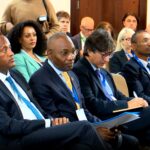
The report was presented in the presence of Ethiopian Prime Minister Abiy Ahmed, along with senior federal and regional officials and members of the standing committee of the House of Peoples’ Representatives.
The report reviewed the key activities carried out by the commission so far, as well as the operational challenges it faced and the strategic measures taken to address them, in addition to defining the expected roles of various stakeholders to ensure the continuity of the process in its next phase.
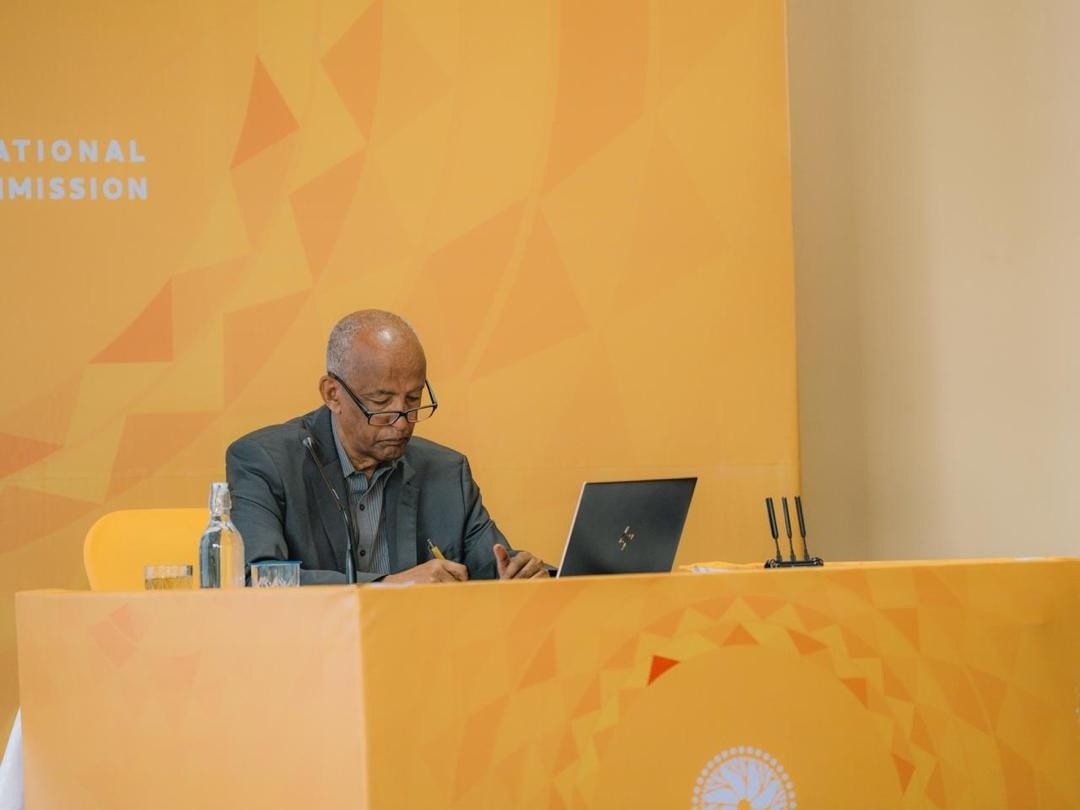
During the presentation, the commission’s chief commissioner, Professor Mesfin Araya, emphasized that the commission’s efforts over the past years have now reached their final stage.
He said: «The work accomplished by the commission over the past years has entered its final stage,» noting that the process has been significantly strengthened by integrating local national expertise and knowledge with best international practices, which has contributed to enhancing the commission’s efficiency during this critical phase.
Professor Mesfin explained that one of the key achievements of the initiative is its reliance on an inclusive and participatory national consultation process.
He added that agenda collection and consultation activities have been successfully completed in 1,234 districts, representing about 93 percent of the country.
Regarding the Tigray region, he explained that prevailing conditions prevented traditional consultations within the region, prompting the commission to organize a special forum in Addis Ababa, bringing together representatives from Tigray alongside representatives from various local communities across the country.
He noted that those consultations focused on integrating these voices into the broader national process of dialogue and formulating a joint national agenda based on cooperation.
The chief commissioner stressed that broad popular participation remained a central focus throughout all stages of the process, from initial engagement with stakeholders to the finalization of dialogue agendas.
Regarding the next phase, the commission stated that its work will focus on three main areas, including enhancing active participation of political forces, completing the formulation of national dialogue agendas, and organizing the official national dialogue conference.
The commission confirmed that preparations for holding the national dialogue conference are currently underway, with the date of its convening to be announced later.
For his part, Prime Minister Abiy Ahmed expressed his appreciation to all participants in the process since the launch of the initiative, noting that the national dialogue path has not only achieved its core results but has also contributed to drawing important lessons that supported broader institutional learning.
The Prime Minister affirmed that the national dialogue process represents a forward-looking initiative that aims not only to address present needs but also considers the interests of future generations.
He also reiterated the government’s commitment to continue providing all forms of necessary support to the commission, in line with previous pledges made by the state to support the national dialogue process.