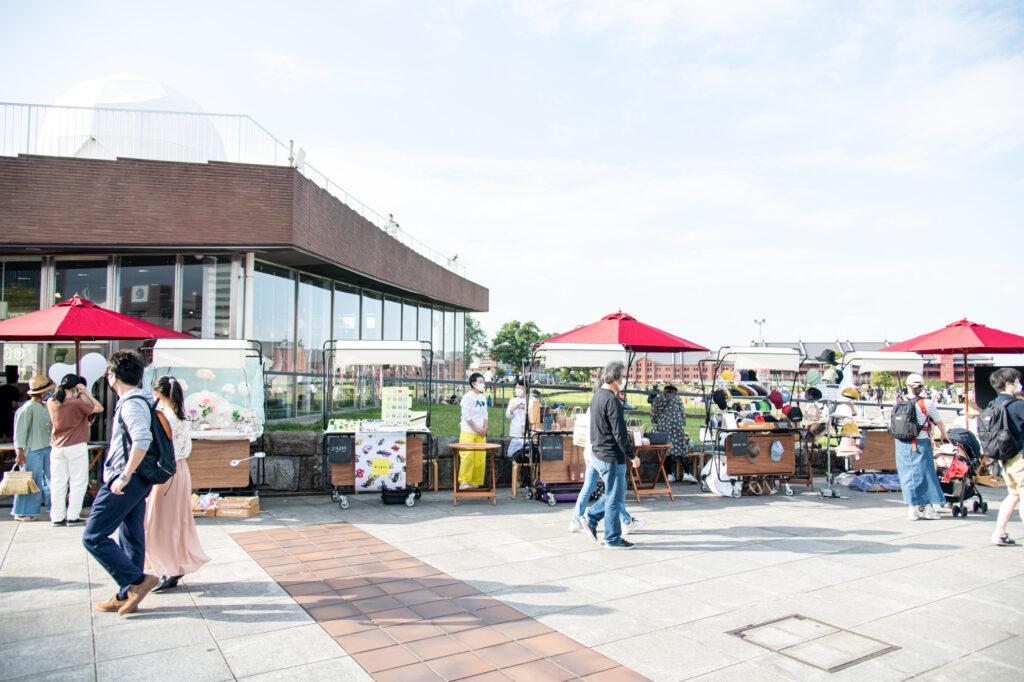
Starting May 2, the market event «ZOU-SUN-MARCHE: Find What You Love, a Harbor Market» will be held at Zou no Hana Terrace (1 Kaigandori, Naka Ward, Yokohama).
This facility opened on June 2, 2009, as part of the 150th anniversary of the Port of Yokohama. It was built as a rest house with an art space and cafe in Zou no Hana Park, a park developed as a symbolic space connecting Yokohama’s history and future at the birthplace of Yokohama Port.
Since 2015, under the concept of «Happy weekends at Zou no Hana,» the market has been held regularly, allowing visitors to interact with participating creators through conversation and hands-on craft experiences. The goal is to create a space where visitors can discover new interests and learning by engaging with the background and techniques of the artworks.
For the 2026 fiscal year, each event will have a theme, featuring a diverse range of creators and shops selected through an open call. The first event this time, themed «Harbor Picnic,» will include markets exploring global cultures, craft workshops, music, and performances.
More than 30 vendors, including 20 first-time participants, will gather at the venue. Stalls will offer a variety of genres such as antiques, woodworking, leather crafts, baked goods, and flowers, along with workshops where visitors can enjoy hands-on creative experiences.
The concurrently held workshop series «Atelier Zou no Hana» will also offer diverse creative experiences, including flower arrangement classes, baskets made from paper strings, and soap carving.
The terrace’s large staircase, connected to the park, will be used as a stage. Performances are planned by artists including Masaki Murata, Ikuko Mukaizawa, Mio, and Maasa. The open space, where you can feel the sea breeze, will create a lively atmosphere.
Additionally, leisure sheets featuring artist Asae Sotani’s work «MIZUNOWA» will be available for free loan. By spreading out the sheets, visitors can enjoy a «moving art» display spreading across the park.
Event hours are from 11:00 AM to 4:00 PM. Admission is free. The event runs until May 5.
Zou no Hana Terrace
Zou no Hana Terrace is a scenic observation deck in Tokyo, Japan, named for its elephant-shaped stone monument (zou no hana meaning «elephant’s nose»). Originally part of the former Kiyosumi Garden estate, the terrace offers panoramic views of the Sumida River and Tokyo Skytree, blending Edo-period landscaping with modern cityscapes. It has become a popular spot for photography and relaxation, reflecting the area’s historical charm and contemporary appeal.
Zou no Hana Park
Zou no Hana Park, located in Tokyo’s Taito Ward, is a small green space that was built on the site of a former tram depot. Its name, meaning «Elephant’s Nose,» comes from the shape of a nearby elevated railway structure that resembles an elephant’s trunk. The park serves as a quiet urban retreat, preserving a piece of the area’s transportation history while offering a place for relaxation.
Yokohama Port
Yokohama Port is one of Japan’s most significant international harbors, located in Kanagawa Prefecture. It opened to foreign trade in 1859 following the end of Japan’s isolationist period, quickly becoming a major gateway for commerce and cultural exchange. Today, it remains a vital economic hub and a popular tourist destination, featuring landmarks like the Yokohama Bay Bridge and the historic red-brick warehouses.
Zou no Hana Terrace
Zou no Hana Terrace is a scenic observation deck in Tokyo, Japan, located near the iconic Tokyo Tower. Its name, meaning «Elephant’s Nose Terrace,» comes from a nearby stone monument shaped like an elephant’s trunk, which dates back to the Edo period as a landmark for travelers. The terrace offers panoramic views of the city, blending modern and historical elements, and is a popular spot for photography and relaxation.
Zou no Hana Park
Zou no Hana Park is a small public park in Tokyo, Japan, known for its unique history as the former site of a zoo’s elephant enclosure. The park’s name, meaning «Elephant’s Nose Park,» pays homage to the beloved elephant that once lived there. Today, it serves as a peaceful green space with a commemorative statue, preserving a piece of local cultural heritage.
Yokohama Port
Yokohama Port is one of Japan’s most important and historic international seaports, located just south of Tokyo. It opened to foreign trade in 1859 during the Bakumatsu period, playing a pivotal role in Japan’s modernization and rapid industrialization. Today, it remains a major hub for global commerce and a popular tourist destination, featuring the iconic Yokohama Bay Bridge and the Minato Mirai waterfront district.
Yokohama Bay Bridge
The Yokohama Bay Bridge is a 860-meter-long cable-stayed bridge in Japan, completed in 1989, that connects the Yokohama port area to the Negishi Bay coastal highway. It was built as part of the city’s urban development and port expansion projects, featuring a distinctive design with two towering pillars and a double-deck roadway. The bridge offers pedestrian walkways with panoramic views of Yokohama’s skyline and Tokyo Bay, making it a popular tourist attraction.
Kiyosumi Garden
Kiyosumi Garden is a traditional Japanese landscape garden in Tokyo, originally built in the late 17th century as a villa for the wealthy merchant Kinokuniya Bunzaemon. It later became the residence of the feudal lord of the Sekiyado domain, who expanded and refined the garden with a large pond, carefully placed stones, and seasonal plants. After surviving the 1923 Great Kanto Earthquake, the garden was donated to the city and opened to the public, now celebrated as a serene example of Edo-period strolling garden design.
Tokyo Skytree
Tokyo Skytree, completed in 2012, is a broadcasting tower and observation deck in Tokyo, Japan, standing 634 meters tall as the country’s tallest structure. It was built to replace the older Tokyo Tower as the primary TV and radio broadcast hub, while also serving as a major tourist attraction offering panoramic city views. Its height of 634 meters was chosen because the numbers 6-3-4 can be read as «Mu-sa-shi,» referring to the old name of the region.
Sumida River
The Sumida River flows through Tokyo, Japan, playing a central role in the city’s history as a key transportation and cultural artery since the Edo period (1603–1868). Historically, it was a popular route for pleasure boats and is famously associated with fireworks festivals that began in the 18th century to honor the river’s spirits. Today, it remains a scenic landmark, lined with cherry blossoms and modern bridges, blending traditional and contemporary Tokyo life.
Tokyo
Tokyo, the capital of Japan, was originally a small fishing village called Edo before becoming the seat of the Tokugawa shogunate in 1603. After the Meiji Restoration in 1868, it was renamed Tokyo («Eastern Capital») and rapidly developed into a major political, economic, and cultural hub. Today, Tokyo is a sprawling metropolis that blends historic temples and imperial palaces with cutting-edge technology, fashion, and pop culture.