At 7:30 AM, at the Yanhe Village Committee in Wushan Town, Gucheng County, village committee members and village group leaders sit in a circle on time.
“There are many things to discuss. Let’s go through them one by one and handle them immediately!” said the village party secretary, Min Hongyan, getting straight to the point and assigning tasks to individuals.
This steadfast morning meeting has been held for 34 years.
Over 34 years, Yanhe has transformed from a remote mountain village into a national 4A-level tourist attraction. The per capita annual income of villagers has exceeded 40,000 yuan, and the village’s collective assets have surpassed 200 million yuan.
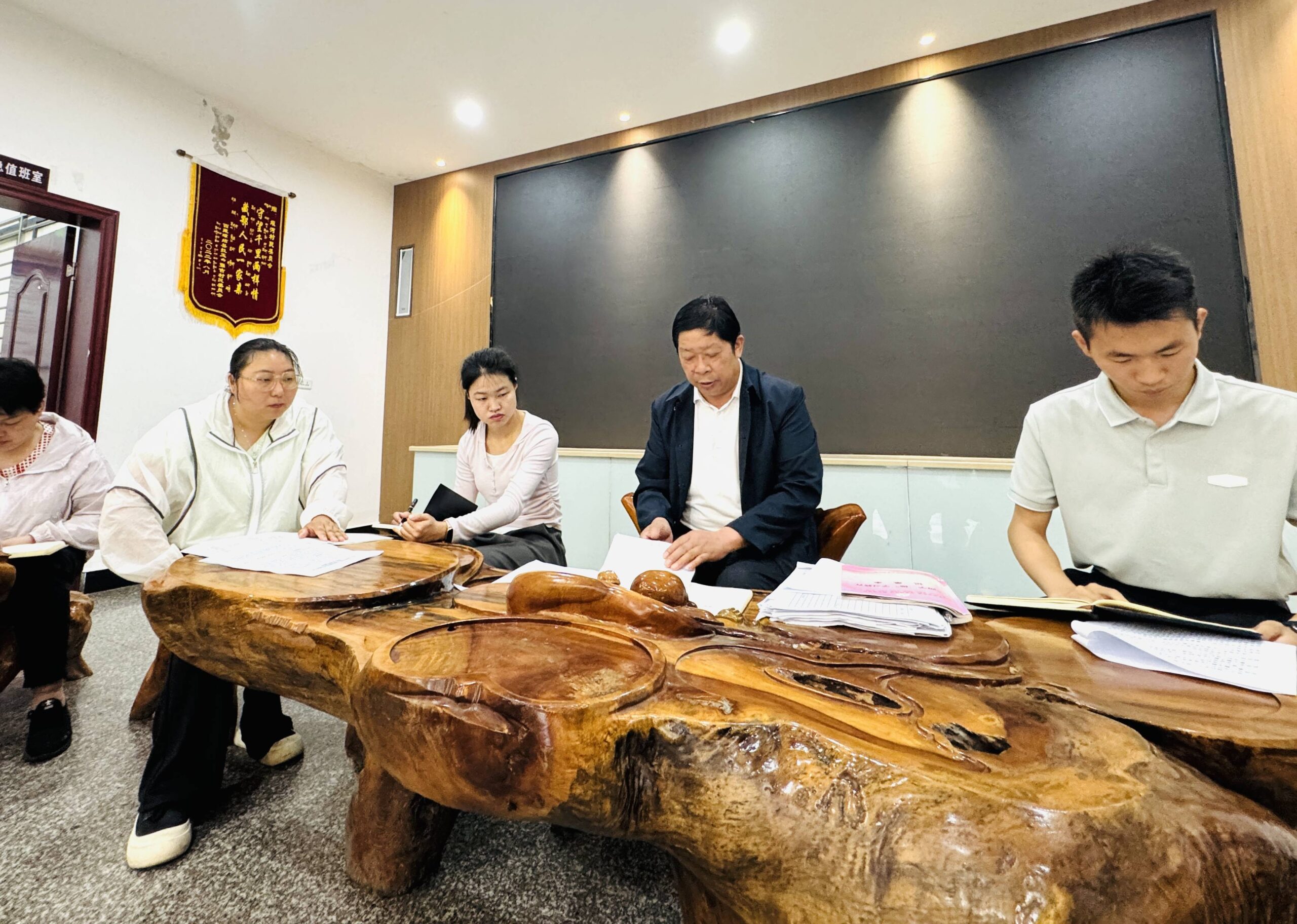
“The reservoir we’ve been waiting for over 30 years has started to store water. We need to closely monitor the finishing work on the village’s water channel.” At the morning meeting on June 3, Min Hongyan immediately discussed this livelihood project.
“The smart locks for the guesthouses will be installed this afternoon.”
“The live-streaming sales plan will be finalized tonight.”
Village officials responded one by one to the matters to be handled that day, setting clear time limits. Half an hour later, everyone went to their respective posts.
“I get up a little after 6 AM and have the meeting at a little after 7 AM.” Yang Xuhao, a town official stationed in the village for over a year, initially didn’t understand the morning meeting.
“Village work is trivial. We meet daily to resolve issues promptly. Besides, the villagers wake up early and are used to coming to the village committee to discuss things in the morning,” Min Hongyan explained the original intention of the morning meeting.
Let’s go back to the early 1990s.
At that time, Yanhe was a debt-ridden village described as “seeing bare mountains, seeing dry riverbeds, and seeing worried faces.” The village collective owed over 200,000 yuan, and the per capita annual income of villagers was less than 1,000 yuan.
In 1992, 29-year-old Min Hongyan took on the critical task and became the village party branch secretary. The new village committee established the daily morning meeting. From major issues like reservoir construction and industrial planning to minor ones like water pipe repairs and e-commerce live streaming, everything was put on the table for discussion.
“The morning meeting isn’t a showpiece; it’s for getting things done. If there are few issues, it takes a few minutes; if there are many, it takes half an hour.” Seeing village officials transform into tour guides, busy receiving wave after wave of tourists, Yang Xuhao gradually understood that Yanhe’s cultural tourism services and village-level governance affairs are complex, and the regular morning meeting is precisely the tool for efficiently serving villagers and tourists.
The reservoir and supporting water channel project, the focus of that day’s morning meeting, carried the hopes of several generations of villagers.
“This is the village’s ‘century-old dream’ and the most gratifying achievement of my work as a people’s representative,” said Min Hongyan, who had continuously proposed suggestions for