Eating for Health
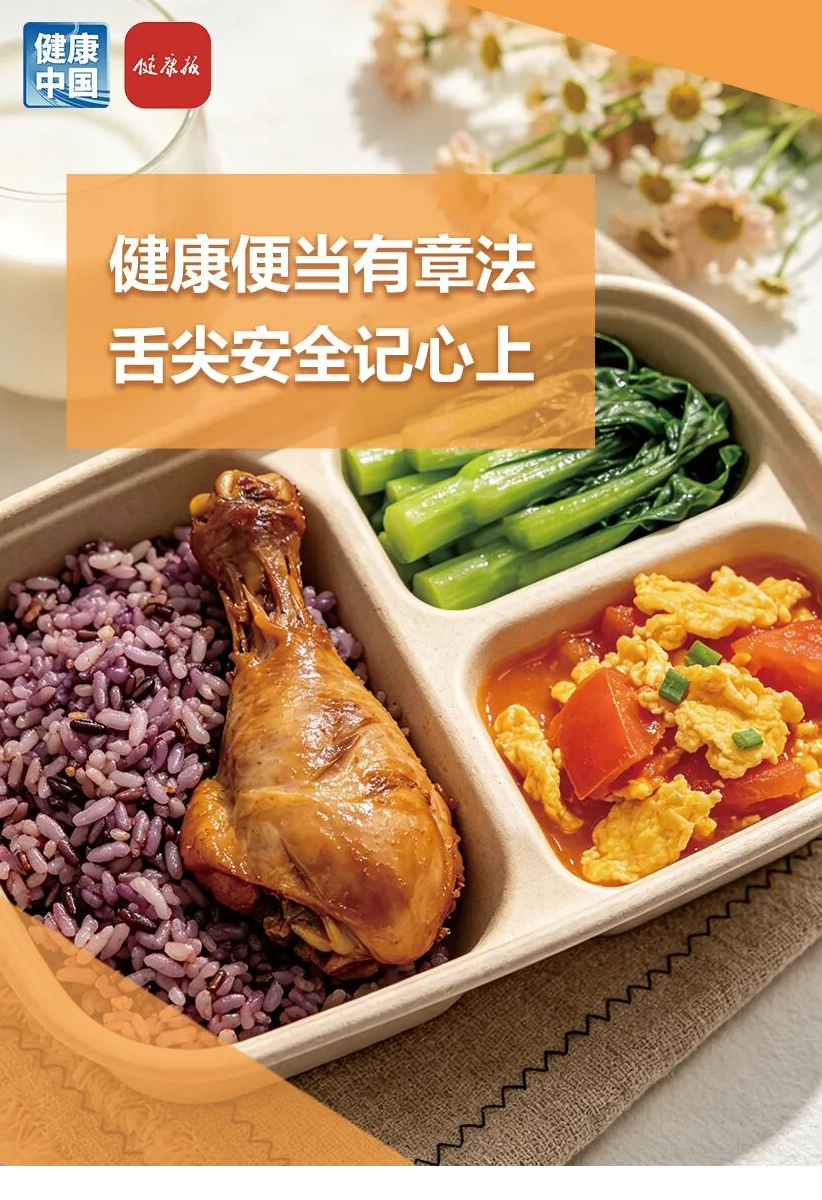
For office workers, bringing lunch from home is a great choice that balances health and cost-effectiveness. Below, we provide a scientific and practical guide to healthy packed lunches from four key perspectives: scientific storage, container selection, safety blind spots, and nutritional balance, to help everyone ensure “safety on the tip of the tongue.”
Whether it’s a lunchbox freshly made in the morning or leftovers intentionally prepared the night before, scientific preservation is key to ensuring food safety.
Pack food while hot and refrigerate quickly. Rice and dishes must be stored separately to avoid cross-contamination that accelerates spoilage. After cooking, dishes should be packed while hot into lunch containers that have been rinsed with boiling water, sealed, and placed in the refrigerator within 1 hour.
Handling leftovers differs for meat and vegetables. Meat dishes can be refrigerated for 1-2 days, while leafy greens are best consumed in the same meal and should ideally not be kept overnight. When commuting, if the journey exceeds 2 hours, use an insulated bag with ice packs to keep the temperature below 4°C. If there is no refrigerator at work, use ice packs for cooling or a high-quality insulated lunchbox to keep food above 60°C.
Reheat thoroughly before eating. Use a microwave on high power for at least 3 minutes to ensure the internal temperature of the food reaches at least 74°C. If not heated through, stir and heat again. It is particularly important to note that leftovers should only be reheated once; any uneaten food after reheating should be discarded.
The material of the lunch container directly affects chemical safety during heating. When choosing a container, prioritize three core principles: heat resistance, good sealing, and ease of cleaning.
Glass containers are chemically stable, less likely to retain odors or stains, and easy to clean. It is recommended to prioritize clear, heat-resistant glass containers. This avoids potential risks from colored glazes and additives and allows for easy visual inspection of food for spoilage.
Plastic containers are lightweight and shatter-resistant, but not all plastics are suitable for microwave heating. Common polypropylene (PP) can withstand temperatures around 140°C, while polyethylene (PE) only withstands about 110°C. Exceeding these temperatures can release harmful substances. Therefore, only products marked with “5 (PP)” are safe for microwave use, as shown in the image below.
Additionally, plastic is prone to aging and scratches; it is recommended to replace plastic containers every 1-2 years.
Stainless steel containers are sturdy, durable, and chemically safe, but they cannot be used in microwaves. They are more suitable for scenarios with steam ovens or when only physical heat retention is needed.
Furthermore, regardless of the material, the container should have a good seal to isolate external bacteria. The lid should ideally have a vent. Opening the vent during microwave heating can prevent moisture loss and allow for more even heating.
Many people believe that food is “safe once it’s in the refrigerator,” but this is a common misconception about food safety.
The temperature range of 5°C to 60°C is the active breeding zone for foodborne pathogens. Harmful bacteria like Salmonella and E. coli can double in number every 20 minutes within this range. Therefore, cooked food should not be left at room temperature for more than 2 hours. If the room temperature