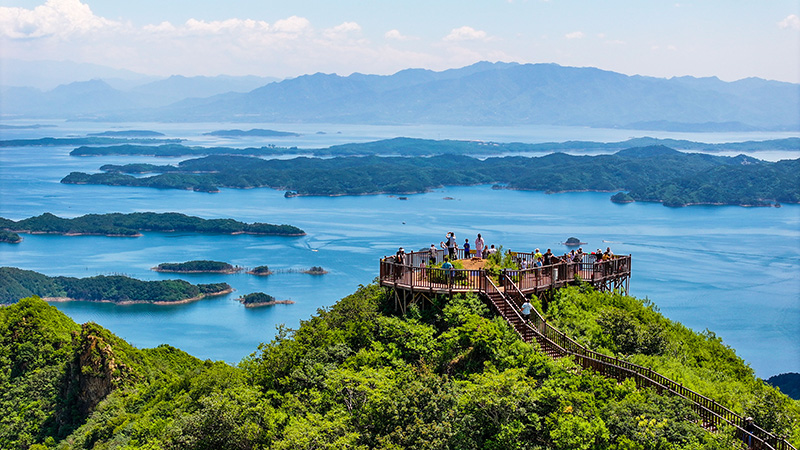
On April 12, Miyun District in Beijing held a city brand launch event, officially unveiling its new city brand—”Come to Miyun to See the Sea.” The event also premiered the brand’s visual design system and promotional video, introduced premium “sea-viewing” spots and routes, and promoted the area’s ecological resources and development opportunities.
Centered around four distinctive “sea-viewing” spots—Sunshine Valley, Yunmeng Mountain, Yunfeng Mountain, and Yishi Manor—Miyun has connected surrounding cultural and tourism resources such as Gubei Water Town, Simatai Great Wall, Bee World, and Yunlongjian. This has resulted in four distinct themed “sea-viewing” tourism routes. Visitors can choose from various modes of transportation including helicopters, paragliders, lakeside driving, or cycling to encounter Miyun’s landscapes from different perspectives and experience diverse micro-vacation scenarios focused on leisure, outdoor activities, wellness, and family fun.
At the launch event, the brand connotation of “Come to Miyun to See the Sea” was systematically explained. It was clarified that “seeing the sea” is not a geographical coastal journey but an overlay of three meanings: viewing a sea of beautiful scenery—Miyun is home to the Miyun Reservoir, the largest artificial lake in North China, with vast blue waves rivaling a seascape; viewing a sea of selfless dedication—for over 60 years, the people of Miyun have protected the capital’s vital water source, prioritizing the greater good; and viewing a sea of broad-mindedness—historically a hub for merchants and culture, Miyun now welcomes visitors and investors with an open attitude. The brand logo centers on a calligraphic character for “cloud,” with negative space suggesting a leaping fish and rising sun. The promotional video uses an international visual language to convey ecological beauty and a spirit of striving, expressing the hope that everyone can find their own unique shade of blue in Miyun.
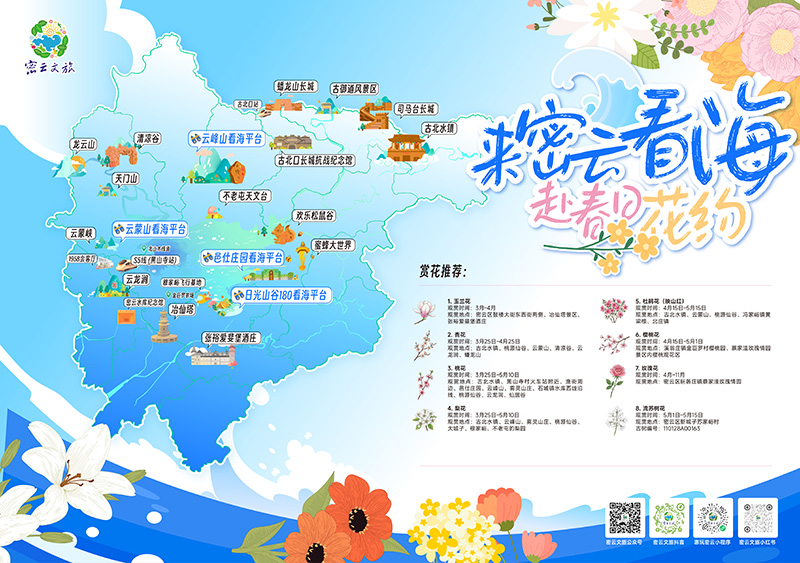
How can one experience Miyun’s “sea-viewing” spots? The event highlighted four premium spots and four themed routes:
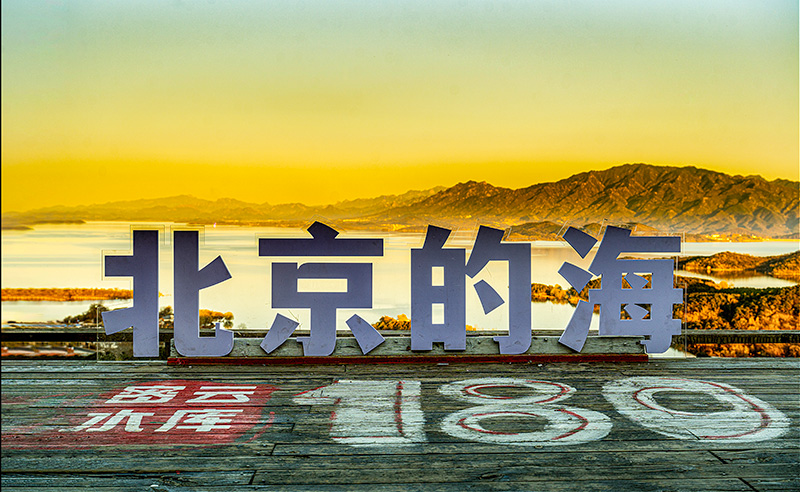
— Sunshine Valley (Reservoir South Line): Promotes “a relaxed and leisurely sea,” featuring a 180-degree viewing platform where visitors can experience mountain carts, UTV off-roading, and stove-side tea brewing.
— Yunmeng Mountain (Reservoir West Line): Known as the “Little Huangshan of the North,” it represents “an energetic sea of sports and passion.” Activities include hiking to scenic spots like the ‘520’ and ‘1314’ points for photos, and taking cable cars for aerial views of the reservoir and mountains.
— Yunfeng Mountain (Reservoir North Shore): Built around a culture of “agelessness,” it offers “a healing sea for body and mind.” Visitors can stroll through lavender fields, ride a small train, and stay in fairy-tale treehouses.
— Yishi Manor (Reservoir East Shore): Blends wine culture with European-style castles, presenting “a warm and poetic romantic sea.” Activities include viewing from the castle and experiencing “seeing the sea in a wine glass.”
Alongside the “sea-viewing” experience, Miyun is offering tangible benefits, including a “Come to Miyun to See the Sea” passport. A total of 40,000 free tickets and over 50,000 discounted packages are being offered, covering popular sites like Sunshine Valley, Yunmeng Mountain, Yunfeng Mountain, Yishi Manor, Gubei Water Town, and Chateau Changyu AFIP. Furthermore, special activities with financial institutions provide benefits such as spend-and-save offers and gift redemptions at over 60 designated locations. Related travel routes and preferential policies can be found on the official “Enjoy Miyun” WeChat mini-program.
“Come to Miyun to See the Sea” is Miyun’s new city calling card, embodying a commitment to ecological development, a spirit of selfless dedication, and an open, win-win mindset.
<div class="my-4 p-4 rounded