2024 “Top 10 Chongqing Economic Figures of the Year” Announced, Focusing on New Quality Productive Forces and Regional Coordination
The winners of the 2024 “Top 10 Chongqing Economic Figures of the Year” selection were officially announced and entered a one-week public review period. This year’s list closely aligns with Chongqing’s strategic positioning and industrial development direction, highlighting a group of leaders who are advancing new quality productive forces in cutting-edge fields such as artificial intelligence, new energy vehicles, new materials, and modern transportation and logistics, as well as collaborative innovation cases contributing to the Chengdu-Chongqing economic circle construction.
The “Top 10 Chongqing Economic Figures of the Year” list fully demonstrates Chongqing’s strategic role as a key pillar in the Western Development strategy and a comprehensive inland open hub. The winners include leaders from modern transportation and logistics hubs; top performers from sectors like new energy vehicles, new materials, and semiconductors, who continue to support the “33618” modern manufacturing cluster system; and outstanding figures deeply involved in digital development, promoting the deep integration of the digital economy and the real economy. The “Top 10 Chongqing Economic Innovation Figures of the Year” focus on “new tracks,” with several entrepreneurs being “hidden champions” or national-level specialized and sophisticated SMEs from fields such as robotics, information technology, biopharmaceuticals, and finance, showcasing Chongqing’s economic innovation vitality. The “Chengdu-Chongqing Economic Circle Collaborative Development Innovation Cases” align with the “Ten Actions,” forming replicable and scalable advanced experiences in areas like jointly built industrial parks, data interconnectivity, and collaborative environmental governance.
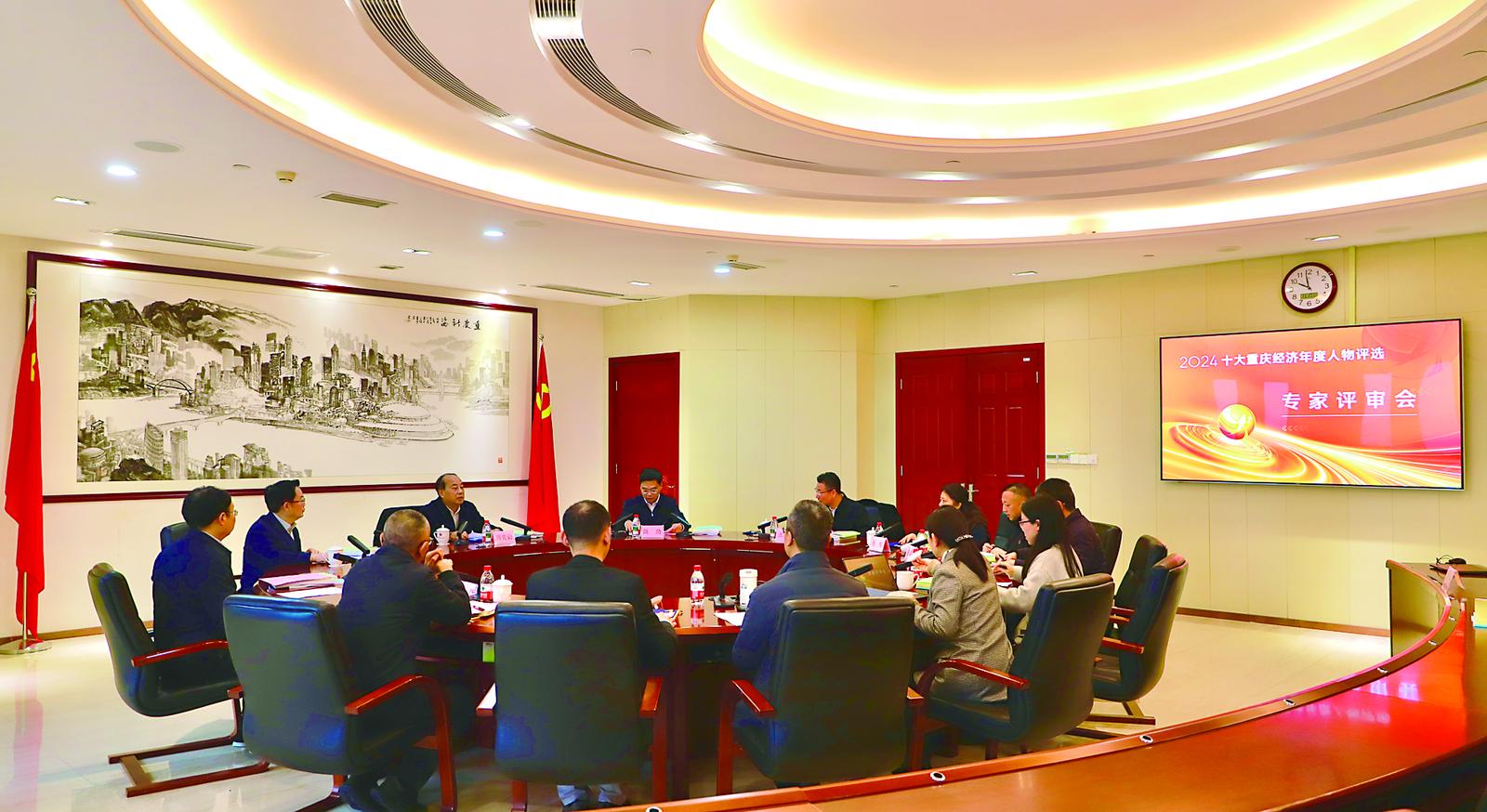
The selection process involved comprehensive evaluation by expert judges and final review by an organizing committee.
The proposed winners list for the 2024 “Top 10 Chongqing Economic Figures of the Year” selection has been drafted and is now entering a one-week public review period for public oversight.
Proposed Winners List for the 2024 “Top 10 Chongqing Economic Figures of the Year” Selection
2024 Top 10 Chongqing Economic Figures of the Year (Listed in alphabetical order by surname)
Ma Yu, General Manager of China Electronics Technology Group Chip Technology Co., Ltd.
Shi Jidong, Party Committee Secretary and Chairman of Chongqing Urban Transportation Development and Investment (Group) Co., Ltd.
Liu Wei, President and Deputy Party Committee Secretary of Chongqing Pharmaceutical Group Co., Ltd.
Li Xin, General Manager of Nine Dragons Paper (Chongqing) Co., Ltd.
Zhang Jingfeng, President of Beidou Zhilian Technology Co., Ltd.
Chen Zhuo, President of Avatr Technology (Chongqing) Co., Ltd.
Miao Yingbin, General Manager of Chongqing Huafeng Chemical Co., Ltd.
Zhou Gang, Party Committee Secretary and Chairman of Chongqing Design Group Co., Ltd.
Qu Hong, Party Committee Secretary and Chairman of Chongqing Port Co., Ltd.
Hong Min, Chairman of Chongqing Guangren Energy Equipment Co., Ltd.
2024 Top 10 Chongqing Economic Innovation Figures of the Year (Listed in alphabetical order by surname)
Lu Qi, Chairman of Chongqing Dawa Hezhi Imaging Technology Co., Ltd.
Zhu Dong, Chairman of Qiteng Robot Co., Ltd.
Li Desheng, President of Qing’an Energy Storage Technology (Chongqing) Co., Ltd.
Zhou Jie, General Manager of Ant Xinghe (Chongqing) Information Technology Co., Ltd.
Pang Xianwei, Chairman of Chongqing Yinhai Financial Leasing Co., Ltd.
Ju Nianfeng, Chairman and General Manager of Chongqing Porton Pharmaceutical Co., Ltd.
Zhao Gang, Party Committee Secretary and Chairman of Chongqing Highway Maintenance Engineering (Group) Co., Ltd.
Xu Can, Party Committee Secretary and Chairman of CISDI Information Technology (Chongqing) Co., Ltd.</