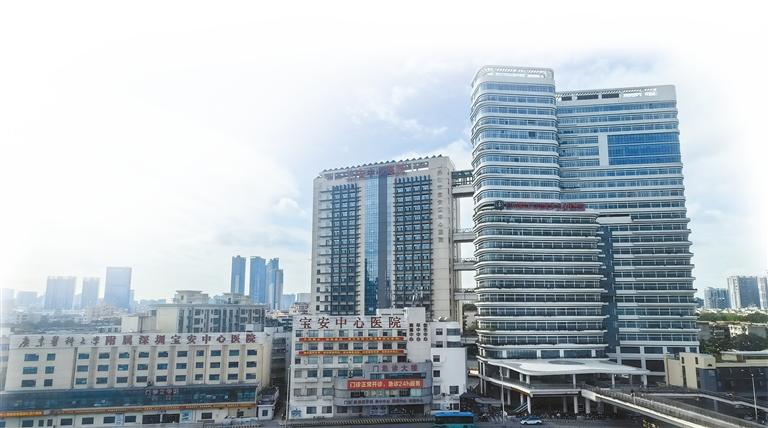
The second-phase project includes supporting facilities such as a smart outpatient department, a modern inpatient building, and hybrid operating rooms.
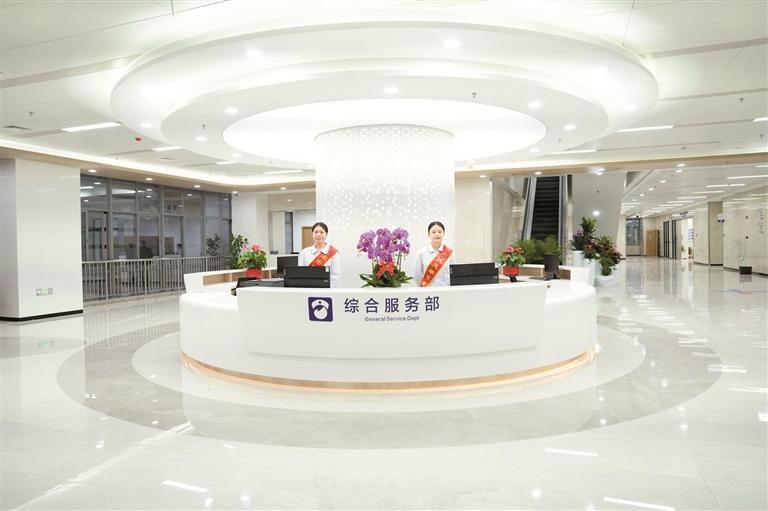
The new building represents a comprehensive upgrade in the medical environment and service capacity.
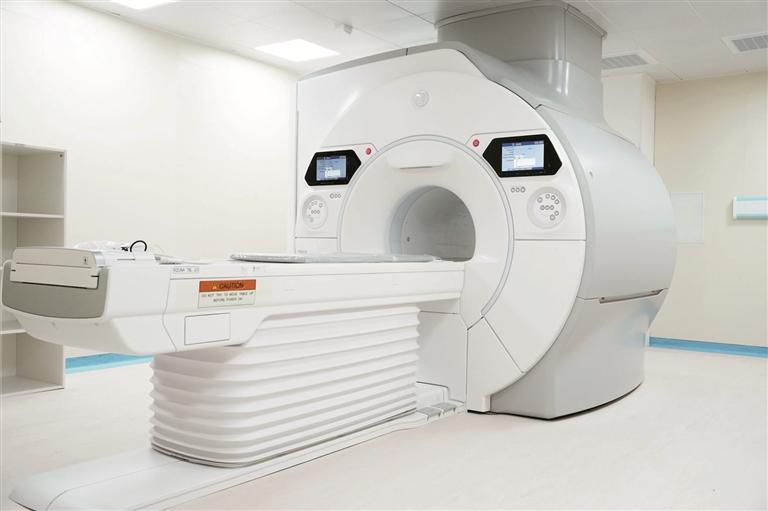
Bao’an District Central Hospital has introduced an “imaging powerhouse” — a whole-body 3.0T MRI system for clinical research.
After five years of dedicated effort, a new chapter begins. The second-phase project of Shenzhen’s Bao’an District Central Hospital has officially commenced operations. This milestone marks the hospital’s full entry into a new journey of expanding scale, improving service quality, and enhancing its core capabilities. It also injects new momentum into the goal of becoming a top-tier (Grade A, Class 3) general hospital and safeguarding residents’ health.
Located alongside the Guang-Shen Highway (National Highway 107), Bao’an District Central Hospital serves a population of 1.5 million in its jurisdiction. The second-phase structure features 24 floors above ground and 3 floors below, with a total investment exceeding 690 million yuan. To further facilitate patient access, the project includes the construction of a new pedestrian bridge spanning Highway 107. Upon opening, the hospital’s total floor area exceeds 100,000 square meters, and the number of available beds increases to 1,150, better meeting the diverse medical needs of patients.
The opening of this new building is a significant milestone in the development history of Bao’an District Central Hospital. It will effectively improve the public’s healthcare experience and further optimize the allocation of regional medical resources, enhancing the area’s medical service capacity. This injects new vitality into advancing the development of “Healthy Shenzhen” and “Healthy Bao’an.”
68 Years of High-Quality Development, Building a Solid Health Barrier for Western Shenzhen
The development journey of Bao’an District Central Hospital is a history of striving in sync with the growth of the Special Economic Zone. Founded in 1957, starting by the Guang-Shen Highway, the hospital has always been rooted in the community, serving the public. It has gradually evolved into a national-level public Grade 3 general hospital and a large-scale primary healthcare group, integrating “main hospital campus — 1 community hospital — 51 community health institutions — 1 nursing home — 1 childcare center.” It possesses comprehensive functions including medical treatment, scientific research, teaching, prevention, healthcare, rehabilitation, and community health services. The hospital is also affiliated with the Guangdong Medical University hospital group, serves as its Shenzhen Bao’an Central Clinical Medical College, and is a model unit for Shenzhen’s primary healthcare group reform.
Bao’an District Central Hospital has not only built a solid health barrier for residents in western Shenzhen but has also explored a modern hospital management model of “two integrations and one coordination” during healthcare reform. Its 51 community health institutions form a large primary healthcare group, safeguarding the health of the district’s residents.
However, with Shenzhen’s rapid urban development, the public’s demand for high-quality medical resources has been growing daily. The original medical space and equipment could no longer match the hospital’s needs for medical treatment, education, and research. The construction of the second-phase project was an inevitable choice for the hospital to break through its development ceiling and achieve a historic shift from “scale expansion” to “quality enhancement.” It is also a mission of the times, responding to public expectations and serving the development of the Greater Bay Area.
Continuous Service Upgrade, Fully Shifting to a “Health-Centered” Approach
Entering the new building, one can see more advanced facilities, more comprehensive functions, and a superior medical environment. A patient who was among the first to visit the new building commented, “The experience was great, the environment is excellent, and the process was very smooth.”
The brand-new building carries a new concept of medical service. Previously, Bao’an District Central Hospital won first prize in Guangdong Province’s 2024典型案例 for improving the medical experience and enhancing patient experience, and was designated as a