This year marks the start of the “15th Five-Year Plan” period. From the strategic deployment of the plan’s outline to the specific task breakdown in the government work report, expanding domestic demand has been placed in a crucial position. The recent meeting of the Political Bureau of the Communist Party of China Central Committee once again emphasized the need to “deeply tap into the potential of domestic demand” and, for the first time, incorporated the construction of the “six networks” into the top-level deployment.
The “six networks” refer to the water network, the new-type power grid, the computing power network, the next-generation communication network, the urban underground pipeline network, and the logistics network. The layout of these six networks covers not only the upgrade of traditional infrastructure but also the construction of new infrastructure. How will they unleash the potential of domestic demand? And what kind of support will they provide for China’s economy to move toward high-quality development?
Starting from the 18th, the financial program center launched a series of reports titled “Weaving the Six Networks, Focusing on Expanding Domestic Demand,” focusing on the construction of the six networks, detailing the plans for each, and explaining the strategic significance of their layout.
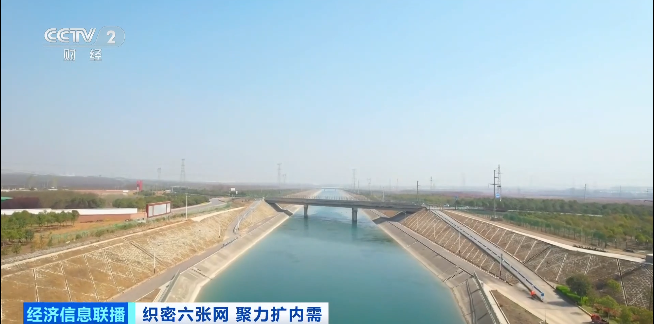
Let us begin with the first network—the national water network. As a landmark project forming the main framework and major artery of the national water network, the ongoing Yangtze-to-Hanjiang Water Diversion Project is also one of the key projects during the 15th Five-Year Plan period. What is the current progress of this project, and what functions will it serve once completed?
Yangtze-to-Hanjiang Diversion: Strengthening the Main Framework of the National Water Network, Bolstering the South-to-North Water Diversion
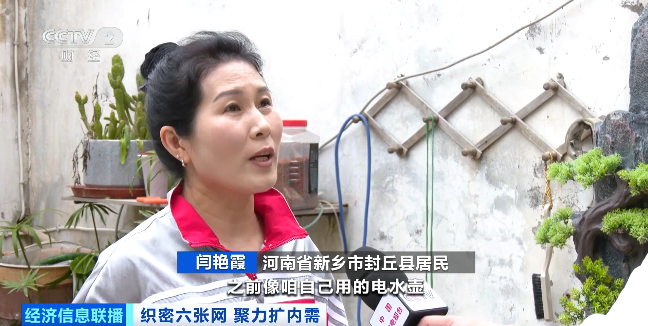
In the evening, Yan Yanxia, a resident of Fengqiu County, Xinxiang City, Henan Province, and her family began preparing dinner. She said that just a year ago, her family was still drinking local groundwater.
Yan Yanxia, resident of Fengqiu County, Xinxiang City, Henan Province: Previously, the electric kettle we used had a thick layer of scale, and the water was a bit cloudy. Since switching to Danjiangkou water, the water quality has become clear, sweeter and better tasting than before.
In June 2015, water from the South-to-North Water Diversion Project officially entered Xinxiang City. As supporting projects were gradually built, more and more families like Yan Yanxia’s began receiving water from the diversion. Over the past decade, the local water supply volume has increased more than tenfold. However, the water inflow from the source area has shown a decreasing trend.
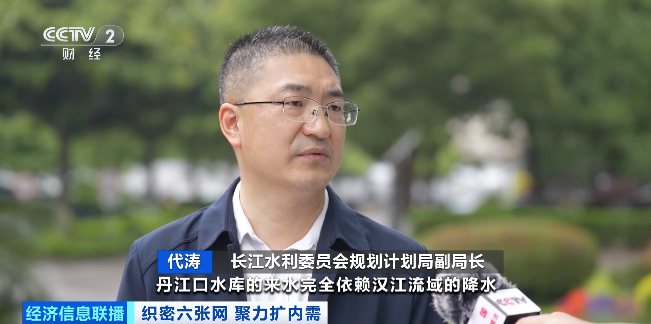
Dai Tao, Deputy Director of the Planning and Program Bureau of the Changjiang Water Resources Commission: The inflow to
Yangtze-to-Hanjiang Water Diversion Project
The Yangtze-to-Hanjiang Water Diversion Project is a major infrastructure initiative in China designed to transfer water from the Yangtze River to the Han River, addressing water scarcity in central China’s Hubei Province. Construction began in the early 2010s, and the project became operational in 2014, forming a key part of the larger South-to-North Water Diversion scheme. It helps supply water for irrigation, industrial use, and urban consumption, while also supporting ecological restoration along the Han River.
South-to-North Water Diversion Project
The South-to-North Water Diversion Project is a massive infrastructure initiative in China designed to transfer water from the water-rich Yangtze River basin in the south to the drier northern regions, including Beijing and Tianjin. Conceived in the 1950s and officially launched in 2002, it consists of three major routes (eastern, central, and western) and is one of the largest water transfer projects in the world. The project aims to address severe water shortages, support economic development, and improve ecological conditions in the north.
Danjiangkou
Danjiangkou is a city in Hubei Province, China, best known as the site of the Danjiangkou Reservoir, a key water source for the South-to-North Water Diversion Project. Historically, the area was part of the ancient state of Chu and later became a strategic location for water management and flood control along the Han River. Today, it plays a vital role in supplying water to northern China, including Beijing and Tianjin.
Fengqiu County
Fengqiu County, located in Henan Province, China, has a history dating back over 2,000 years to the Spring and Autumn period. It was historically known for its role as a strategic military and administrative center, and it is famous for the Chenqiao Mutiny of 960 AD, where Zhao Kuangyin was proclaimed emperor, founding the Song Dynasty. Today, the county is recognized for its agricultural production and cultural heritage, including historical sites like the Qingliang Temple.
Xinxiang City
Xinxiang City, located in northern Henan Province, China, has a rich history dating back to the ancient Shang Dynasty and was an important area during the Spring and Autumn period. It is known for its cultural heritage, including the birthplace of the legendary folk hero Yue Fei from the Song Dynasty. Today, Xinxiang is a modern industrial and transportation hub, blending historical sites with rapid urban development.
Henan Province
Henan Province, located in central China, is widely regarded as the cradle of Chinese civilization due to its rich history as the site of several ancient capitals, including Luoyang and Kaifeng. It was home to the Xia and Shang dynasties, and the famous Shaolin Temple and Longmen Grottoes are located there, reflecting its deep cultural and religious significance. Today, Henan remains a key cultural and agricultural hub in China.
Changjiang Water Resources Commission
The Changjiang Water Resources Commission (CWRC) is a key governmental agency under China’s Ministry of Water Resources, responsible for the integrated management, planning, and flood control of the Yangtze River basin. Established in 1950, it has played a crucial role in major water projects, including the Three Gorges Dam, and oversees water resource allocation, environmental protection, and navigation along the Yangtze. The CWRC’s headquarters are located in Wuhan, Hubei Province, reflecting its historic and ongoing importance in managing China’s longest river.