A cross-sector event between the Shanghai Committee of the Chinese People’s Political Consultative Conference (CPPCC) youth and economic sectors was held on May 14 at the Whole-Process People’s Democracy Practice Point of the Shanghai CPPCC.
Earlier this year, the Shanghai Committee of the Communist Youth League conducted research on promoting youth consumption and supporting youth innovation and entrepreneurship, leading to relevant proposals. Subsequently, the Shanghai Committee strengthened system design, conducted policy research, and worked with relevant municipal departments to continuously implement these proposals. To further enhance the effectiveness of whole-process people’s democracy and guide the healthy and orderly development of the youth economy, this event gathered suggestions from members and pooled wisdom from all sides to discuss development measures.
At the event, the Shanghai Youth Economy White Paper was officially released. Compiled from a professional perspective on business, finance, and urban development, the white paper focuses on emerging trends in youth consumption. It conducts systematic and in-depth research on concept definition, business classification, consumption characteristics, and typical scenarios, comprehensively outlining the current state and development potential of youth consumption in Shanghai.
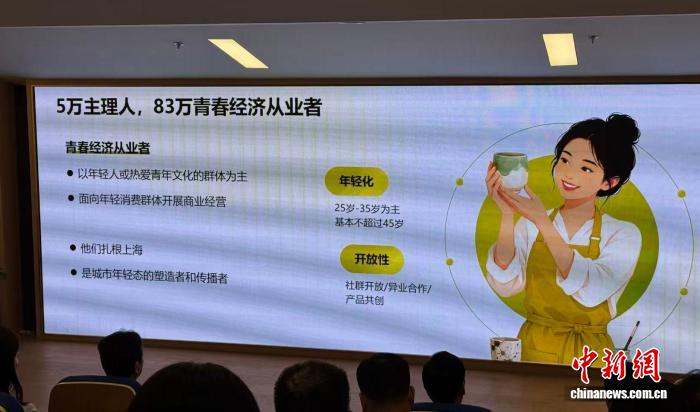
According to reports, Shanghai has outstanding advantages in promoting youth consumption and supporting youth entrepreneurship, having formed a nationally leading ecological environment. For example, Shanghai boasts a complete spectrum of fashion buyer store formats and has over 11,000 coffee shops, making it the only city in China with more than 10,000 coffee shops. At the same time, youth entrepreneurship is vibrant, with practitioners primarily being young people or groups passionate about youth culture, characterized by individuality, youthfulness, openness, and adaptability. With its comprehensive commercial supply, quality cultural resources, and friendly business environment, Shanghai continues to provide fertile ground for youth creativity incubation and business model innovation.
A policy service package supporting the development of the youth economy was also released at the event. Recently, 12 units, including the Shanghai Committee of the Communist Youth League and the Shanghai Municipal Commission of Commerce, jointly introduced several measures to support the innovative development of the youth economy. These measures focus on entrepreneurship incubation, growth of principals, brand cultivation, and government services to support youth innovation and entrepreneurship. The policy service package covers store openings, funding, venues, competitions, intellectual property, and other items.
On the same day, the First Financial City Research Institute was invited to give a special presentation. Several CPPCC members and youth representatives were appointed as youth entrepreneurship mentors and youth consumption observers. During the roundtable discussion, CPPCC members, street party organization leaders, experts, scholars, young entrepreneurs, and principals engaged in lively discussions on youth consumption needs and innovation and entrepreneurship, building a consensus on development.