Shanghai Conducts Fire Safety Awareness Campaign with Community, Rural, and Household Theme Day Activities
Door-to-door safety reminders, hands-on experiences with fire extinguisher use and smoke mask donning, organizing evacuation drills for residents… To further strengthen fire prevention and control during the winter and spring seasons and enhance fire safety awareness among urban and rural residents, a city-wide concentrated “Fire Safety Knowledge Promotion into Communities, Villages, and Households” theme day event was launched, mobilizing street offices, neighborhood (village) committees, and property service enterprises.
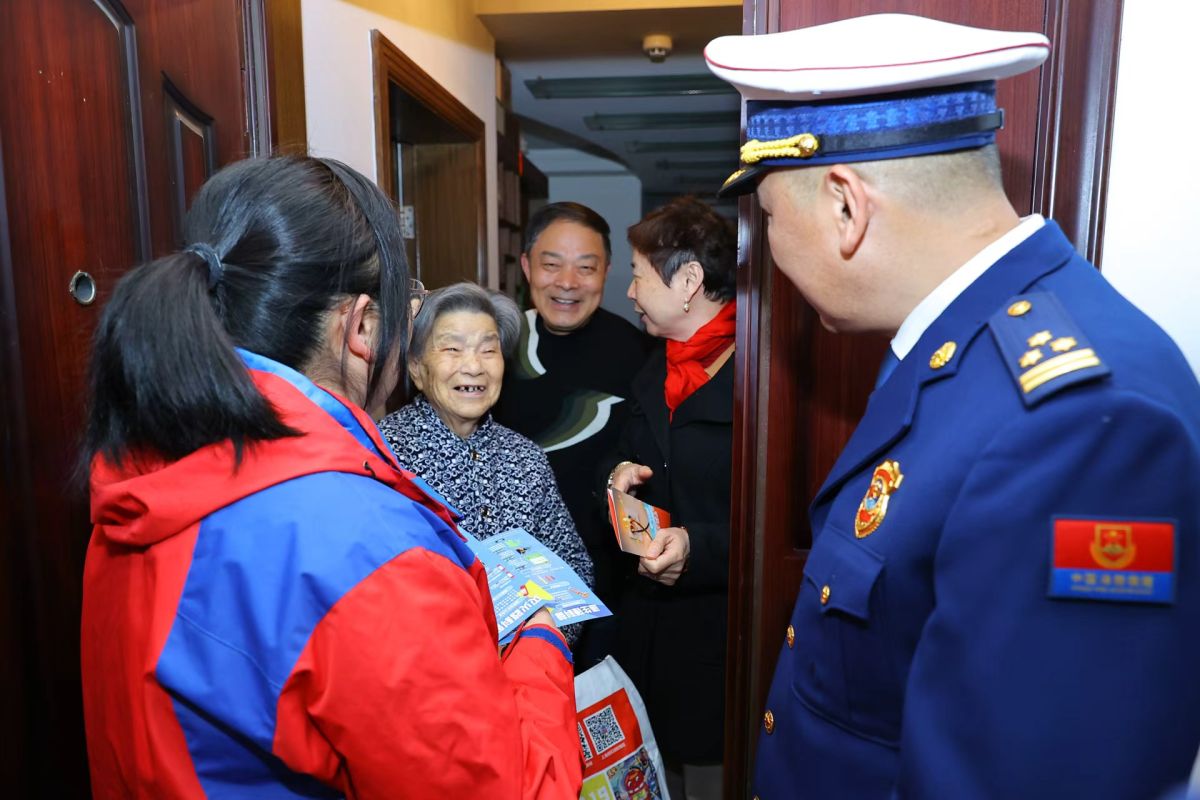
In the afternoon, at the Xiangyuan Lidu residential community in Putuo District, teams consisting of personnel from public security, civil affairs, street offices, neighborhood committees, power, and gas sectors conducted door-to-door promotion and service visits to households of key care groups. They delivered safety promotional materials, provided reminders on safe use of fire, electricity, and gas, and replaced power strips that did not meet safety standards or were aged. Staff reminded key care groups to use electric blankets safely, keep electric heaters away from combustible materials, avoid drying clothes on electric heaters, refrain from parking or charging electric bicycles indoors, remember never to leave the kitchen unattended while cooking, and avoid smoking in bed. For the very elderly, proactive care and assistance were offered, including checking whether electrical wiring and gas stoves met safety requirements and helping to clear combustible clutter from corridors, balconies, and kitchens.
Teams from public security, urban management, housing management, neighborhood committees, property management, and firefighting volunteers conducted safety inspections of the community’s public firefighting facilities, fire truck access routes, corridors, and pipe shafts. The focus was on rectifying and clearing illegal activities such as obstruction, blockage,堆放杂物, and improper parking and charging of electric bicycles.
In the community square, the Putuo District Fire and Rescue Bureau set up public interactive experience booths such as “Firefighting Nine-Square Game,” “Safety Knowledge Quiz,” “Extinguishing Real Fire,” “Water Hose Target Practice,” and “Window Breaking for Escape.” On-site activities included demonstrations on using fire extinguishers and wall-mounted fire hydrants, as well as fire science popularization experiences like wearing smoke masks, which were well-received by residents. Public security, fire rescue, civil affairs, housing management, and other departments set up safety knowledge promotion and service points based on their respective responsibilities, using display boards to highlight typical residential fire cases and accident lessons.
To test the rapid response capability of residential communities in the event of fires or other emergencies, personnel from public security, fire rescue, and community micro-stations organized residents to participate in evacuation drills under simulated emergency conditions and training on initial fire suppression skills. A fire safety science lecture was also held at the Party-Mass Activity Center.
On the same day, various districts across the city held diverse “Fire Safety Knowledge Promotion into Communities, Villages, and Households” theme day events. Street offices and neighborhood committees actively mobilized firefighting volunteers and safety volunteers to promote the “Three Clears and Three Shutdowns” (clear kitchen, clear balcony, clear corridor; shut off gas, shut off power, shut off fire source) fire safety reminders. They participated in劝导文明行为 such as clearing corridors and standardizing electric bicycle parking and charging, guiding residents to actively rectify fire hazards in their surroundings.
Xiangyuan Lidu residential community
Xiangyuan Lidu is a modern residential community located in Shenzhen, China, developed in the early 2000s as part of the city’s rapid urban expansion. It reflects Shenzhen’s transformation from a small fishing village into a major economic hub, showcasing contemporary urban living without significant historical landmarks. The area primarily serves as a residential zone for local families and professionals in the bustling metropolis.
Putuo District
Putuo District is a central urban district of Shanghai, China, located on the western bank of the Huangpu River. Historically, its name derives from Putuo Mountain, a famous Buddhist site in Zhejiang province, and the area developed from farmland and industrial zones in the early 20th century into a major residential and commercial hub. Today, it is notably home to the Jade Buddha Temple, a significant active temple built in 1882 to house two revered jade Buddha statues brought from Myanmar.
community square
A community square is a public open space, often at the heart of a town or neighborhood, historically serving as a marketplace and a central gathering point for social, civic, and ceremonial events. Its origins typically date back to ancient Greek agoras or Roman forums, evolving through medieval and modern times to become a focal point for community identity, festivals, and public discourse. Today, these squares remain vital as accessible hubs for recreation, cultural activities, and civic engagement.
Putuo District Fire and Rescue Bureau
The Putuo District Fire and Rescue Bureau is a modern public safety institution responsible for fire prevention, emergency response, and rescue operations within Shanghai’s Putuo District. While the bureau itself is a contemporary administrative body, it operates within a district that has a long urban history, reflecting the evolution of organized firefighting in China from traditional volunteer brigades to today’s professional emergency services.
Firefighting Nine-Square Game
The Firefighting Nine-Square Game is a traditional Chinese folk sport and cultural performance originating from ancient firefighting drills. It simulates firefighting tactics by having teams compete to move a ball (representing water) through a grid of nine squares, symbolizing the organized passing of water buckets. Historically practiced by fire brigades during the Ming and Qing dynasties, it has evolved into a ceremonial team-building activity that preserves the heritage of community-based fire prevention.
Safety Knowledge Quiz
“Safety Knowledge Quiz” is not a physical place or cultural site, but an interactive educational tool or event designed to test and improve understanding of safety procedures, often in workplaces, schools, or public awareness campaigns. Its history is tied to the broader development of safety standards and preventative education, evolving from simple paper tests to digital formats to engage participants and reduce accidents.
Extinguishing Real Fire
“Extinguishing Real Fire” is not a recognized historical place or cultural site. The phrase appears to be a direct English translation, possibly from Chinese, and may refer to a metaphorical concept or a specific local event rather than a physical location. Without a specific cultural or geographical context, it is not possible to provide a historical summary.
Water Hose Target Practice
“Water Hose Target Practice” is not a widely recognized historical or cultural site. It appears to refer to a training exercise, typically for firefighters, where participants use water hoses to hit specific targets to develop accuracy and control. As a modern training drill, it does not have a significant historical narrative beyond its practical role in professional skill development.