On June 6 in Shanghai, the “Gathering in Shanghai, Discussing Tomorrow” 2026 Overseas Chinese High-Level Young Talent Training Camp concluded at the Nanshanghai Science and Innovation Center in Fengxian District. Over the three-day camp, nearly thirty high-level young talents from Australian universities, research institutions, and Shanghai’s overseas Chinese community exchanged ideas and discussed innovative development through site visits, policy briefings, and roadshow exchanges.
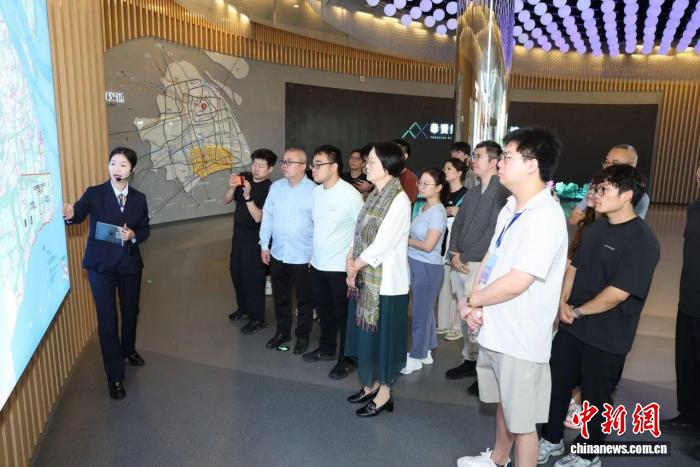
During the camp, participants visited the Fengxian District Planning and Resources Exhibition Hall and other locations, gaining an intuitive understanding of Fengxian’s strategic layout as a key hub for Shanghai’s science and innovation center. During corporate visits, participants experienced the innovative vitality of Fengxian’s technology and biomedical sectors up close.
At a talent policy presentation and exchange forum, two returnee entrepreneur representatives shared their experiences of establishing businesses in Fengxian District and engaged in in-depth discussions with representatives from key local enterprises on topics such as technology transfer and industrial collaboration.
An expert from the Economics Teaching and Research Department at the Shanghai Party Institute interpreted Shanghai’s “15th Five-Year Plan” for the participants. From both a global perspective and Shanghai’s actual conditions, the expert systematically elaborated on the city’s development path over the next five years in areas such as building the “five centers” and fostering new productive forces, providing guidance for participants to seize development opportunities in Shanghai.
During the science and innovation project roadshow, three young talents from home and abroad showcased cutting-edge achievements: a participant from Shanghai’s overseas Chinese community presented “Boundless Intelligent Connectivity—A Real-Time Emotion Interaction System Based on Brain-Computer, AI, and XR Wearable Devices”; a postdoctoral researcher at the University of Sydney shared “Microbial Mineralization Crack Repair Simulation Technology”; and a postdoctoral researcher at the Victor Chang Cardiac Research Institute demonstrated “AI-Empowered Intelligent Design and Functional Validation of Cell-Specific Enhancers.” Venture capital and incubation experts provided on-site questions and feedback, offering professional guidance on technical pathways, business models, and market prospects.

At the closing ceremony, participant representatives stated that the event not only deepened their understanding of Shanghai’s, especially Fengxian’s, industrial ecosystem and talent policies but also helped them connect with like-minded partners, opening new avenues for future interdisciplinary collaboration and returning to China for innovation and entrepreneurship.
This training camp was hosted by the Overseas Chinese Affairs Office of the Shanghai Municipal Government and co-organized by the Shanghai Overseas Chinese Professionals Association, the Fengxian District Overseas Chinese Affairs Office, the Fengxian District Federation of Returned Overseas Chinese, and Kexi Incubation and Investment (Shanghai) Technology Co., Ltd. It represents an important initiative by Shanghai to deepen the cultivation of high-level young talent from overseas Chinese communities and support the construction of the “five centers.” In the future, municipal and district-level overseas Chinese affairs departments will continue to build exchange and cooperation platforms to help more young overseas Chinese talents pursue their dreams on Shanghai’s innovative soil.
Nanshanghai Science and Innovation Center
Fengxian District Planning and Resources Exhibition Hall
Nanshanghai Science and Innovation Center
Fengxian District Planning and Resources Exhibition Hall
Shanghai Party Institute
Related news

In July, Shanghai’s imports and exports both achieved rapid growth.

Members of the Shanghai Cultural and History Museum visited Shanshen Village to offer suggestions on culturally empowering the construction of Shanghai-style Jiangnan.

Children’s Novel on War Theme “The Boy and His Cat General” Showcases Ordinary People’s Perseverance and Resistance
Global Food Festival event drives positive growth in Shanghai’s dining industry in the first quarter.