BEIJING — A spokesperson for the Ministry of Commerce answered questions on the preliminary results of the China-U.S. economic and trade consultations.
A reporter asked: On May 14, the heads of state of China and the United States held a meeting and announced that the economic and trade teams of the two countries had reached a generally balanced and positive outcome. Could the Ministry of Commerce provide more details on the results of the economic and trade consultations?
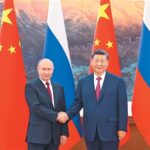
The spokesperson stated that the heads of state of China and the United States held a meeting in Beijing, where they discussed economic and trade issues in depth, further charting the course and providing strategic guidance for the development of bilateral economic and trade relations.
The spokesperson said that on May 13, the economic and trade teams of China and the United States held consultations in South Korea to prepare for the heads of state meeting. During the consultations, both sides followed the important consensus of the heads of state, adhered to the principles of mutual respect, peaceful coexistence, and win-win cooperation, and conducted frank, in-depth, and constructive exchanges and consultations on addressing each other’s concerns in economic and trade issues and further expanding practical cooperation. Subsequently, the two sides held intensive consultations on the specific content of the results and reached positive consensus.
The spokesperson introduced that the preliminary results achieved in the economic and trade field mainly include the following aspects:
First, both sides will continue to implement the results of previous consultations and have formed a positive consensus on relevant tariff arrangements.
Second, both sides agreed to establish a Trade Council and an Investment Council to discuss their respective concerns in the fields of trade and investment. The two sides will discuss issues such as tariff reductions on certain products through the Trade Council and have agreed in principle to reduce tariffs on products of mutual concern on a comparable scale.
Third, both sides will resolve or substantially promote the resolution of some non-tariff barriers and market access issues for agricultural products. The U.S. side will actively work to resolve China’s long-standing concerns regarding automatic detention of dairy and aquatic products, exports of medium-sized bonsai plants to the U.S., and recognition of Shandong Province as a poultry-free zone. The Chinese side will also actively work to resolve U.S. concerns such as the registration of beef facilities and exports of poultry meat from certain states to China.
Fourth, both sides agreed to promote the expansion of two-way trade, including in agricultural products, through arrangements such as mutual tariff reductions on products within a certain scope.
Fifth, both sides reached relevant arrangements on China’s purchase of aircraft from the U.S. and the U.S.’s guarantee of supply of aircraft engines and parts to China, and agreed to continue promoting cooperation in related fields.
The spokesperson stated that the positive results of the China-U.S. economic and trade consultations demonstrate that both sides can find ways to resolve issues by adhering to the spirit of mutual respect, equality, and mutual benefit, and through dialogue and cooperation. Currently, both sides are still consulting on the details of the results. The economic and trade teams of the two countries will follow the consensus direction set by the heads of state, finalize the results as soon as possible, work together to implement them, and inject more certainty and stability into the next phase of China-U.S. economic and trade cooperation and the world economy.
Beijing
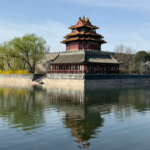
Beijing, the capital of China, is a historic and cultural site with over 3,000 years of history, serving as the nation’s political and cultural center for centuries. It is home to iconic landmarks like the Forbidden City, the Great Wall, and the Temple of Heaven, reflecting its imperial past under dynasties such as the Ming and Qing. Today, Beijing blends ancient traditions with modern development, making it a vibrant symbol of China’s rich heritage and rapid growth.
South Korea
South Korea is a vibrant East Asian nation known for its rich cultural heritage and rapid modernization. Its history spans thousands of years, from ancient kingdoms like Goguryeo and Joseon to Japanese colonization and the Korean War, which divided the peninsula. Today, South Korea is a global leader in technology and pop culture, blending traditional sites like Gyeongbokgung Palace with futuristic cities like Seoul.
<div class="my-4 p-4 rounded-lg shadow
Beijing
Beijing, the capital of China, is one of the world’s oldest continuously inhabited cities, with a history spanning over three millennia. It served as the imperial capital for the Ming and Qing dynasties, leaving landmarks like the Forbidden City and the Great Wall nearby. Today, it is a bustling modern metropolis that preserves its rich cultural heritage while serving as the political and cultural heart of the country.
Forbidden City
The Forbidden City, located in the heart of Beijing, China, was the imperial palace for 24 emperors during the Ming and Qing dynasties, spanning nearly 500 years from 1420 to 1912. Construction began in 1406 under Emperor Yongle, and it served as the political and ceremonial center of Chinese government. Today, it is a UNESCO World Heritage Site and houses the Palace Museum, showcasing a vast collection of ancient Chinese art and artifacts.
Great Wall
The Great Wall of China is a series of fortifications built across northern China, with construction beginning as early as the 7th century BC and continuing through the Ming Dynasty (1368–1644). Originally designed to protect Chinese states and empires from invasions and raids, it stretches over 13,000 miles and is one of the most iconic symbols of Chinese civilization. Today, it is a UNESCO World Heritage site and a major tourist attraction.
Temple of Heaven
The Temple of Heaven in Beijing is a complex of religious buildings built in 1420 during the Ming Dynasty, where emperors of the Ming and Qing dynasties performed annual ceremonies to pray for good harvests and divine favor. It is renowned for its precise architectural layout, which symbolizes the relationship between heaven and earth, and its iconic structures like the Hall of Prayer for Good Harvests. Today, it is a UNESCO World Heritage site and a popular public park where locals practice tai chi and traditional activities.
South Korea
South Korea is a dynamic East Asian nation with a rich history spanning thousands of years, from ancient kingdoms like Goguryeo and Joseon to the Korean War and its subsequent rapid industrialization. Today, it is known for its vibrant pop culture (K-pop, K-dramas), advanced technology, and cultural landmarks such as Gyeongbokgung Palace and the DMZ. The country seamlessly blends traditional heritage with modern innovation, making it a unique and influential global hub.
Goguryeo
Goguryeo was one of the Three Kingdoms of Korea, founded in 37 BCE and lasting until 668 CE. It was a powerful and expansive state known for its military strength, unique culture, and advanced fortifications, including mountain fortresses and the famous Goguryeo tombs with their vibrant wall paintings. The kingdom played a crucial role in Korean history, resisting Chinese invasions and eventually falling to the Silla-Tang alliance, which led to the unification of the Korean Peninsula.
Joseon
Joseon was a Korean dynastic kingdom that lasted for approximately five centuries, from 1392 to 1897. Founded by General Yi Seong-gye, it succeeded the Goryeo dynasty and established a highly influential Confucian state, with its capital in present-day Seoul. The era is renowned for its cultural achievements, including the creation of the Korean alphabet, Hangul, under King Sejong the Great.
Gyeongbokgung Palace
Gyeongbokgung Palace, built in 1395, is the largest and most iconic of the Five Grand Palaces from the Joseon Dynasty in Seoul, South Korea. It served as the main royal residence and the seat of government until it was damaged during the Japanese invasions and later largely destroyed by Japan’s colonial rule in the early 20th century. Today, the palace has been meticulously restored and stands as a proud symbol of Korean heritage, featuring traditional architecture and the famous changing of the guard ceremony.