Original Title: Beijing Launches Tourism and Leisure Greenway Brand
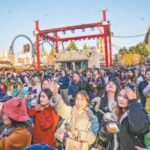
On January 1st, the “Stroll the Greenways, Explore Beijing” Beijing Tourism and Leisure Greenway Brand Launch and the Greenway New Year’s First Stop event was held at the Baifuquan Park Greenway in Changping District. The event officially launched the Beijing Tourism and Leisure Greenway brand and introduced the first batch of 52 greenways, opening a new chapter in the integrated development of the capital’s culture, tourism, agriculture, forestry, and water resources.
To enrich the leisure lives of residents and tourists and enhance the quality of cultural tourism and leisure in the capital, the Municipal Culture and Tourism Bureau, in collaboration with departments such as landscaping, water affairs, sports, agriculture and rural affairs, and district governments, has meticulously created and launched the first batch of 52 tourism and leisure greenways. These greenways cover all districts of the city, featuring reasonable layouts, beautiful scenery, and basically complete facilities. They serve as excellent pathways and platforms for strolling and sightseeing, running and cycling, family outings, and cultural exploration.
The Municipal Culture and Tourism Bureau has partnered with platforms such as Keep, Amap, Ctrip, Meituan, Qunar, and Weibo to simultaneously establish dedicated pages and brand halls for “Beijing Tourism and Leisure Greenways.” Residents and tourists can simply search for keywords on these platforms to access information about the 52 greenways, including guides, surrounding service facilities, and event registrations. Among these, Keep has launched a dedicated check-in activity for the tourism and leisure greenways. Participants can scan codes to join, earn points through exercise check-ins, and use the points for prize draws to exchange for Keep merchandise, trendy “Beijing Gifts” toys, and more. Collecting all 52 virtual badges allows for the exchange of a physical medal themed on the tourism and leisure greenways.
At the event site, residents and tourists, led by Keep-certified professional coaches and the intelligent interactive robot “Lingxi X2,” experienced the Baifuquan Park Greenway. Along the route, integrated activities included interactive displays with tech robots, interactions with Ma Dundun dolls, magic culture performances, blind box cultural and creative products, and draws for surrounding cultural tourism consumption vouchers, offering participants an immersive experience combining sports, culture, and technology.
This year, the Municipal Culture and Tourism Bureau will create a system of online and offline activities characterized by “weekly regularity, monthly concentration, quarterly uniqueness, and year-round continuity,” providing residents and tourists with diverse services such as fun check-ins and themed activity guidance. In the future, efforts will continue to improve the service quality and experience of tourism and leisure greenways, enhancing the fun and diversity of activities, with the goal of establishing these greenways as the preferred routes for residents and tourists to explore the greater Beijing suburbs and as a new growth pole for cultural tourism consumption.