In spring, the job market enters an active period. Analysis of spring recruitment data from various human resources and social security departments and service agencies shows that in the first quarter of 2026, industries representing new quality productive forces—such as advanced materials, next-generation information technology, and new energy vehicles—exhibited significantly active hiring demand.
Strong Recruitment Demand in New Quality Industries
Significant Growth in R&D and Technical Roles
According to recruitment data, several technology-driven sectors within the new quality productive forces saw rapid increases in job openings. Among them:
— Robotics and new materials sectors saw job numbers rise by over 30% year-on-year, the most notable increase;
— Optoelectronics and artificial intelligence sectors saw job numbers grow by nearly 20% year-on-year;
— Aerospace and shipbuilding sectors experienced a 20% year-on-year increase in recruitment positions;
— New energy vehicle parts sector saw job numbers rise by over 10% year-on-year.
In terms of salaries, industries related to new quality productive forces demonstrated their urgent demand for talent with substantial compensation. Among them:
— Robotics, new materials, and optoelectronics led the top three, with average monthly recruitment salaries exceeding 10,000 yuan;
— Artificial intelligence engineers had an average monthly recruitment salary of 20,804 yuan;
— Chip engineers, mobile development, and software development followed, with salaries of 17,790 yuan, 16,624 yuan, and 15,816 yuan, respectively.
From a city-level recruitment perspective, industries related to new quality productive forces show a clear pattern of “one high, one fast”:
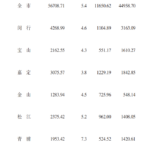
— “High” refers to cities like Beijing, Shenzhen, and Shanghai, where the proportion of positions in new quality industries is relatively high, at 7.4%, 4.8%, and 4.6%, respectively;
— “Fast” refers to rapid growth and strong momentum, with positions in Wuhan, Suzhou, and Nanjing growing by 28.3%, 24.8%, and 20.5%, respectively.
Recruitment platform staff noted that new quality industry hiring in the first quarter of this year exhibited two distinct characteristics:
— Concentrated demand: Rapid growth in core chain positions such as advanced manufacturing, information technology, and new materials;
— Chain interaction: From upstream material R&D to midstream equipment manufacturing and downstream complete machine integration, the full industrial chain’s talent demand is being simultaneously activated, reflecting a trend of coordinated industrial ecosystem development.
An in-depth look at the employment structure of new quality industries reveals particularly prominent growth in R&D and technical roles. Data shows that recruitment for automotive manufacturing/design engineer positions increased by over 30% year-on-year, the fastest growth rate among all positions, reflecting the continuous investment in R&D talent within the new energy vehicle industry amid technological upgrades and capacity expansion.
Meanwhile, clinical research/trial positions, AI engineer positions, and semiconductor/chip engineer positions have maintained stable and rapid growth.
What Does the “Talent Profile” Favored by New Quality Enterprises Look Like?
Recently, multiple university job fairs have been held across various regions. It was observed that new quality industry enterprises are releasing high demand for R&D positions. What kind of talent is favored by these enterprises?
Data indicates that when recruiting, new quality industry enterprises generally require high academic qualifications with a science or engineering background. In cutting-edge fields such as aerospace and biotechnology, graduates from top-tier universities are particularly favored.
In terms of majors, computer science and technology, mechanical design, manufacturing and automation, electrical engineering and automation, software engineering, and electronic information engineering rank among the top five most in-demand majors. These align closely with the technical needs of industries like next-generation information technology, high-end manufacturing, and new energy, making them the primary targets for enterprises actively seeking talent.
Overall, although different new quality industries have varying focuses on specific majors, fields such as computer software, mechanics, electrical engineering, electronics, and automation are generally highly valued by enterprises. These majors form the common knowledge base and primary source of technical talent for new quality industries.
New Quality Enterprises Still Face Shortage of Key Core Technical Talent
While overall demand is rising, recruitment data shows that a number of key core technical positions remain “many positions, few candidates,” indicating a talent shortage.
Zhejiang: Three Cities Release Lists of In-Demand Skilled Trades
Previously, the cities of