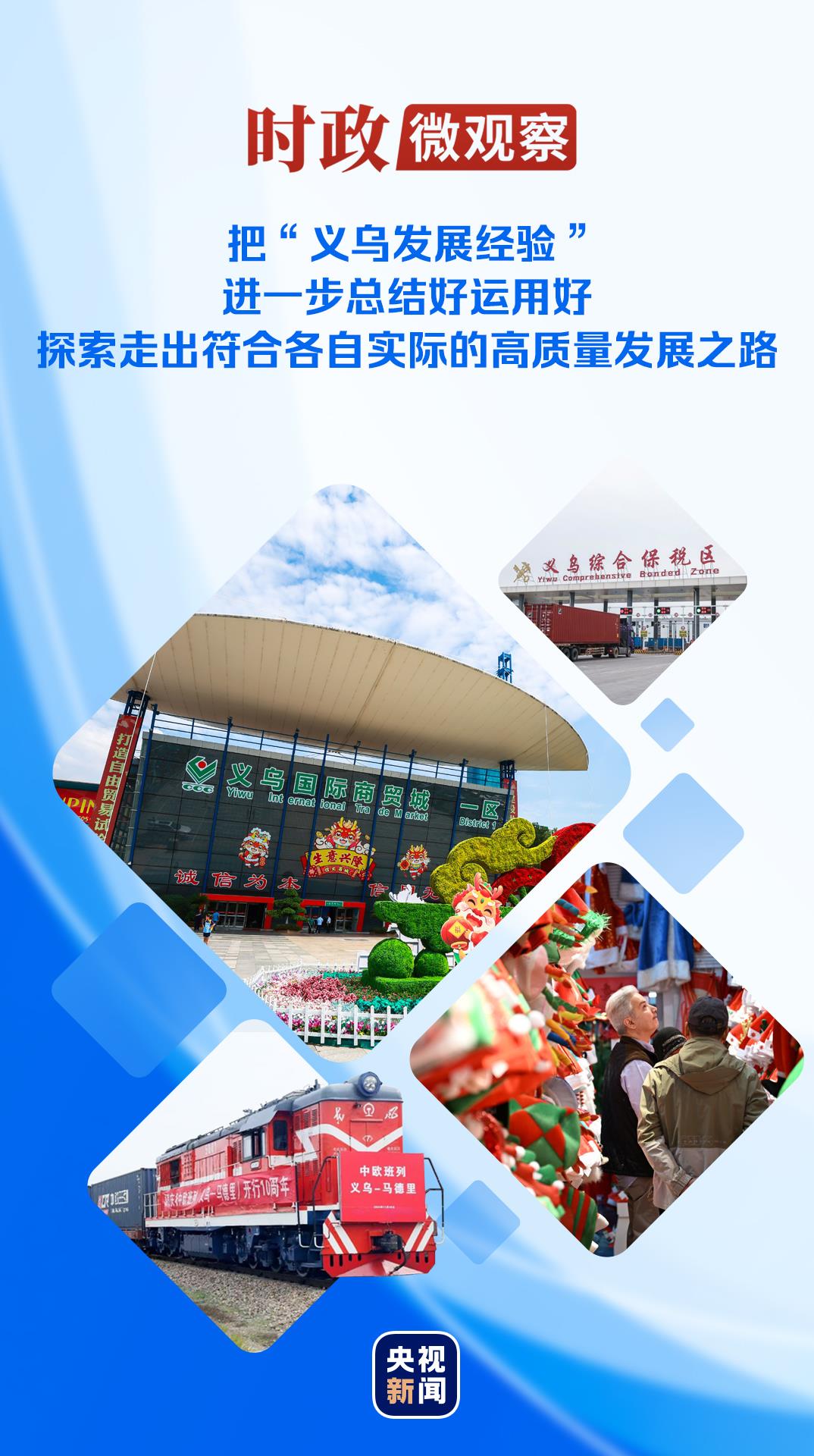
“Yiwu’s small commodities broke into a big market and formed a large industry, creating the ‘Yiwu development experience.’ This is a successful practice of developing county economies based on local conditions.”
Recently, General Secretary Xi Jinping made an important directive emphasizing the need to further summarize and apply the “Yiwu development experience.” He urged all regions to leverage their own resource endowments, respect grassroots and mass initiative, pursue reform and innovation, work hard with determination, and persistently explore high-quality development paths that suit their own realities, better serving and integrating into the national development landscape.
From shaking a rattle drum while peddling through streets, to setting up stalls by the roadside, and then building a “world supermarket” that “buys globally and sells globally,” Yiwu in Zhejiang Province has written a miracle in China’s county economic development.
“This place is neither near the sea nor the border—how did it become a global trade center?” During an inspection in Yiwu in September 2023, General Secretary Xi Jinping hit the nail on the head: “It’s because the people of Yiwu achieved something out of nothing and did it in a seemingly inexplicable way.”
Going back to June 8, 2006, a symposium on the Yiwu development experience was held in the conference room of the Hengtang Village Committee in Yiwu. At the meeting, Xi Jinping, then Secretary of the Zhejiang Provincial Party Committee, comprehensively elaborated for the first time on the Yiwu development experience as he saw it, summarizing Yiwu’s development as “inexplicable development, development out of nothing, and development that turns stone into gold.” This became the most incisive and vivid annotation of the Yiwu development experience.
At the start of the “15th Five-Year Plan,” the Yiwu development experience offers important insights for all regions to work down-to-earth, take concrete actions, and solidly promote high-quality development.
Leveraging Local Resource Endowments and Developing According to Local Conditions
A set of data shows Yiwu’s “small commodities, big market”:
Currently, the number of business entities in the small commodity market has exceeded 1.26 million, with trade ties to over 230 countries and regions. In 2025, Yiwu’s foreign trade export volume ranked first among counties (cities, districts) nationwide. In the first quarter of this year, Yiwu’s foreign trade continued its rapid growth momentum, with total import and export value exceeding 200 billion yuan, a year-on-year increase of 25%.
General Secretary Xi Jinping has always been concerned about Yiwu’s development. While working in Zhejiang, he visited Yiwu multiple times for research and issued special instructions. During his research in Yiwu on June 8, 2006, he required all parts of Zhejiang to learn from Yiwu’s experience in creatively implementing central policies and provincial party committee decisions based on local realities, and to learn how Yiwu, grounded in its local conditions and inheriting its historical traditions, pioneered development paths with local characteristics.
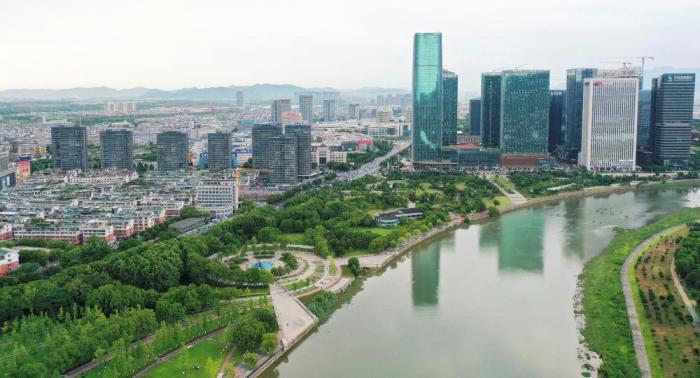
Each region nurtures its own characteristics, and each characteristic fosters a unique industry.
Over the years, General Secretary Xi Jinping has repeatedly emphasized the importance of adapting to local conditions, urging all regions to “use the right key to open the right lock” and “adapt to local conditions, leverage strengths, and compensate for weaknesses to find a high-quality development path suitable for their own reality.” During local inspections, the General Secretary closely monitors the development of county economies and specialty industries based on local conditions, calling for the promotion of new urbanization centered on county towns and the development of distinctive county economies.
The “15th Five-Year Plan” outlines specific arrangements for developing county-level industries that benefit the people, requiring the development of distinctive county economies, deep integration of primary, secondary, and tertiary industries in rural areas, and the cultivation of strong agricultural counties, industrial powerhouses, and tourism-famous counties according to local conditions, promoting integrated development of industry, county prosperity, and people’s wealth.
The Yiwu development experience is not a rigid template but a vivid practical inspiration, providing useful references for all regions to explore high-quality development paths that suit their own realities.</