Former Senior Political Advisor Qizhala Sentenced to Life Imprisonment for Bribery
On June 5, the First Intermediate People’s Court of Chongqing publicly sentenced Qizhala, former standing committee member of the 14th National Committee of the Chinese People’s Political Consultative Conference (CPPCC) and former deputy director of the Agriculture and Rural Affairs Committee, to life imprisonment for bribery, with deprivation of political rights for life and confiscation of all personal property. All illicit gains and their proceeds recovered from Qizhala will be turned over to the state treasury, with continued recovery for any shortfall.
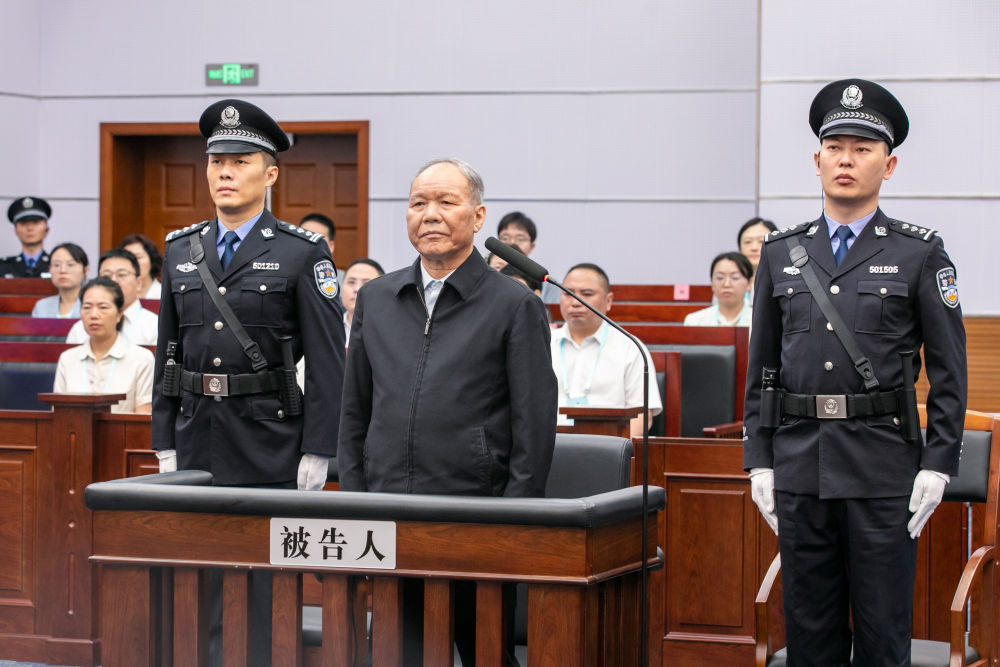
Court scene. (Photo provided by the First Intermediate People’s Court of Chongqing)
The trial established that from 1999 to 2025, the defendant Qizhala, taking advantage of his positions as member of the Diqing Prefecture Committee of Yunnan Province, secretary of the Zhongdian County Committee, deputy secretary of the Diqing Prefecture Committee, secretary of the Zhongdian County Committee, deputy secretary and governor of Diqing Prefecture, secretary of the Diqing Prefecture Committee, member of the Yunnan Provincial Committee and secretary of the Diqing Prefecture Committee, member of the Tibet Autonomous Regional Committee and secretary of the Lhasa Municipal Committee, deputy secretary of the Tibet Autonomous Regional Committee and chairman of the regional government, deputy director of the Ethnic Affairs Committee of the 13th National People’s Congress, standing committee member of the 14th CPPCC National Committee and deputy director of the Agriculture and Rural Affairs Committee, as well as the便利 conditions formed by his authority and status, provided assistance to relevant units and individuals in matters such as real estate development, project contracting, administrative approvals, and personnel promotions. In return, he illegally accepted property worth approximately 158 million yuan from these units and individuals.
The First Intermediate People’s Court of Chongqing held that Qizhala’s actions constituted the crime of bribery. The amount involved was particularly huge, causing especially significant losses to the interests of the state and the people, warranting severe punishment. Considering that part of the bribery was an attempted crime, that Qizhala truthfully confessed his crimes after arrest and voluntarily disclosed most bribery facts not yet known to the investigative authorities, that he reported others’ major criminal acts which were verified and constituted major meritorious service, that he expressed remorse and actively returned illicit gains, and that most of the involved赃款赃物 and proceeds have been recovered, the court applied leniency in accordance with legal provisions and rendered the above judgment.
It is reported that the First Intermediate People’s Court of Chongqing publicly tried the case on March 27, 2026. During the trial, the prosecution presented relevant evidence, and the defendant Qizhala and his defense counsel conducted cross-examination. Both sides fully expressed their opinions under the court’s guidance. Qizhala made a final statement and expressed remorse in court. More than thirty people, including deputies to the People’s Congress, members of the CPPCC, and members of the public, attended the trial.