1/5
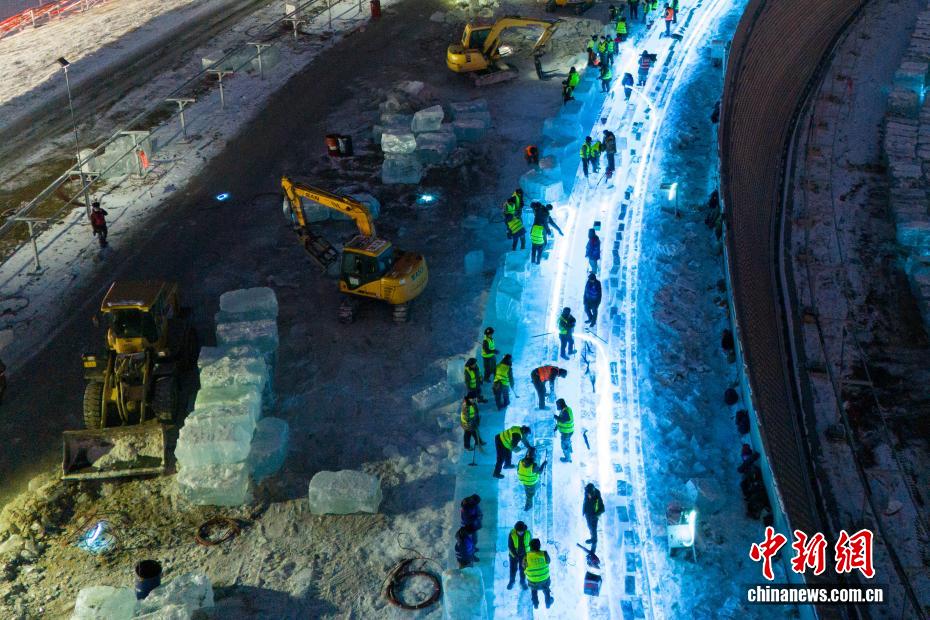
On November 27th in Harbin, Heilongjiang, the Super Ice Slide at the Ice and Snow World is under construction. This year, the Harbin Ice and Snow World will incorporate elements of the Great Wall’s battlements and beacon towers into the Super Ice Slide, creating a deep integration between the “speed and thrill” of the slide and the “majestic grandeur” of the Great Wall, showcasing the magnificent beauty of northern ice and snow. Currently, within the Harbin Ice and Snow World park, hoisting, transportation, and cutting equipment are operating noisily, engineering vehicles are coming and going, and nearly ten thousand construction workers will gradually be deployed to various construction tasks.
Harbin Ice and Snow World
The Harbin Ice and Snow World is a massive winter theme park in Harbin, China, renowned for its magnificent sculptures and buildings carved from ice and snow. It was first established in 1999 as part of the city’s long-standing Harbin International Ice and Snow Sculpture Festival, which itself draws from a local tradition of ice lantern displays that dates back centuries. Each year, the park features a new theme, with illuminated structures that create a spectacular, colorful landscape at night.
Super Ice Slide
The Super Ice Slide is a modern winter attraction, typically a large-scale temporary structure built for seasonal festivals or tourism. It gained popularity in the 21st century, often featured in events like China’s Harbin Ice and Snow Festival, where it is constructed entirely from ice blocks. These slides are designed for recreational sledding or tubing, offering visitors a thrilling experience amid elaborate ice and snow sculptures.
Great Wall
The Great Wall of China is an ancient series of fortifications built across the historical northern borders of China. Its construction began as early as the 7th century BC, with the most famous sections built by the Ming dynasty between the 14th and 17th centuries to protect against nomadic invasions. Stretching over 20,000 kilometers, it stands as one of the most impressive architectural feats in history and a UNESCO World Heritage site.
battlements
Battlements are the distinctive, notched stone parapets seen atop castle walls and fortifications. Historically, they served a crucial military function by providing defenders with protected openings (crenels) to shoot from, while the raised sections (merlons) shielded them from enemy fire. This architectural feature became a common defensive element in medieval castles across Europe and the Middle East.
beacon towers
Beacon towers were a series of signal stations used for military communication along the Great Wall of China and other frontiers. By using fire and smoke signals, they could rapidly transmit messages across vast distances to warn of impending attacks or relay other urgent information. This system formed a crucial early warning network for the defense of ancient Chinese empires.