Diverse Business Formats Integrate to Create New Hotspots for Cultural Tourism Consumption
Across the country, diverse business formats are being developed to promote the integration of culture and tourism. Innovation and creativity are being leveraged to invigorate the consumer market and meet the diverse needs of tourists.
From cities to the countryside, various regions are actively exploring new models to inject fresh momentum into cultural and tourism consumption. In Wuhan, Hubei, idle rooftops and platforms in old urban areas like Zhonghua Road and Liangdao Street are being revitalized through innovative business formats. Rooftop restaurants, sky-high cafes, and rooftop theaters now connect ancient streets and alleys, riverfronts, and cultural landmarks, transforming popular scenic spots into vibrant consumer hubs. In Pu’er, Yunnan, visitors can not only experience the entire process of coffee from picking to brewing and tea from picking to tasting, but also deeply appreciate the unique charm of Pu’er’s unique woodblock prints and Wa ethnic brocade. This turns intangible cultural heritage from mere exhibits into experiential, take-home trendy items.
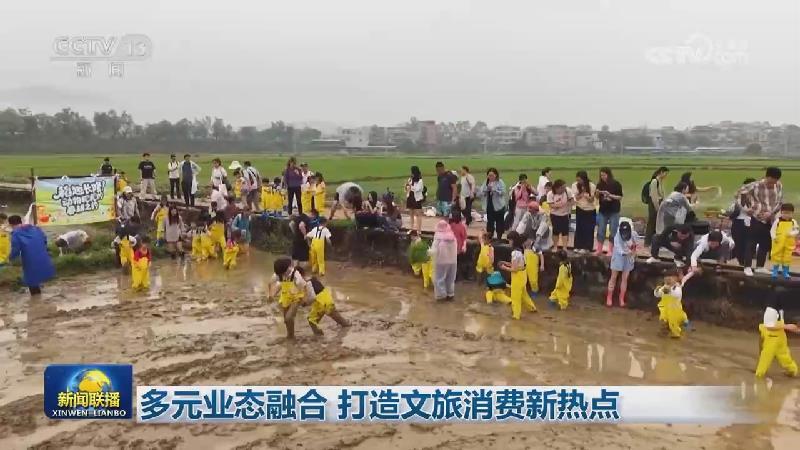
Study tour activities are driving cultural and tourism consumption. In Qingyuan, Guangdong, a vast agricultural industry demonstration base has launched spring plowing and rice transplanting experiences for families. Instructors explain to children how agricultural resources can be recycled. The Qinling National Botanical Garden is home to over 6,500 plant species. Currently, a hundred flowers are in bloom, with rare plants like the Paeonia rockii and Davidia involucrata entering their peak flowering period, attracting numerous study tour groups. In Pingtang, Guizhou, the China Sky Eye (FAST) scenic area is highly popular. Through interactive light and sound displays, simulated operations, and VR experiences, abstract astronomical knowledge is transformed into tangible, perceptible interactive projects. People observe planetary motion trajectories, listen to signals from the universe, and experience the charm of technology up close.
The empowering effect of film and TV IP continues to show. In Delingha, Qinghai, the filming location of the TV series “Tree of Life” offers interactive plot experiences and hands-on prop-making projects, attracting many visitors. Since opening over two months ago, it has received more than 150,000 visitors, driving nearly 40 million yuan in surrounding consumption.
Zhonghua Road
Zhonghua Road is a major historical thoroughfare found in many Chinese cities, often serving as a central commercial and cultural artery. Its name, meaning “China” or “Chinese,” reflects its modern establishment or renaming, typically in the early to mid-20th century, to symbolize national identity and urban development. Today, these roads are bustling hubs of commerce, transportation, and local life, often lined with shops, department stores, and historical buildings that tell the story of the city’s growth.
Liangdao Street
Liangdao Street is a historic commercial street in Tainan, Taiwan, originally developed in the 17th century during the Dutch colonial period and later flourishing as a key trading hub in the Qing Dynasty. Today, it is known for its well-preserved traditional shop-houses and vibrant local markets, reflecting Tainan’s status as Taiwan’s oldest city.
Pu’er woodblock prints
Pu’er woodblock prints are a traditional folk art form originating from Yunnan Province, China, historically created by the Pu’er (or Bulang) ethnic group. They are known for their intricate designs depicting local mythology, nature, and daily life, carved into wood and printed using natural plant-based dyes. This craft dates back centuries and serves as both a cultural record and an artistic expression of the region’s indigenous heritage.
Wa ethnic brocade
Wa ethnic brocade is a traditional textile art of the Wa people, an ethnic group primarily living in China’s Yunnan Province and parts of Myanmar. Historically, these vibrant, geometric-patterned fabrics were handwoven using natural dyes and served as important cultural symbols, often used in clothing and rituals to represent social status and spiritual beliefs. Today, the craft is preserved as an intangible cultural heritage, reflecting the Wa community’s identity and artistic heritage.
Qinling National Botanical Garden
The Qinling National Botanical Garden, located in Shaanxi Province, China, was established in 2006 as a major conservation and research center focused on the unique flora of the Qinling Mountains—a critical biodiversity hotspot and geographic divide between northern and southern China. It serves to protect thousands of plant species, including many rare and endemic ones, while promoting public education and ecological sustainability.
Paeonia rockii
“Paeonia rockii,” also known as Rock’s peony or the tree peony, is a species of flowering plant native to the mountainous regions of central China, notably Gansu and Sichuan provinces. It has a long history of cultivation, valued for centuries in Chinese horticulture and art for its large, fragrant white flowers with distinctive dark purple basal flares. While not a single built site, it is a culturally significant botanical treasure, often associated with imperial gardens and traditional Chinese medicine.
Davidia involucrata
“Davidia involucrata,” commonly known as the dove tree or handkerchief tree, is a rare and ornamental tree species native to central and southwestern China. It was first described for Western science in 1869 by French missionary and botanist Père David, after whom it is named, and is celebrated for its distinctive large, white bracts that resemble fluttering doves or handkerchiefs when in bloom.
China Sky Eye (FAST)
The China Sky Eye, officially known as the Five-hundred-meter Aperture Spherical radio Telescope (FAST), is the world’s largest single-dish radio telescope. Completed in 2016 in Guizhou Province, it was built in a natural karst depression to minimize interference and is a key instrument for astronomical observations, including the search for extraterrestrial life and pulsars. Its construction represents a major advancement in China’s space exploration and scientific capabilities.