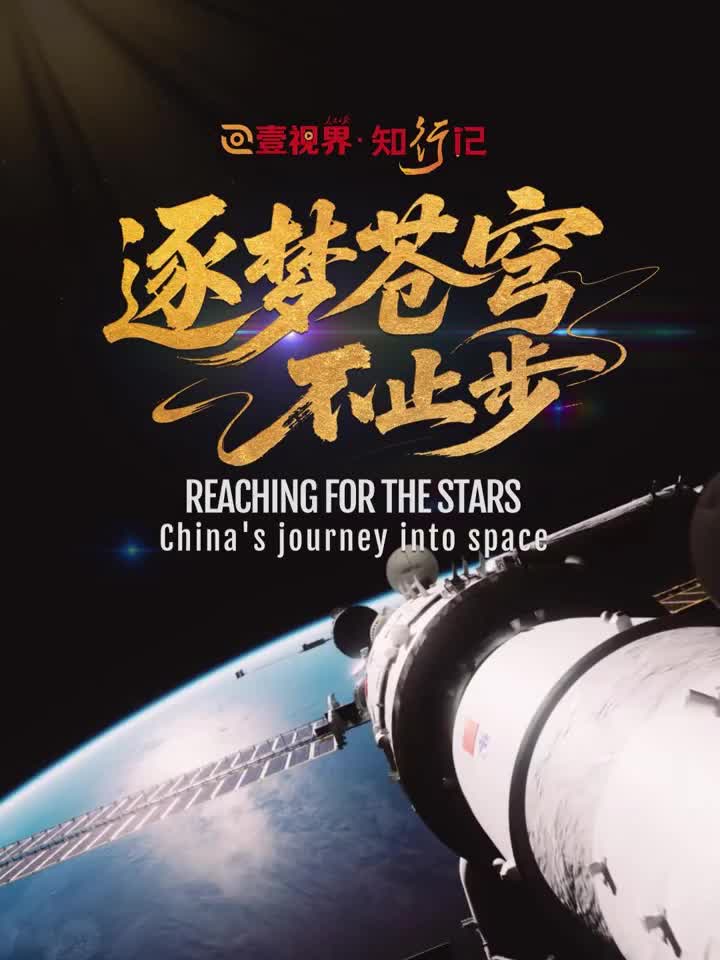
On April 24 this year, we will celebrate the 11th “China Space Day,” coinciding with the 70th anniversary of the founding of China’s space industry.
56 years ago, China successfully launched its first independently developed artificial Earth satellite, “Dongfanghong-1,” making China the fifth country in the world to independently develop and launch a satellite, thus taking the first step into the vast expanse of space.
“Exploring the vast universe, developing the space industry, and building a space power are our unremitting pursuit of the space dream.” In the new era, General Secretary Xi Jinping attaches great importance to building a space power, leading China’s space industry to continuously create new history.
“Beidou” networking, “Chang’e” lunar exploration, “Tiangong” orbiting, “Zhurong” Mars exploration, “Xihe” solar observation… China’s space industry continues to write legends of spaceflight in the vast sky, while forging a space spirit that is passed down from generation to generation and thrives endlessly.
The starry sea, exploration never ends. On the new journey of the “15th Five-Year Plan,” the pace of Chinese people exploring space will surely become more confident and composed.
Dongfanghong-1
Dongfanghong-1 was China’s first artificial satellite, launched successfully on April 24, 1970, aboard a Long March-1 rocket. It marked a major milestone in China’s space program, broadcasting the patriotic song “The East Is Red” for 28 days. The satellite remains in orbit as a historic symbol of China’s early achievements in space exploration.
Beidou
Beidou is a Chinese term meaning “Northern Dipper,” historically referring to the Big Dipper asterism in the night sky, which has held deep cultural and navigational significance in Chinese astronomy and folklore for millennia. In a modern context, “Beidou” also denotes the BeiDou Navigation Satellite System (BDS), China’s independent global satellite navigation system, which was developed to provide positioning, navigation, and timing services worldwide. The system’s name pays homage to the ancient asterism’s role as a celestial guide, symbolizing China’s blend of traditional cultural heritage with cutting-edge technological achievement.
Chang’e
Chang’e is the Chinese goddess of the moon, central to the Mid-Autumn Festival legend. According to myth, she drank an elixir of immortality and floated to the moon, where she resides with the jade rabbit. Her story symbolizes love, longing, and the celestial beauty of the moon in Chinese culture.
Tiangong
“Tiangong,” meaning “Heavenly Palace,” is the name of China’s modular space station, which represents a major milestone in the nation’s human spaceflight program. Its construction began with the launch of the core module, Tianhe, in April 2021, and it has since been expanded with additional modules and crewed missions. The station is designed for long-term habitation and scientific research, building on China’s earlier Tiangong-1 and Tiangong-2 space laboratory missions.
Zhurong
Zhurong is a Chinese Mars rover that successfully landed on the Red Planet on May 15, 2021, as part of the Tianwen-1 mission, making China the second country to operate a rover on Mars. Named after the ancient Chinese god of fire, Zhurong explored the Utopia Planitia region, studying the planet’s geology and atmosphere. Its mission contributed valuable data before entering hibernation in May 2022, marking a major milestone in China’s space exploration history.
Xihe
Xihe, also known as the “Sun Valley,” is a historic site in China’s Hunan Province, celebrated as the birthplace of the legendary archer Hou Yi and the solar deity Xihe from ancient Chinese mythology. This cultural landmark is deeply tied to the myth of the ten suns, where Xihe was said to have driven the sun chariot across the sky, and Hou Yi later shot down nine of the suns to save the earth. Today, Xihe is a popular tourist destination featuring the Xihe Sun-Worshiping Cultural Park, which preserves relics and traditions from the Dawenkou and Longshan cultures dating back over 4,000 years.