The 15th Wujiang Miao Flower Trampling Festival of 2026 opened in Pengshui, Chongqing on May 24. A delegation of over 100 people, including representatives of Taiwan’s indigenous peoples and individuals from various sectors of the island, visited Pengshui that day to celebrate the festival alongside the Miao community.
Pengshui is the largest autonomous county in Chongqing with a concentrated Miao population. At the event, as the traditional Miao folk song “Jiao A Yi” began to play, thousands of dancers dressed in Miao attire moved to the rhythm. This allowed the Taiwanese visitors to directly experience the vitality of Miao cultural heritage on the mainland.
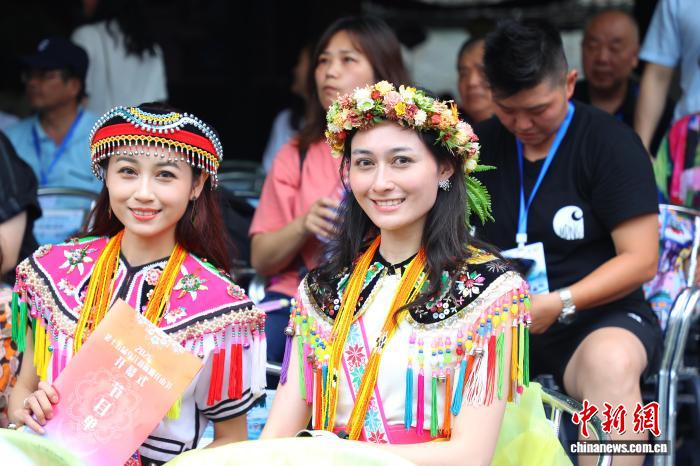
A Taiwan indigenous representative attended the Flower Trampling Festival for the first time, deliberately wearing a traditional Amis outfit handmade by her grandmother. “Being able to wear my ethnic attire and join this celebration makes me especially happy,” she said. She introduced the “lover’s bag” hanging at her waist, a traditional Amis accessory often made by elders as gifts for their children or given by women to their beloved, carrying significant cultural meaning. “Every move in the ethnic dance is a way to showcase our culture.”
A Taiwan youth who has been learning dance since her school days noticed similarities between the steps of the Flower Trampling Festival and Taiwan’s indigenous dances, though there were also differences. She plans to study the performance footage she recorded and share it with her dance team back in Taiwan to learn and adapt some moves.
A Taiwan representative visiting the mainland for the third time also wore an Amis “lover’s bag” at his waist and a Paiwan wild boar tooth ornament on his chest. “This is my mix-and-match style,” he said with a smile, hoping to express that people across the strait are one family. He brought professional equipment this time to document Pengshui’s ethnic culture through his lens. “There are many shared cultural imprints between the ethnic cultures of both sides of the strait. I want to share this beauty and kindness with our Taiwanese compatriots.”
After the Flower Trampling Festival, the Taiwanese guests also experienced a Miao-style long-table banquet. Together, they took part in the traditional “High Mountains and Flowing Water” ceremony, receiving rice wine through stacked cups, and felt the warm hospitality of Chongqing’s “Miao Village.”
Wujiang Miao Flower Trampling Festival
The Wujiang Miao Flower Trampling Festival is a traditional celebration held by the Miao ethnic group in Wujiang, China, where participants dance and trample flowers as a symbolic act to pray for good harvests and ward off evil. Historically, the festival is rooted in ancient agricultural rituals and Miao folklore, serving as both a cultural expression and a communal gathering to honor nature. It has been preserved for centuries, blending vibrant costumes, music, and dance to showcase the Miao people’s rich heritage.
Pengshui
Pengshui is a county in Chongqing, China, known for its rich ethnic Miao and Tujia cultures. Historically, it developed as a remote mountainous region with a strong agricultural and folk tradition, and in recent years it has become a tourist destination for its natural scenery and cultural heritage. The area features attractions like the A Yi River and ancient Miao villages, reflecting its long-standing history and diverse traditions.
Chongqing
Chongqing is a major city in southwest China known for its dramatic mountainous terrain and position at the confluence of the Yangtze and Jialing rivers.
Wujiang Miao Flower Trampling Festival
The Wujiang Miao Flower Trampling Festival is a traditional celebration of the Miao ethnic group in Wujiang, China, where participants stomp on flowers to pray for a bountiful harvest and good fortune. Historically, this festival dates back centuries and is rooted in ancient agricultural rituals, serving as a vibrant expression of Miao cultural identity through music, dance, and colorful costumes. It continues to be a key cultural event, attracting both locals and visitors to witness its unique customs and lively atmosphere.
Pengshui
Pengshui is a county in Chongqing, China, known for its stunning karst landscapes and the Wujiang River Gallery. Historically, it has been home to the Miao and Tujia ethnic minorities, whose cultural traditions remain vibrant in local festivals and architecture. The area has developed into a popular tourist destination, blending natural beauty with rich folk heritage.
Chongqing
Chongqing is a major city in southwestern China known for its mountainous terrain and role as a key industrial and transportation hub. Historically, it served as the wartime capital of the Republic of China during the Second Sino-Japanese War (1937–1945) and has since grown into a bustling metropolis. Today, it is famous for its spicy hotpot, unique river views, and the spectacular Yangtze River cruise.
A Yi River
The Yi River, located in China’s Henan Province, is a significant waterway with deep historical roots, often associated with the ancient Yiluo River system. It flows through the city of Luoyang, a former capital of multiple Chinese dynasties, and has been referenced in classical texts like the *Book of Documents* for its role in early Chinese civilization. Today, the river remains a cultural landmark, reflecting the region’s rich heritage and its importance in the development of Chinese history.
Yangtze River
The Yangtze River is the longest river in Asia and the third-longest in the world, flowing over 6,300 kilometers through China. It has been a cradle of Chinese civilization for thousands of years, supporting agriculture, trade, and cultural development since ancient times. Historically, it served as a vital transportation route and a natural boundary between northern and southern China, while its Three Gorges region is now home to one of the world’s largest hydroelectric projects.
Jialing River
The Jialing River is a major tributary of the Yangtze River in southwestern China, flowing through the provinces of Gansu, Shaanxi, and Sichuan before joining the Yangtze at Chongqing. Historically, it served as a vital transportation and trade route, linking remote inland areas to the Yangtze basin, and its fertile basin supported early agricultural civilizations. Today, it is known for its scenic gorges and cultural significance, including landmarks like the ancient fishing town of Ciqikou along its banks.