Chongqing Holds Symposium on Strengthening Basic Research
Yuan Jiajun Chaired and Delivered a Speech
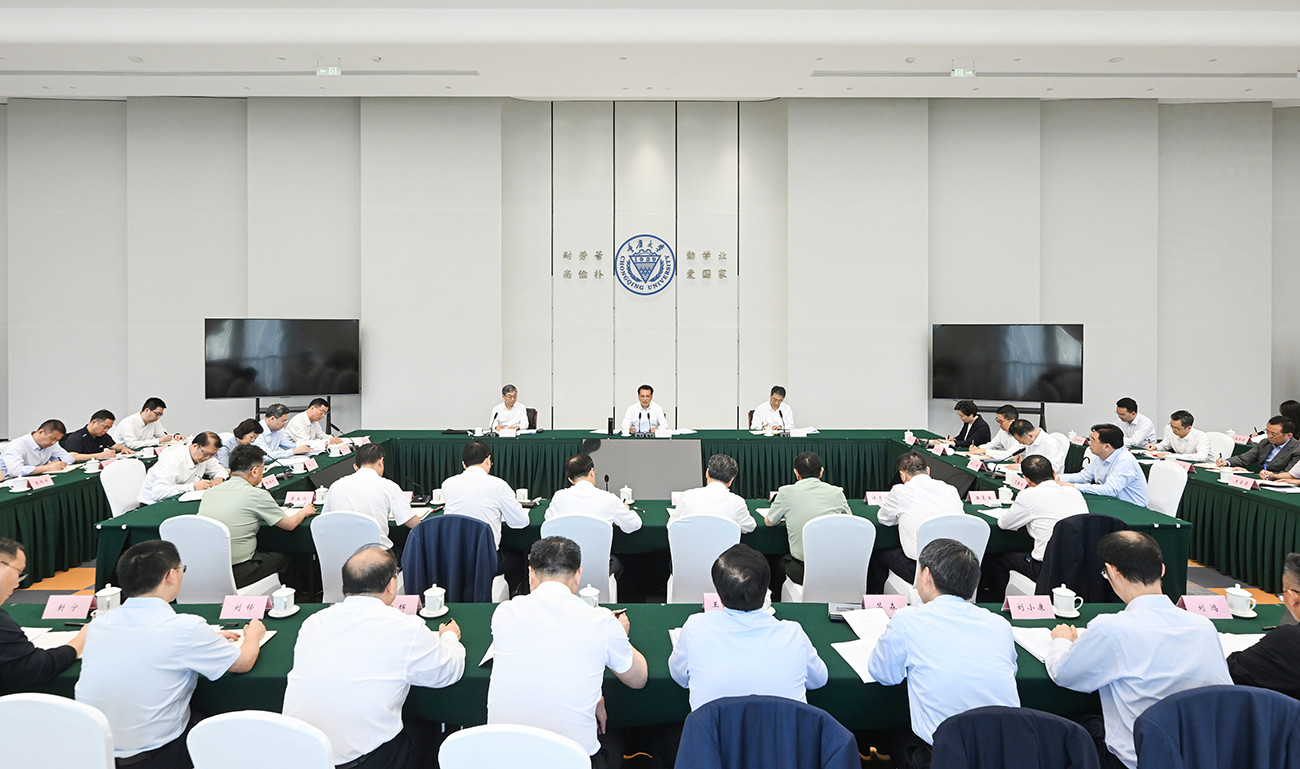
On the afternoon of May 19, Chongqing held a symposium on strengthening basic research. Yuan Jiajun, Secretary of the Municipal Party Committee, chaired the meeting and delivered a speech. He emphasized the need to thoroughly study and implement the spirit of General Secretary Xi Jinping’s important speech at the symposium on strengthening basic research, deepen the implementation of the guiding principles from General Secretary Xi Jinping’s important inspection speech in Chongqing, adhere to the “four orientations,” promote the integrated development of education, science and technology, and talent. Based on Chongqing’s distinctive strengths, efforts should focus on creating landmark achievements in basic research, contributing Chongqing’s strength to achieving high-level technological self-reliance and building a technological powerhouse.
Municipal leaders Liu Shangjin and Ma Zhen, Wang Shuxin, an academician of the Chinese Academy of Engineering and Secretary of the Party Committee of Chongqing University, Liu Changsheng, an academician of the Chinese Academy of Sciences and President of Chongqing University, academicians of the Chinese Academy of Sciences Bian Xiuwu and Zhang Zemin, and Pan Fusheng, an academician of the Chinese Academy of Engineering, attended the meeting.
At the meeting, representatives from the Municipal Science and Technology Bureau, Chongqing University, Chongqing Jinfeng Laboratory, Chongqing Institute of Information and Smart Medicine, and China Starnet Network Applications Co., Ltd. delivered speeches on strengthening basic research and offered suggestions and opinions.
After carefully listening to the speeches, Yuan Jiajun gave a speech. He pointed out that since the 20th National Congress of the Communist Party of China, the Municipal Party Committee has been deeply implementing the central government’s major decisions and deployments on strengthening basic research. It has thoroughly implemented the primary strategy of technological innovation and talent-driven city building, integrated the “416” scientific and technological innovation layout with the “33618” modern manufacturing cluster system, actively established important platforms for source innovation, achieved continuous emergence of cutting-edge results, accelerated the gathering of basic research resource elements, iteratively improved institutional mechanisms, and made positive progress in the city’s basic research. This has injected strong momentum into accelerating the enhancement of the overall efficiency of the city’s innovation system.
Yuan Jiajun emphasized that all levels and departments in the city should thoroughly study and implement the spirit of General Secretary Xi Jinping’s important speech, focus on key breakthroughs in the “416” areas, leverage strengths, make precise efforts, aim for commanding heights in frontier fields of basic disciplines, break through core technologies based on industrial needs, and strengthen dynamic deployment of basic research for the future. Efforts should be made to cultivate and strengthen the main body of basic research, reinforce the role of universities as the main force, activate the role of enterprises as a new force, continuously enhance the capacity of innovation platforms, and better achieve complementary advantages and coordinated efforts among various innovation entities. The talent team for basic research should be expanded, with comprehensive efforts in cultivation, introduction, and utilization. Strategic scientific and technological talents should be attracted and nurtured faster, with attention to cultivating young scientific and technological talents, strengthening university talent training, and building a full chain supporting the development of basic research talents. Deepening reforms of the basic research institutional mechanisms should be advanced, coordinating systematic reforms in the basic research field, optimizing project performance management, innovating talent evaluation and service systems, and continuously improving the efficiency of research funding use. A good ecosystem supporting basic research should be fostered, cultivating an innovation culture of dedicated research, continuously improving the policy support system, further deepening open cooperation, diversifying investment mechanisms, enriching the fertile soil for source innovation in basic research, and striving to create a first-class research environment.