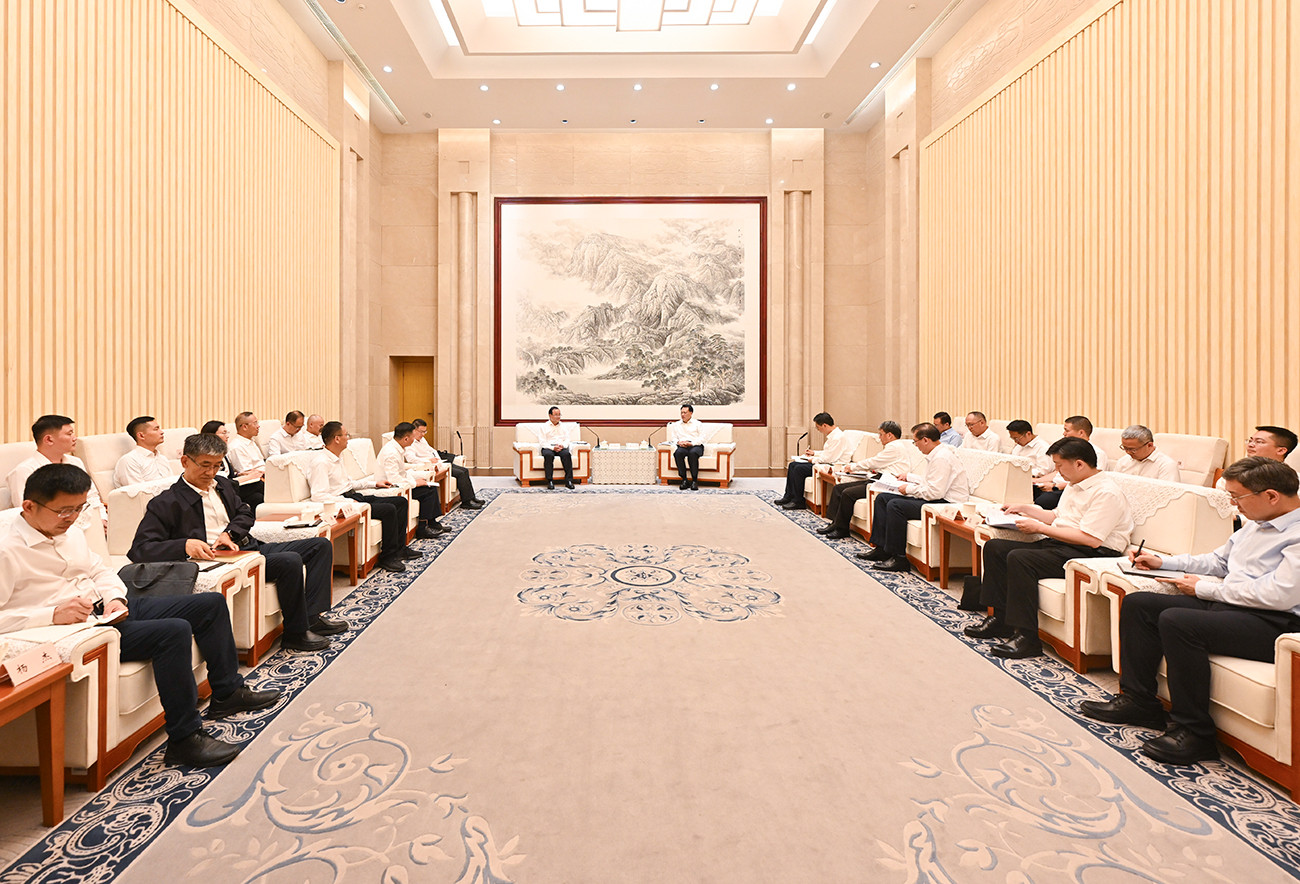
On the afternoon of June 3, the Chongqing Municipal People’s Government signed a strategic cooperation agreement with China South-to-North Water Diversion Group Co., Ltd. Municipal Party Secretary Yuan Jiajun met with Wang Annan, Party Secretary and Chairman of China South-to-North Water Diversion Group, and witnessed the signing.
Ying Xiong, Deputy Party Secretary and Director of China South-to-North Water Diversion Group, along with Vice Presidents Zhou Houguo and Li Xiaozhen, and municipal leaders Liu Shangjin and Jiang Guojie, attended the event.
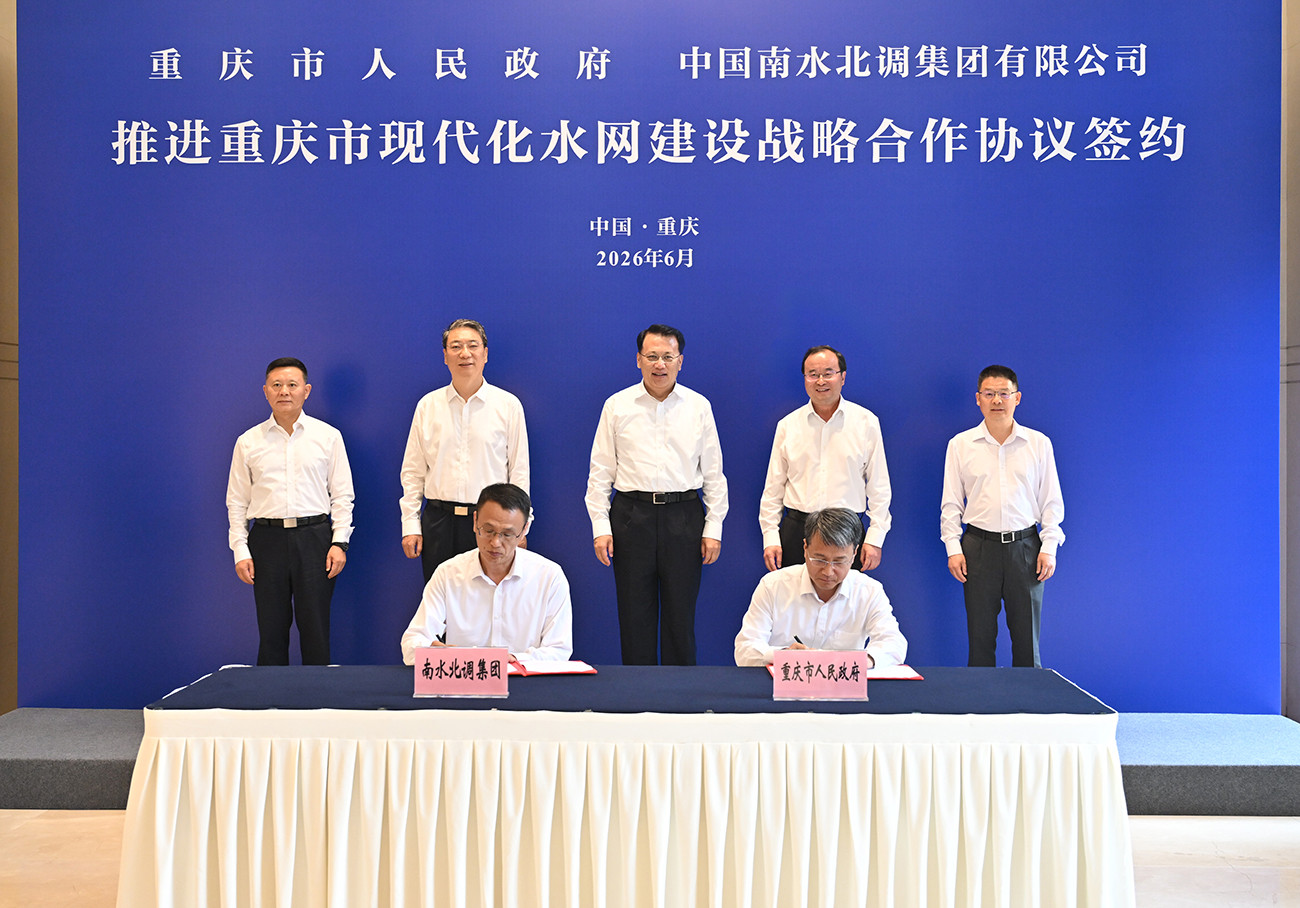
Yuan Jiajun, on behalf of the municipal party committee and government, welcomed Wang Annan and his delegation to Chongqing for deepened cooperation. Yuan stated that Chongqing is an economic center in the upper Yangtze River region, a shipping hub, and a key national modern manufacturing base with vast development potential. Currently, the city is thoroughly studying and implementing the important speeches and directives of General Secretary Xi Jinping during his inspection of Chongqing, focusing on solidifying the “two major positions” and leveraging the “three roles.” It is amplifying comparative and late-mover advantages such as superimposed national strategies, city scale, industrial foundation, transportation hubs, and human ecology, accelerating the enhancement of the Chengdu-Chongqing Economic Circle’s development capacity, continuously strengthening the industrial main engine, striving to build a strategic hub linking the Eurasian continent economic corridor, promoting urban-rural integration and comprehensive rural revitalization, advancing the construction of a beautiful Chongqing, and working to become a growth pole and powerhouse for high-quality development in the western region. Water network construction affects every household and is crucial for sustainable urban development, forming a key part of Chongqing’s modern infrastructure system. He hopes China South-to-North Water Diversion Group will leverage its national team and main force advantages in water network construction, take this signing as a new starting point, strengthen mutual empowerment between central enterprises and local governments, and deepen practical cooperation with Chongqing in areas such as major water conservancy project investment, water-saving technology innovation, and smart water network construction, jointly creating mutually beneficial landmark achievements.
Wang Annan thanked Chongqing for its strong support of the group’s development in the city. He noted that Chongqing has a prominent geographical advantage and broad development space, holding a special and important strategic position in the national water network layout. China South-to-North Water Diversion Group will thoroughly study and implement the important speeches and directives of General Secretary Xi Jinping, strengthen central-local cooperation and government-enterprise coordination, and deepen collaboration with Chongqing in areas such as investment, construction, and operation of major water diversion projects, as well as productive services for modern water networks, actively contributing to the construction of a modern water network and striving to make greater contributions to national water security.
Representatives from China South-to-North Water Diversion Group and relevant municipal departments and enterprises attended the event.